
Food Court ESP —
up to 97.6% Centralized Kitchen Exhaust Purification
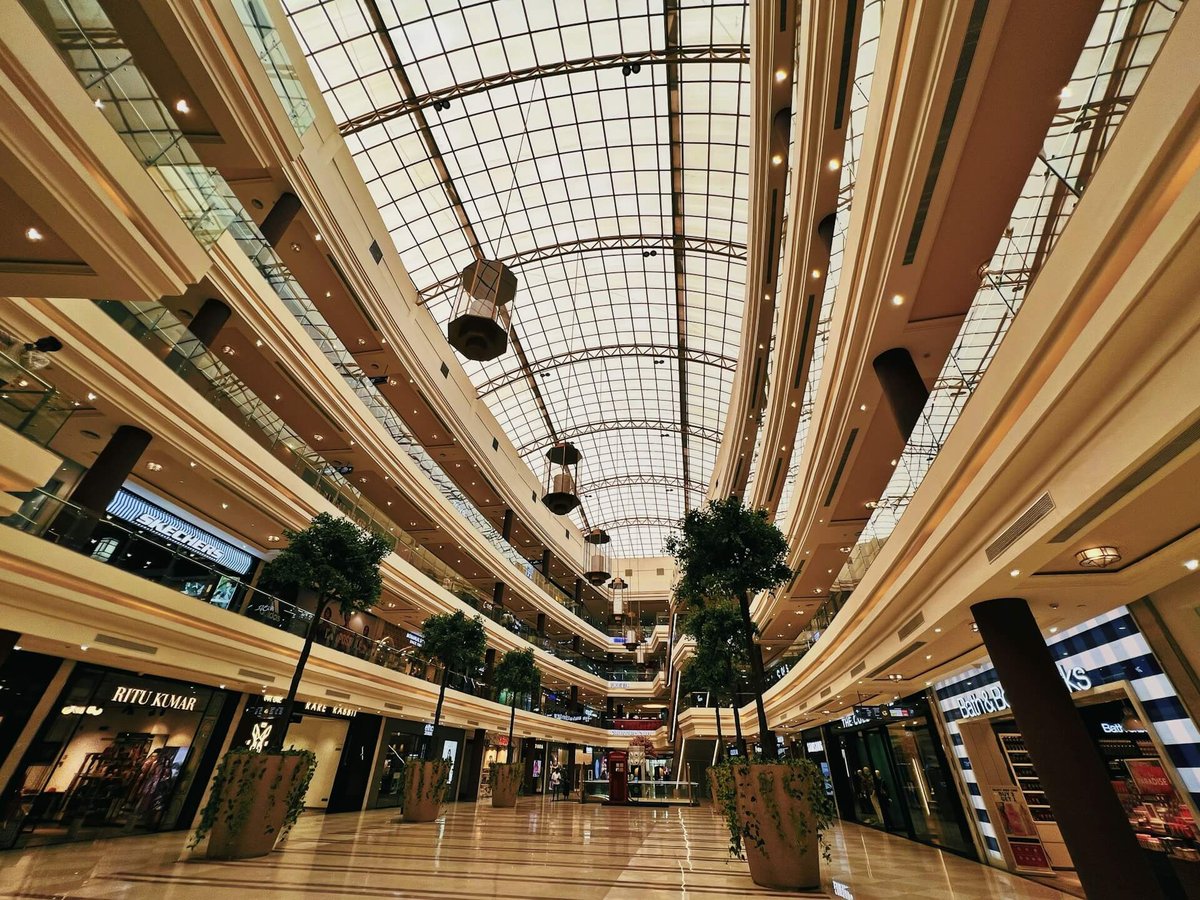
Food court ESP is the proven centralized solution for shopping mall kitchens with 20–60+ cooking stalls. Our systems handle 20,000–60,000+ m³/h combined, unify multi-tenant exhaust management, and clear visible plumes from rooftop discharge — supporting your mall’s fire safety and code alignment and keeping retail tenants comfortable. Trusted by 50 countries with 225 patents granted, CE certified models and UL Listed models.
Why Food Courts Need Centralized Exhaust Purification
Managing kitchen exhaust across 20–60+ independent cooking stalls — each with different menus, hours, and cooking intensities — creates unique challenges that no single stall owner can solve alone. A food court is effectively dozens of commercial kitchens sharing one roof — and one exhaust system.
Multi-Tenant Exhaust Management
Each food court stall generates its own exhaust stream — Chinese wok, Thai stir-fry, Korean BBQ, deep fryer, and pizza oven all running simultaneously. Without a unified exhaust architecture, individual stall exhausts conflict, recirculate, and create hot spots. Grease accumulates at different rates in different duct branches, making fire risk unpredictable and maintenance chaotic.
Massive Airflow Volumes
A 30-stall food court generating 1,500 m³/h per stall requires 45,000 m³/h of total exhaust capacity — equivalent to 15 large standalone restaurants. Traditional grease filters at this scale require hundreds of filter panels, daily monitoring, and weekly replacement during peak trading. The maintenance labor cost alone is substantial for a mid-size food court, and exhaust at this scale must stay balanced with make-up air units serving the dining area.
Tenant Compliance & Lease Enforcement
Shopping mall leases typically require tenants to maintain compliant kitchen exhaust. But with individual stall exhaust, there is no objective way to measure each tenant’s contribution to the shared system or verify compliance. Fire authority inspections that cite the food court’s shared exhaust shaft create liability for the mall operator, not just the offending tenant.
Odor Spillage into Retail Areas
Cooking odors migrating from the food court into adjacent retail corridors, anchor stores, and cinema lobbies are a frequent tenant complaint in shopping malls and a constant indoor air quality concern. According to ASHRAE Handbook guidelines, grease-laden air that escapes the exhaust system rather than being captured creates a persistent, worsening odor problem that traditional kitchen ventilation systems struggle to address.
How Electrostatic Purification Works in a Food Court Exhaust System
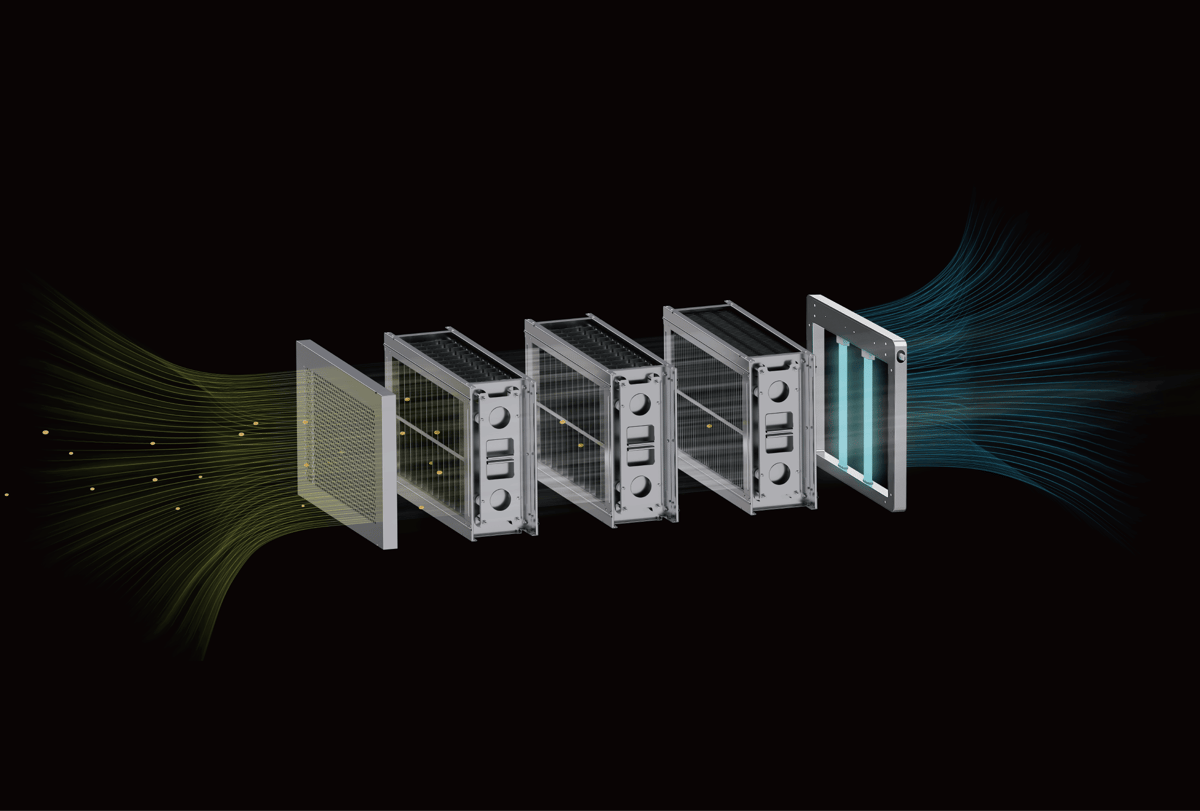
Polygee ESP uses a multi-stage purification process — from pre-filtration to UV sterilization — with third-party tested grease removal for food court kitchens: 97.6% on LK160 and 97.0% on LK40 (Beijing Zhongyan Huanneng, CMA — reports ZY05W230298 / ZY05W230296); 96.0% at rated airflow on LK120 (SQEP, CMA — report 2024I20-35-5322488001).
Airflow Distribution
Washable mesh pre-filter traps large particles and evenly distributes airflow.
→Primary Ionization
High-voltage ionization charges grease and smoke particles.
→Plate Collection
Dual-zone plate-type collector captures charged particles.
→Secondary Collection
Additional collector stage for the top-tier configuration.
→UV Sterilization
UV-C module decomposes VOCs and reduces odors.
Centralized Food Court Exhaust System Architecture
A centralized commercial kitchen ventilation system that collects, purifies, and discharges exhaust from every stall in the food court.
Food Court Ventilation Configured for Every Layout
From traditional inline food courts to premium food halls and ghost kitchen clusters — our ESP solutions are configured for each format’s specific commercial kitchen exhaust architecture.
Shopping Mall Inline Food Court
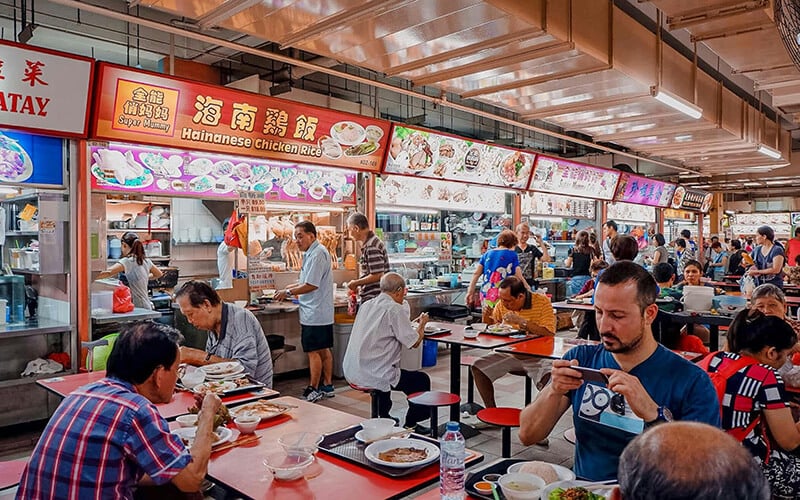
The typical format: 20–60 stalls arranged in rows around a shared seating area, all connected to one central exhaust riser. Polygee deploys 1–2 high-capacity ESP units at the shaft base, purifying the entire combined airflow before rooftop discharge — a cost-efficient setup for uniform stall layouts.
Centralized Shaft · 20,000–60,000 m³/h combined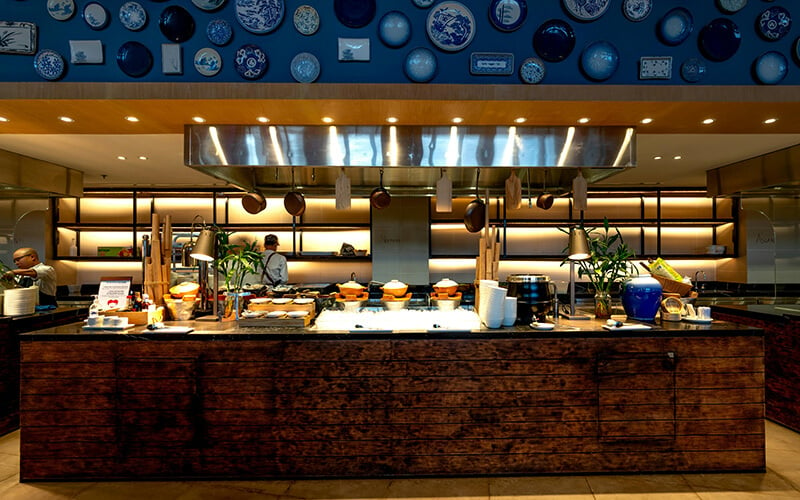
Island Stalls & Open-Plan Layout
Freestanding island kiosks in open atrium spaces lack direct access to a central shaft. Polygee uses a distributed ESP cluster approach — one compact unit per cooking zone — with flexible duct routing to multiple risers. This zone-by-zone design allows individual stall changes or cuisine upgrades without re-engineering the entire exhaust system.
Zone-by-Zone · Flexible Duct Routing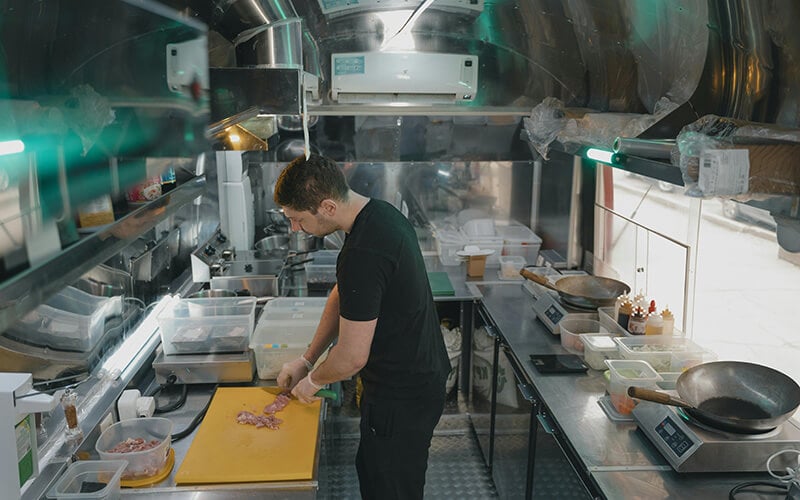
Ghost Kitchen & Cloud Kitchen Cluster
Delivery-only kitchen clusters operate 18–24 hours with peak-hour cooking intensity far exceeding traditional food courts. Basement or back-of-house locations leave little tolerance for grease leakage. Polygee provides hot-swappable ESP modules with redundant capacity, enabling cell-by-cell cleaning without closing stalls.
18–24h Operation · Hot-Swap Modules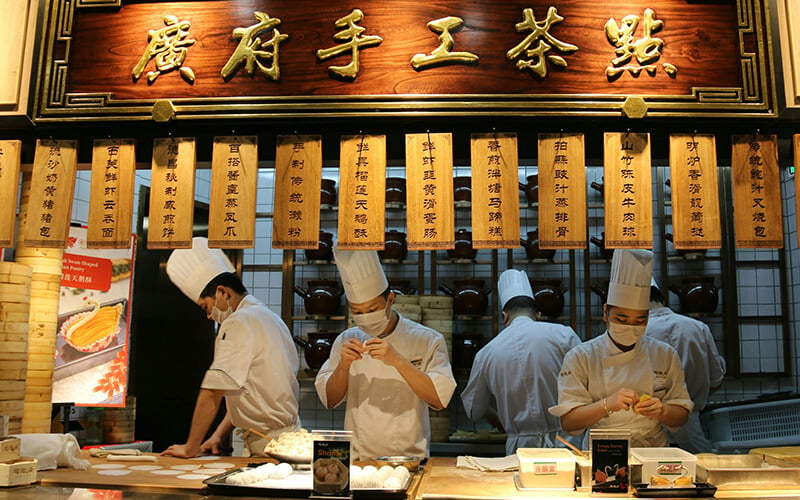
Premium Food Hall & Open Kitchen
High-end food halls with live-cooking theaters and artisanal vendor concepts demand discreet exhaust treatment. Polygee pairs ESP with activated carbon modules for high grease capture plus odor reduction. Visibly clean discharge, minimal odor bleed into the dining hall — protecting the brand experience that commands premium rent per square foot.
Low Odor · Low Noise · Brand-Grade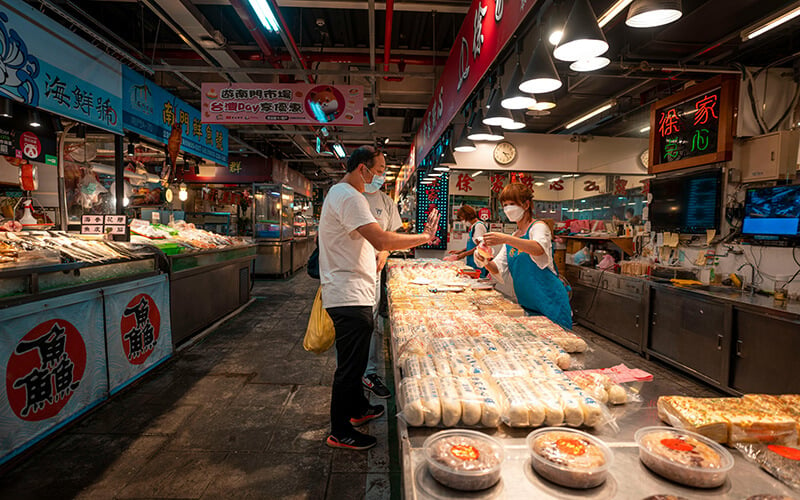
Supermarket & Hypermarket Hot Deli
Rotisserie counters, wok stations, and bakery ovens inside retail stores generate grease and odor that can contaminate adjacent fresh produce and refrigerated aisles. Polygee’s ultra-compact ESP modules install above the ceiling grid, integrating directly with the store’s existing HVAC — no visible equipment on the sales floor.
Above-Ceiling · HVAC Integrated · Compact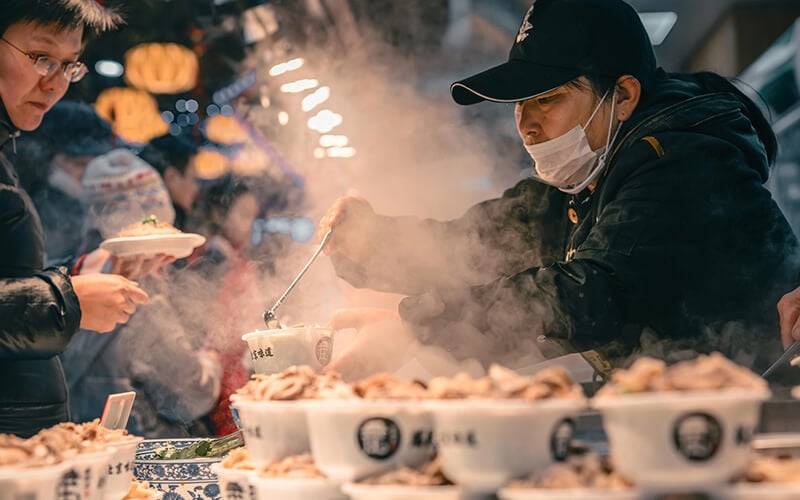
Indoor Street Food Market
Converted warehouses and purpose-built hawker halls feature high ceilings, exposed ductwork, and mixed vendor types from noodle woks to charcoal grills. Semi-open architecture demands strong capture velocity at each stall. Polygee configures modular ESP arrays that handle diverse grease loads while fitting the industrial aesthetic without enclosed ceilings.
High Ceiling · Mixed Cuisine · ModularFood Court ESP vs. Traditional Grease Filters
At food court scale, the cost and performance gap between electrostatic purification and traditional filters is substantial. Industry standards such as NFPA 96 set out how grease-laden exhaust has to be handled in a centralized kitchen extraction system.
| Feature | Traditional Mesh/Baffle Filter | Polygee ESP |
|---|---|---|
| Grease Capture Efficiency | Limited | up to 97.6% ✓ |
| Annual Filter Replacement Cost | Significant recurring cost | ✓ None — washable, reusable cells |
| Visible Rooftop Plume | ✗ Common | ✓ Visibly clean discharge |
| Odor Migration to Retail | ✗ Frequent complaints | ✓ Optional carbon add-on reduces odor |
| Tenant Compliance Monitoring | ✗ Not possible | ✓ Centralized airflow data per zone |
| Duct Cleaning Frequency | Monthly (heavy grease zones) | ✓ Quarterly or less |
| Maintenance Labor | High — 100s of panels to change | ✓ Low — slide-out cells, dishwasher safe |
| Fire Risk Reduction | Limited — grease enters shared shaft | ✓ Vast majority of grease removed before entering shaft |
| Pressure Drop | Increases as filters clog | ✓ ≤150 Pa incl. distribution plate |
| Scalability | Linear cost increase with stall count | ✓ Modular — add capacity as needed |
Ready to upgrade your food court exhaust with third-party tested centralized ESP filtration?
Get Your Free Food Court ESP Assessment →Choose the Right ESP for Your Food Court
Whether you are installing a centralized shaft system for a new mall or retrofitting an existing food court, we have the right configuration. For single-tenant venues, see our restaurant kitchen exhaust filtration solution.
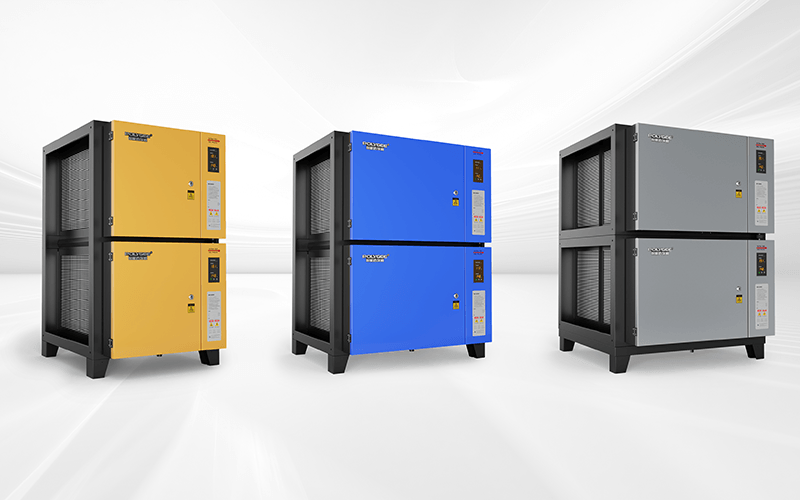
Modular In-Duct ESP
Installs directly into the food court’s main exhaust duct riser. Multiple units can be combined in parallel to handle 60,000+ m³/h. Modular design allows adding capacity as the food court expands. Ideal for both new build and retrofit installations.
In-duct kitchen electrostatic precipitator specifications →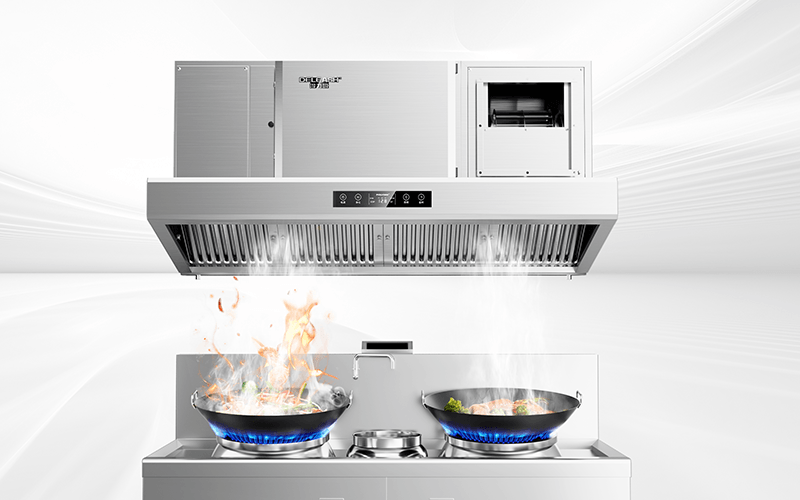
Integrated Kitchen Hood ESP
For food courts where individual stall exhaust is managed stall-by-stall — or for premium open-kitchen concepts that require a clean, integrated look. All-in-one hood with built-in ESP, LED task lighting, and oil drainage.
Integrated ESP hood specifications →LK-K series (top tier) quick reference for typical food court centralized exhaust volumes:
| Model | Airflow (m³/h) | Power (W) | Power Supply | Pressure Drop |
|---|---|---|---|---|
| LK20K | 20,000 | 1,296 | 220V or 380V, 50/60 Hz | ≤150 Pa incl. distribution plate |
| LK30K | 30,000 | 2,160 | 220V or 380V, 50/60 Hz | ≤150 Pa incl. distribution plate |
| LK40K | 40,000 | 2,592 | 220V or 380V, 50/60 Hz | ≤150 Pa incl. distribution plate |
| LK45K | 45,000 | 3,240 | 220V or 380V, 50/60 Hz | ≤150 Pa incl. distribution plate |
| LK54K | 54,000 | 3,528 | 220V or 380V, 50/60 Hz | ≤150 Pa incl. distribution plate |
| LK60K | 60,000 | 3,888 | 220V or 380V, 50/60 Hz | ≤150 Pa incl. distribution plate |
| See all 41 kitchen electrostatic precipitator models (LK-K / LK-D / LK-A) → | ||||
From Design to Full Operation in 4 Steps
Our installation process is built around mall construction schedules, tenant fit-out coordination, and low-disruption to operating stalls.
Exhaust Load Analysis
Review the tenant mix, cooking types, stall count, and duct layout. Our engineers calculate zone-by-zone airflow loads and design the optimal ESP architecture — centralized, clustered, or hybrid — within 48 hours on business days.
Custom Production
ESP units are manufactured to match your duct riser dimensions. For large food courts, multiple units are produced in parallel for simultaneous installation. Material submittals and compliance documentation are provided for authority review.
Phased Installation
For new build: installed as part of the MEP fit-out programme. For retrofit: nighttime phased installation — 2–5 nights per duct riser. No stall closure, no daytime disruption to mall operations. Each phase commissioned before proceeding to the next.
Handover & Ongoing Support
Full dashboard handover to mall engineering team. Staff training on monitoring and cell maintenance. Annual maintenance contracts available. Remote diagnostics and spare parts supply for the life of the installation.
Why Polygee for Your Food Court
Scales to 60,000+ m³/h
Parallel modular units combine to handle any food court size — from a 10-stall food corner to a 60-stall flagship food court. One system grows with your tenant mix.
Removes Filter Costs
At 30 stalls, switching from traditional filters to ESP removes recurring filter purchases and cuts maintenance labor. Cells are washable and last the life of the unit, and their low, stable pressure drop supports the energy efficiency of the entire exhaust system.
Globally Certified
CE (FQC2602501), UL Listed models (File E522667), RoHS, CQC, CCEP, ISO 9001/14001/45001 — exported to 50 countries; compliance documentation available on request. Documentation ready for fire authority and building control. View our ESP certifications →
24h Engineering Support (Mon–Fri)
Share your food court layout and tenant mix — our engineering team provides a complete system design and equipment recommendation within 24 hours on business days. Backed by a BSE-listed manufacturer with institutional project capabilities.
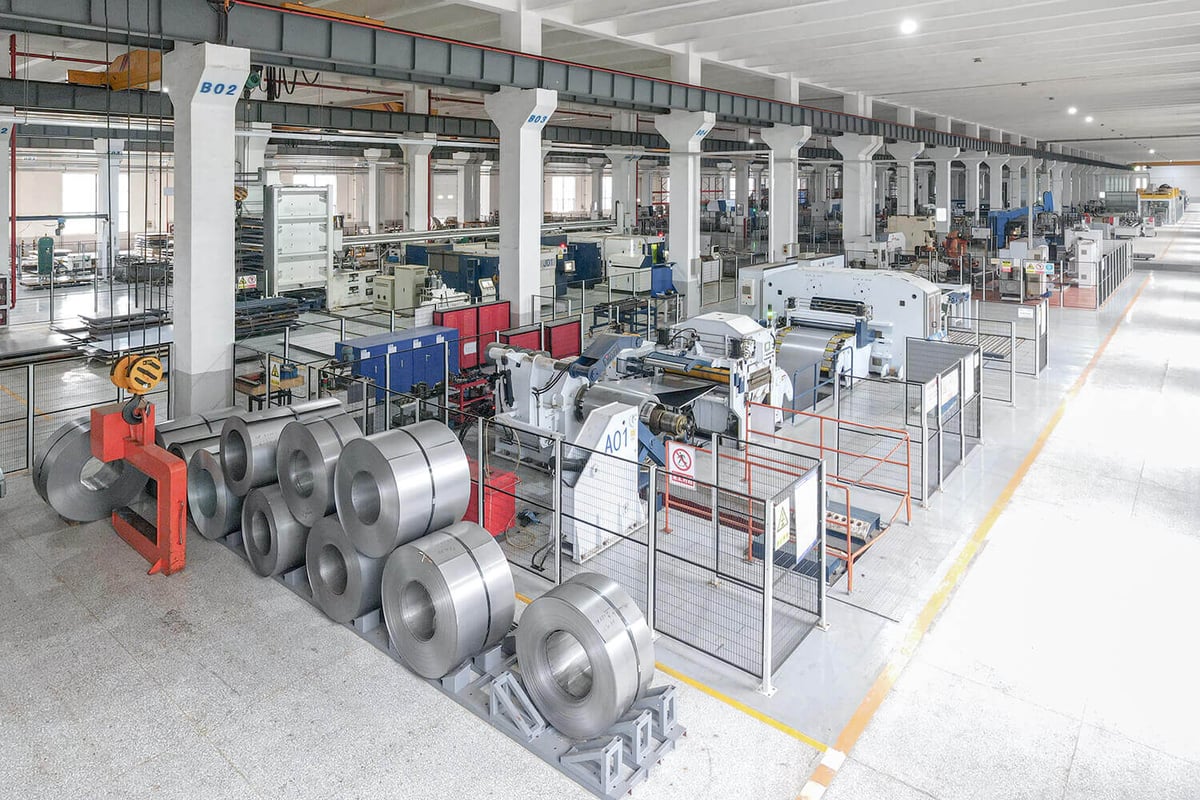
Built in Our Own Smart Factory
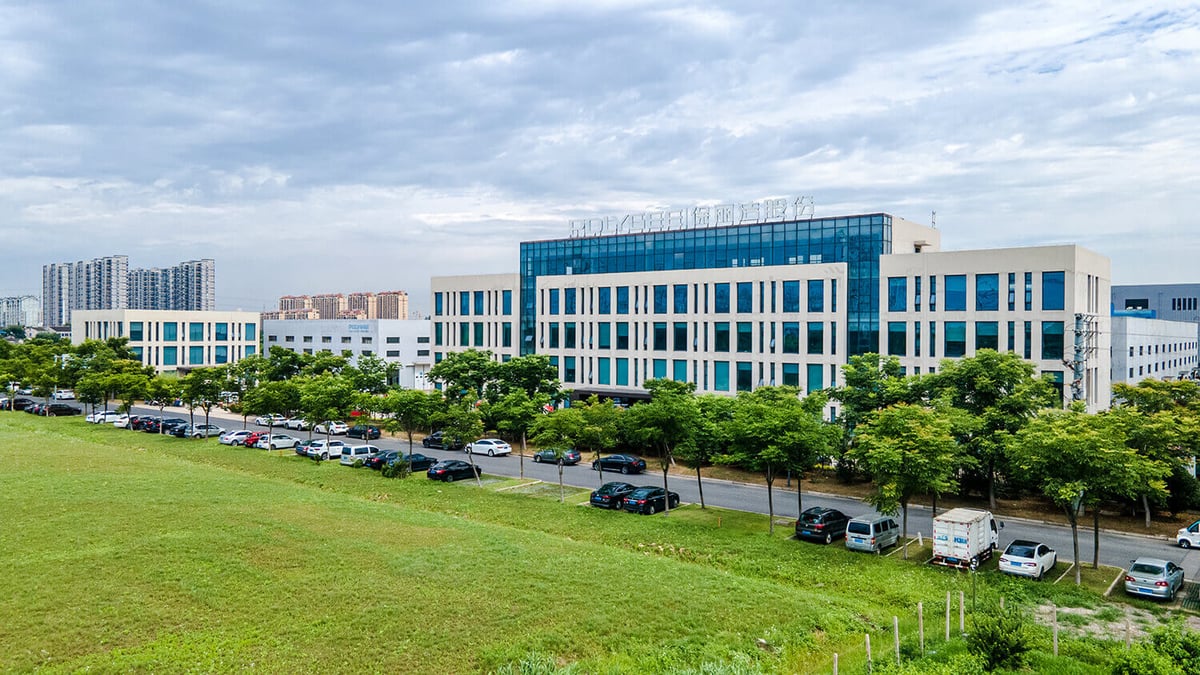
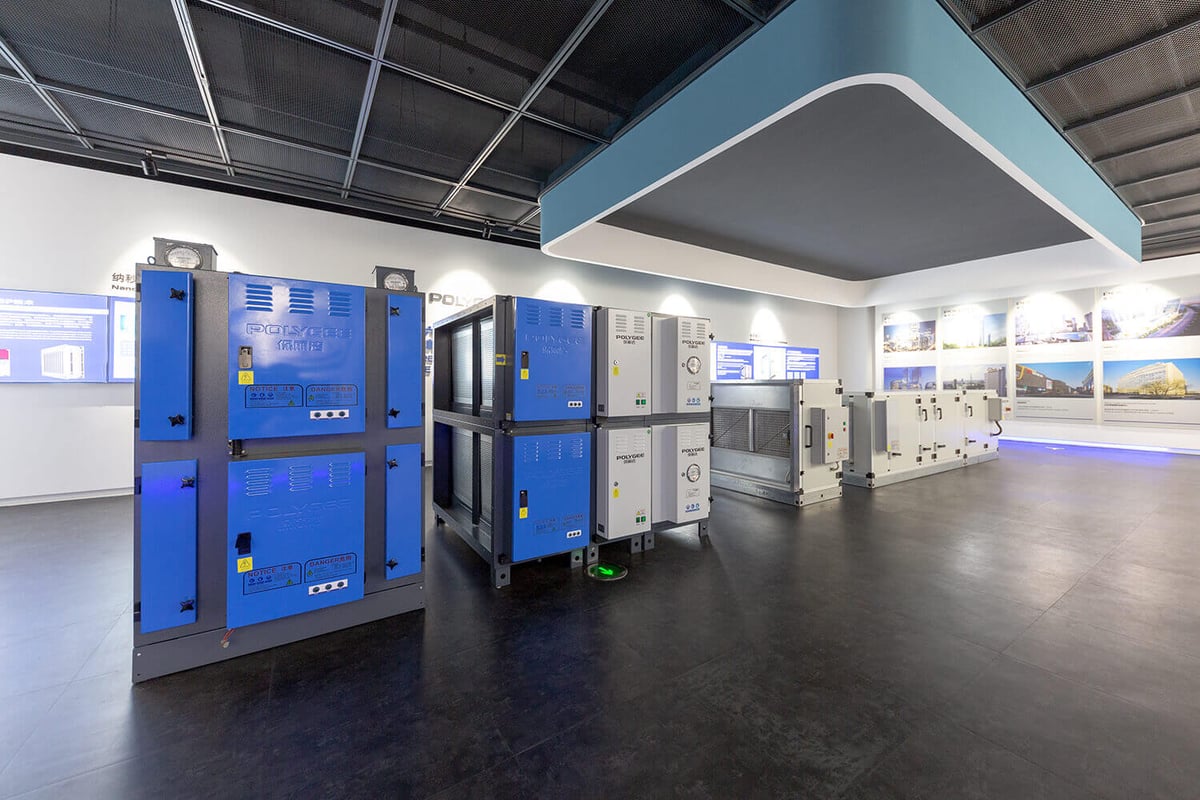
Every Polygee ESP is manufactured in-house at our 110,000 m² intelligent production facility — delivering consistent quality for large-scale mall projects worldwide.
Trusted by Iconic Properties Worldwide
Polygee ESP systems are installed in major shopping destinations, campus dining facilities, and mixed-use developments worldwide — including an activated carbon odor-control project at Hankyu shopping mall: 300+ units, approx. 5,000,000 m³/h combined airflow. Local project support runs through our global kitchen ESP distributor network.
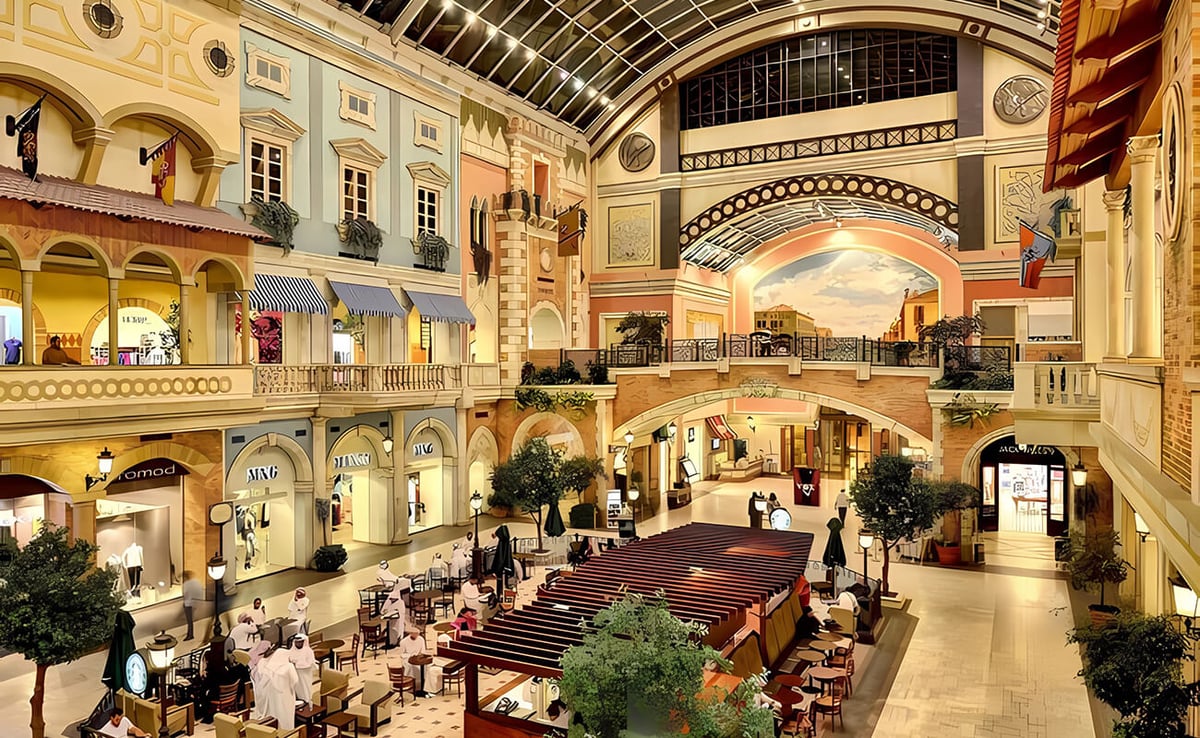
Dubai Mall
Food court ventilation upgrade covering 1,200+ dining seats across multiple food court zones. Delivered visibly clean discharge at all rooftop points.
UAE · Shopping Mall 2017 · ODM units · 40 units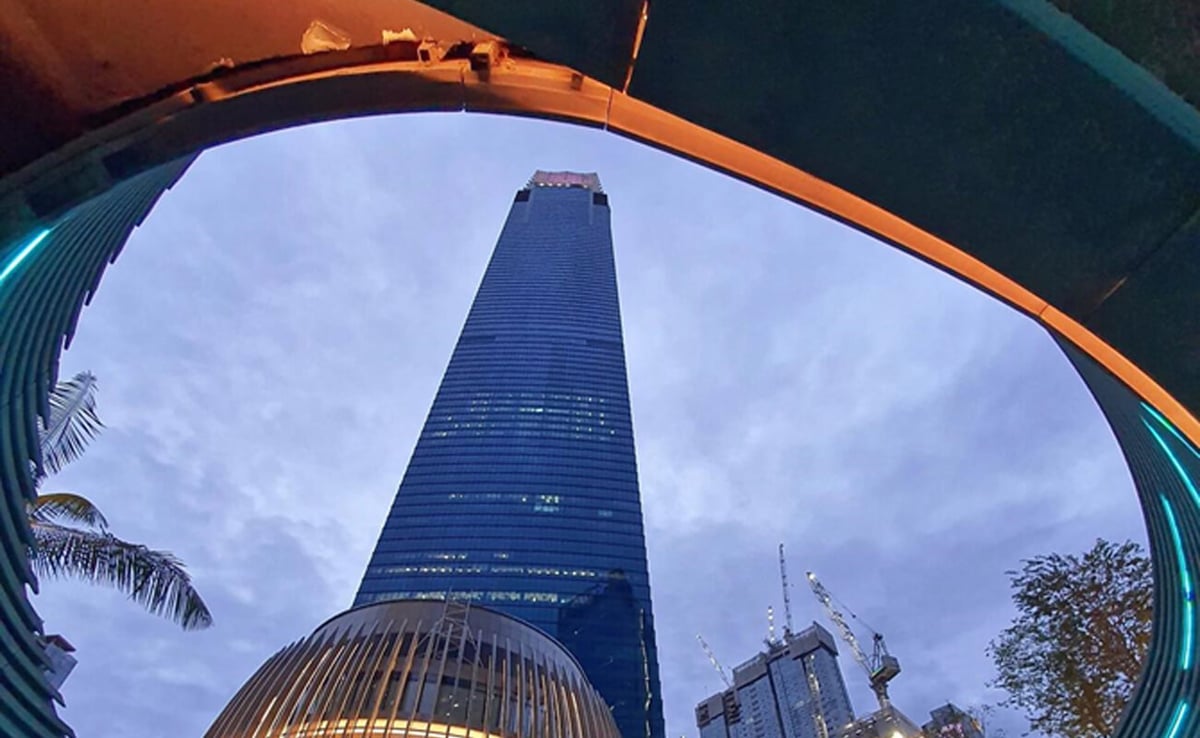
TRX Exchange
Multi-tenant F&B exhaust solution for KL’s new financial district mixed-use development, serving a diverse food court with 30+ cooking concepts.
Malaysia · Mixed-Use 2022 · LK-E + UV series · 300 units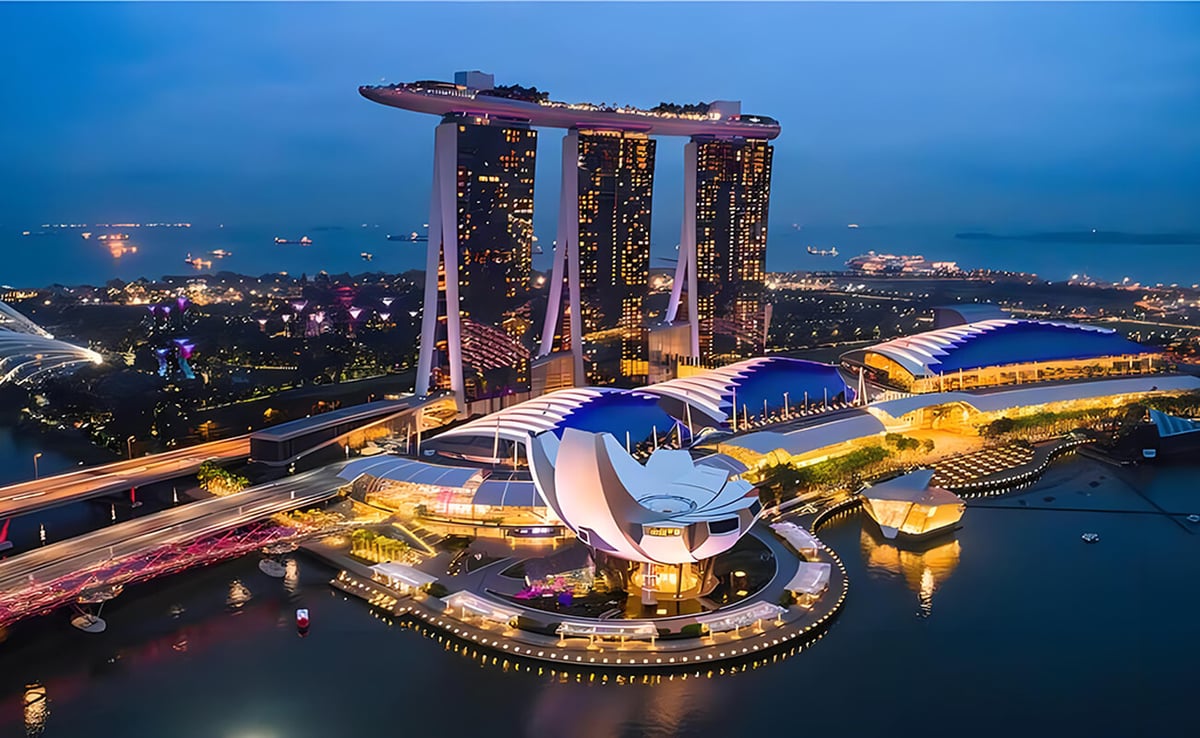
Marina Bay Sands
F&B zone exhaust purification across all casino and hotel food court outlets. Managing diverse cuisine types and high visitor volume simultaneously.
Singapore · Integrated Resort 2012 · ODM units · 500 units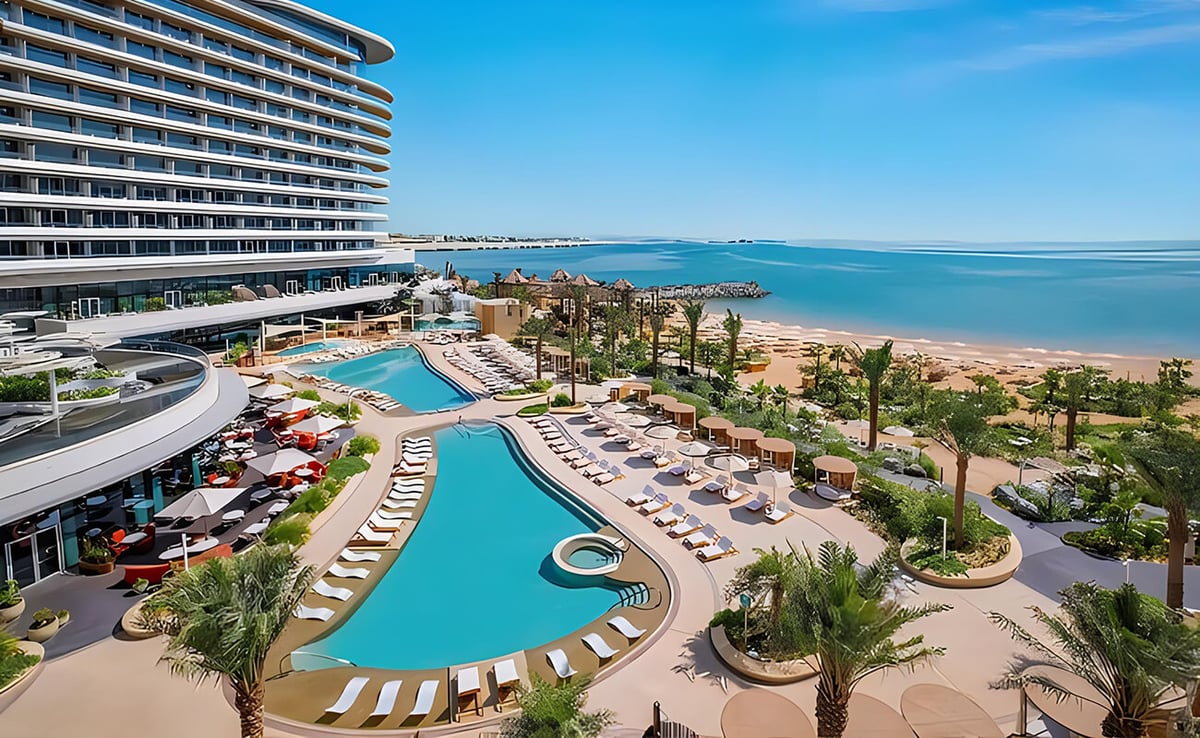
Waldorf Astoria Doha
Multi-outlet F&B kitchen ESP system. No guest emission complaints reported since installation — meeting the brand’s stringent environmental standards.
Qatar · Luxury Hotel 2016 · LK-E series · 30 units
University of Sydney
Campus dining facility with multiple food concepts under one roof. Centralized ESP manages high volume across all stations with a rolling maintenance schedule.
Australia · Education 2013 · RY series · units on requestCommercial Terms
Standard commercial terms for food court ESP projects — from a single duct riser retrofit to a full mall programme.
| Term | Details |
|---|---|
| Payment | 30% (or 50%) deposit, balance before shipment — T/T and L/C accepted |
| Incoterms | Incoterms arranged to suit the buyer (EXW / FOB / CIF) |
| Warranty | 1-year warranty on the complete unit, covering the ESP cell and SPP power supply. UV lamps and activated carbon media are consumables and not covered; on-site labor is not included (paid on-site service available) |
| MOQ | 1 unit · Project and volume pricing quoted per project. |
| Lead Time | 7–15 days |
| Spare Parts | Common spare parts kept in stock; supply continues for 1 year after a model is discontinued |
| Engineering Support | System design proposals, CAD drawings and full specification sheets — request with your project’s airflow details. |
Get Your Free Food Court Assessment
Share your food court layout, stall count, combined exhaust volume, tenant mix, and duct drawings — our engineering team will design a complete centralized ESP solution with zone-by-zone specifications and full quotation within 48 hours on business days.