

BBQ Smoke Control
ESP & Grease Extraction System
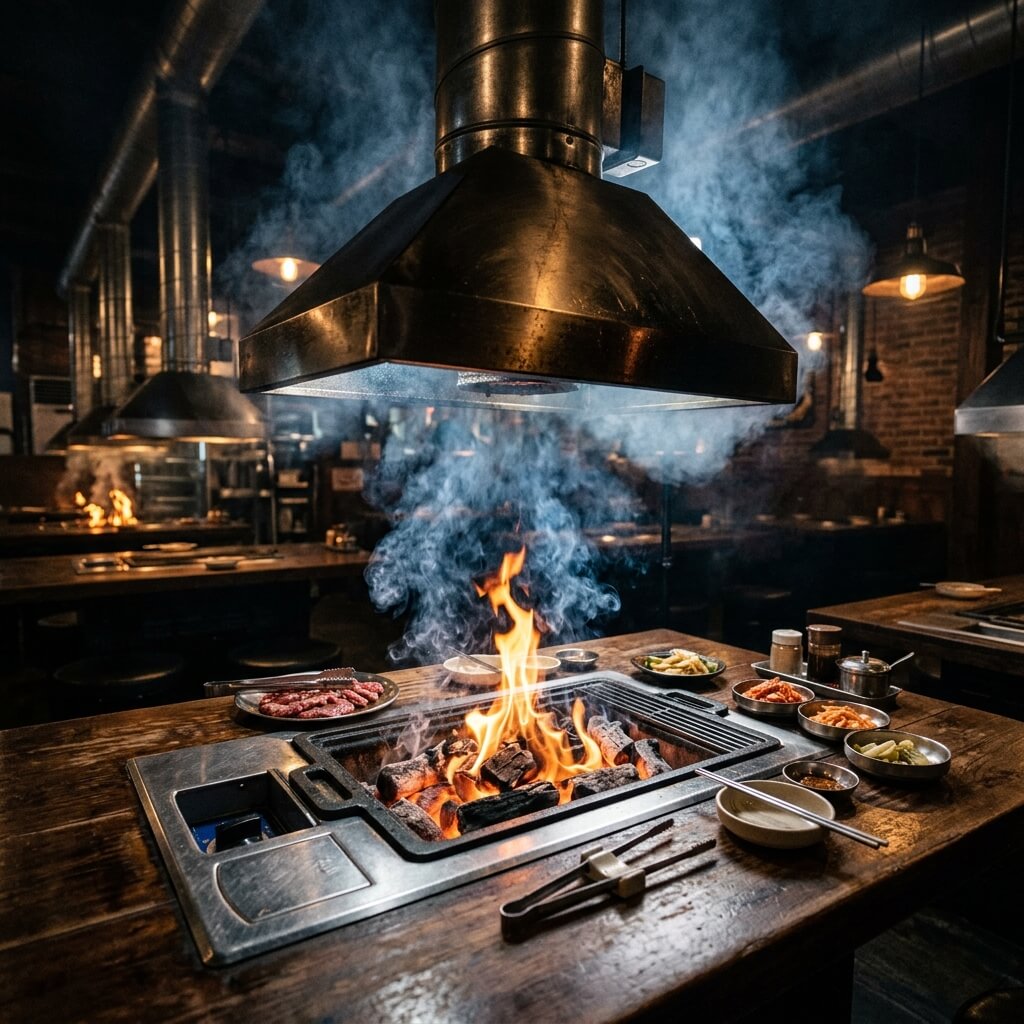
BBQ smoke control ESP is essential for charcoal grills, Korean BBQ tabletops, and open-flame rotisseries that produce among the heaviest and most visible smoke loads in foodservice. Our triple purification system — ESP + activated carbon + UV-C — removes up to 97.6% of grease, clears visible smoke plumes, and sharply reduces cooking odors before they reach your neighbors.
Why BBQ Restaurants Need ESP
BBQ and open-flame grilling produce exhaust conditions that standard kitchen ventilation cannot handle — and traditional grease filters make dramatically worse.
Ultra-Dense Grease & Smoke Load
A Korean BBQ restaurant with 20 tabletop charcoal grills produces several times the grease loading of a standard restaurant kitchen. Traditional mesh filters saturate within hours of service, rapidly losing capture efficiency and pushing unfiltered smoke directly into ductwork. Polygee ESP handles the full load at up to 97.6% efficiency — regardless of cooking intensity.
Charcoal & Wood Smoke Odors
The distinctive BBQ smell — creosote, polycyclic aromatics, and burnt fat compounds — consists of gaseous molecules that pass straight through particle-based filtration. Standard ESP alone only removes particulate matter. Deep odor control requires activated carbon adsorption and UV-C photolysis downstream of the ESP — our complete triple purification system.
Fire Risk from Rapid Grease Buildup
BBQ restaurants accumulate flammable creosote and grease deposits in exhaust ducts far faster than standard restaurant kitchens. Without ESP, duct cleaning is required every 2–4 weeks at significant cost — and grease fires remain an ongoing risk between cleanings. ESP removes up to 97.6% of grease before it enters the ductwork, dramatically reducing both cleaning frequency and fire risk.
Neighbor & Community Complaints
BBQ cooking odors are among the most frequently complained-about food service smells in urban areas. A visible smoke column from a BBQ restaurant — especially in a mixed-use building — generates council complaints, environmental fines in many jurisdictions, forced operational restrictions, and lease termination threats from landlords. This is a major operational risk for BBQ restaurant owners.
Principle of Electrostatic Purification
Polygee ESP uses a multi-stage purification process — from pre-filtration to UV sterilization — delivering up to 97.6% grease removal for BBQ kitchens. Third-party tested: 97.6% on LK160 and 97.0% on LK40 (Beijing Zhongyan Huanneng, CMA — reports ZY05W230298 / ZY05W230296); 96.0% at rated airflow on LK120 (SQEP, CMA — report 2024I20-35-5322488001).
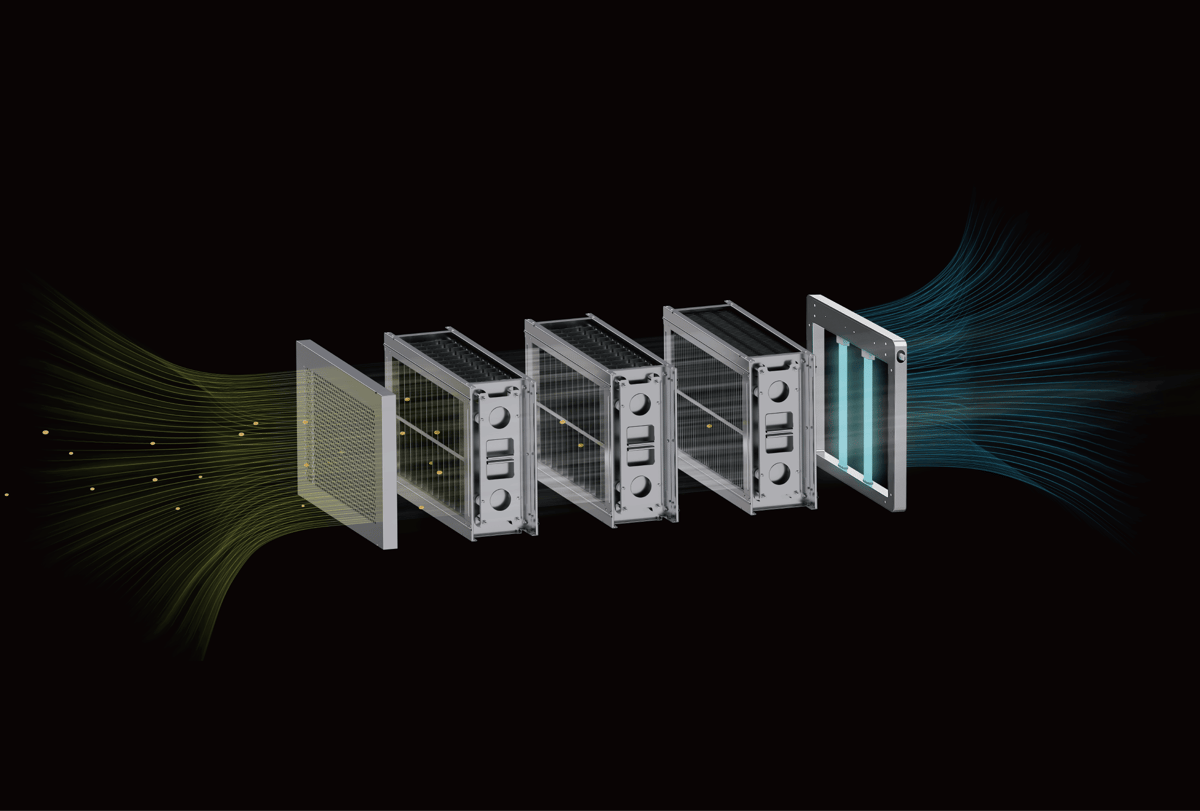
Airflow Distribution
Washable mesh pre-filter traps large particles and evenly distributes airflow.
→Primary Ionization
High-voltage ionization charges grease and smoke particles.
→Plate Collection
Dual-zone plate-type collector captures charged particles.
→Secondary Collection
Additional collector stage for the top-tier configuration.
→UV Sterilization
UV-C module decomposes VOCs and reduces odors.
Complete BBQ Kitchen Purification System
A 5-stage system from grill to clean rooftop discharge — designed specifically for BBQ and heavy smoke kitchen environments.
ESP for Every Grilling Format
Different BBQ formats produce different smoke profiles and require different ESP configurations. We design for the specific demands of each format.
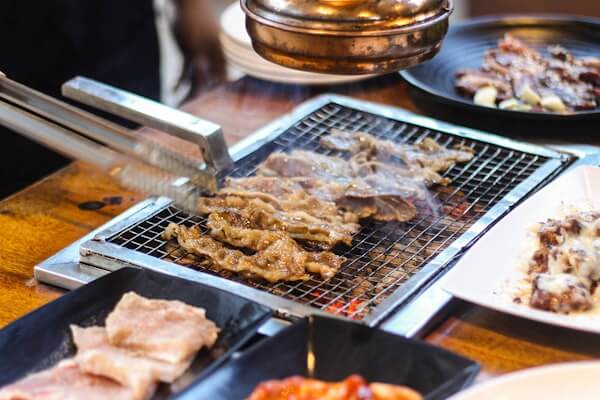
Korean BBQ (Tabletop Grill)
One of the highest-intensity BBQ formats — each table is a heat and smoke source. Individual tabletop extraction hoods for every table, all feeding into a central ESP system. Continuous smoke production requires heavy-duty ESP with enhanced ionizer capacity.
Ultra-Heavy · Per-Table Hoods · 6,000–15,000 m³/h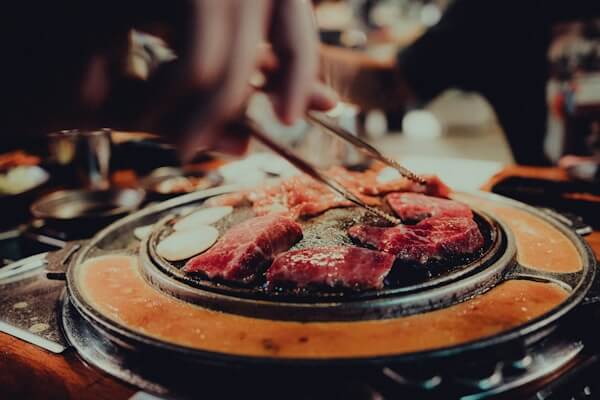
Japanese Yakiniku
Similar to Korean BBQ but often with higher-quality meat and lower smoke intensity. Gas or charcoal tabletop grills with elegant tabletop hoods. Quiet, low-profile ESP systems maintain the premium dining atmosphere while clearing the smoke.
Heavy · Premium Dining · 4,000–10,000 m³/h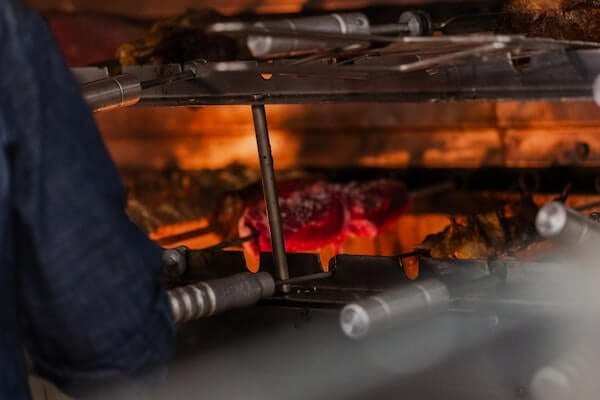
Brazilian Churrascaria
Large rotisserie spits and charcoal churrasqueiras produce intense smoke during active cooking. Central kitchen-style exhaust with heavy-duty ESP handles the rotisserie load. Full triple purification tames the distinctive wood-charcoal smoke odor.
Heavy · Rotisserie · 5,000–12,000 m³/h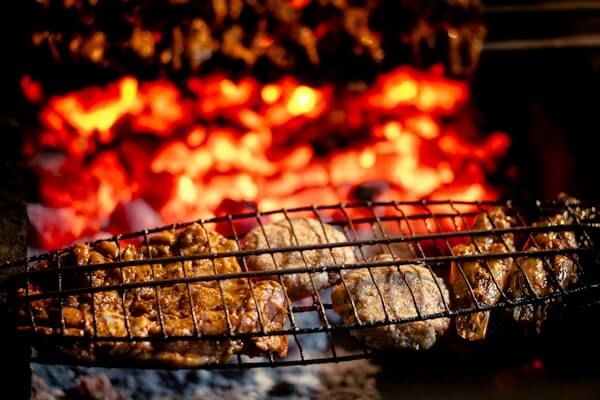
Charcoal Grill & Steakhouse
Commercial charcoal broilers and Josper-style ovens produce intense smoke bursts during service. ESP captures the grease-laden smoke before it enters ductwork. Carbon module handles the distinctive charcoal and seared meat aroma.
Heavy · Broiler · 4,000–8,000 m³/h
Middle Eastern & Halal Grill
Mashawi, shawarma, and open-flame kebab grills are a fixture in Middle Eastern and South Asian restaurants. Charcoal and gas grilling with fatty meats produces dense smoke. Our ESP systems are in active use across the GCC, serving this exact format.
Heavy · GCC & South Asia · 3,000–8,000 m³/h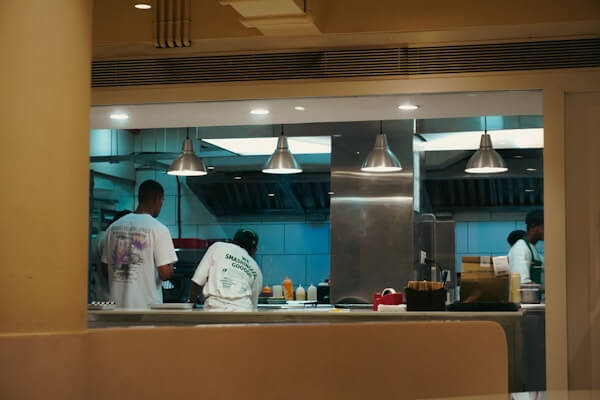
BBQ Chain & Multi-Outlet
Chains expanding BBQ restaurant concepts across multiple cities need standardized triple purification specs. One equipment standard covers all locations, simplifying procurement and supporting compliance in every market — from urban high-streets to shopping mall food courts. Multi-site rollouts are supported through our ESP distributor and project partner network.
Chain · Standardized Spec · Multi-LocationESP vs. Traditional Grease Filters
The performance gap between ESP and traditional filters is especially wide in BBQ restaurants.
| Feature | Traditional Mesh/Baffle Filter | Polygee ESP + Triple Purification |
|---|---|---|
| Grease Capture Efficiency | Limited (saturates quickly) | up to 97.6% ✓ |
| Visible Smoke Plume | ✗ Heavy — especially charcoal | ✓ Visibly clean discharge |
| BBQ Odor Control | ✗ None | ✓ ESP + Carbon + UV-C: low residual odor |
| Filter Saturation | ✗ Saturates within hours at BBQ load | ✓ Consistent up to 97.6% at any load |
| Duct Cleaning Frequency | Every 2–4 weeks (BBQ load) | ✓ Quarterly or less |
| Fire Risk in Ducts | ✗ High — creosote deposits rapidly | ✓ up to 97.6% removed before entering duct |
| Neighbor Complaint Risk | ✗ Very high (visible smoke + odor) | ✓ Substantially reduced |
| Annual Maintenance Cost | High — frequent filter replacement + duct cleaning | ✓ Low — washable ESP cells + scheduled carbon |
| Regulatory Compliance | ✗ Often fails emission standards | ✓ Exported to 50 countries; documentation on request |
| Operational Continuity | Frequent filter changes disrupt kitchen flow | ✓ Maintenance during off-hours, no disruption |
Ready to upgrade to a BBQ smoke control ESP with triple purification and up to 97.6% grease capture?
Get Your Free BBQ Assessment →Choose the Right BBQ Smoke Control ESP
We offer two configurations for BBQ environments — core ESP for lighter BBQ loads, and full triple purification for heavy smoke and strict odor control requirements.
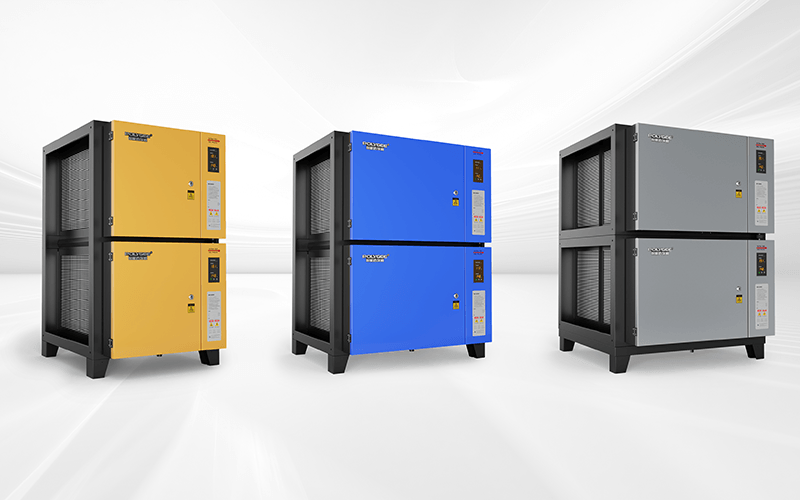
In-Duct ESP (Heavy BBQ Config)
Our heavy-duty ESP configuration with enhanced ionizer wire spacing and higher collector cell density — specifically optimized for BBQ and charcoal smoke. Captures up to 97.6% of the ultra-fine sub-micron particles that charcoal smoke produces. The foundation of the triple purification system.
In-duct kitchen electrostatic precipitator specifications →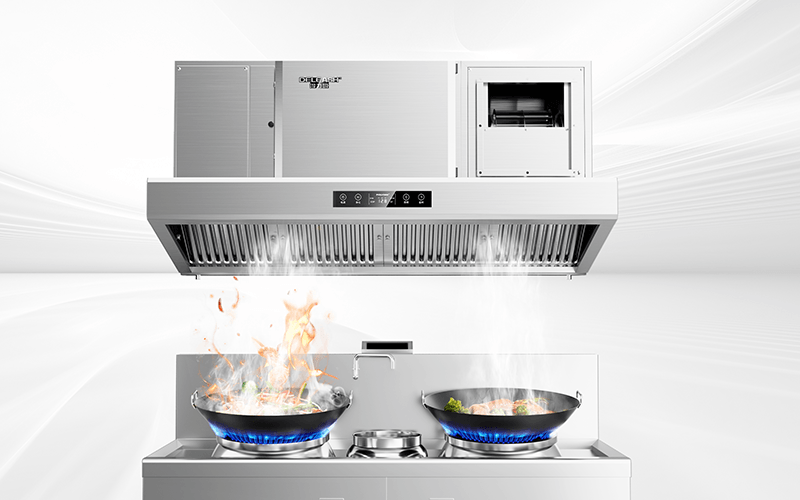
Integrated Hood ESP (Tabletop)
All-in-one hood with built-in ESP for Korean BBQ and yakiniku tabletop formats. Captures smoke at source — directly above each individual grill — before it can spread into the dining room. Built-in LED task lighting. Custom dimensions for any table size.
Kitchen ESP hood specifications →LK-K series (top tier) quick reference for common BBQ exhaust airflow ranges:
| Model | Airflow (m³/h) | Power (W) | Power Supply | Pressure Drop |
|---|---|---|---|---|
| LK4K | 4,000 | 280 | 220V or 380V, 50/60 Hz | ≤150 Pa incl. distribution plate |
| LK6K | 6,000 | 432 | 220V or 380V, 50/60 Hz | ≤150 Pa incl. distribution plate |
| LK8K | 8,000 | 560 | 220V or 380V, 50/60 Hz | ≤150 Pa incl. distribution plate |
| LK10K | 10,000 | 720 | 220V or 380V, 50/60 Hz | ≤150 Pa incl. distribution plate |
| LK12K | 12,000 | 864 | 220V or 380V, 50/60 Hz | ≤150 Pa incl. distribution plate |
| LK15K | 15,000 | 1,080 | 220V or 380V, 50/60 Hz | ≤150 Pa incl. distribution plate |
| See all 41 kitchen electrostatic precipitator models (LK-K / LK-D / LK-A) → | ||||
From Assessment to Clean BBQ Restaurant Exhaust in 4 Steps
Our BBQ exhaust design process accounts for the unique capture challenges of open-flame and tabletop grilling environments.
Smoke Load Assessment
Evaluate your grilling format, grill count, cooking intensity, and duct layout. Our engineers calculate the smoke volume and recommend the appropriate ESP configuration and triple purification components within 24 hours on business days.
Custom Configuration
Heavy BBQ loads require specific ESP cell configurations, carbon media selection, and UV-C lamp sizing. All components are configured and tested at our factory before delivery — so the complete system arrives ready to install.
1–2 Day Installation
ESP, carbon, and UV-C units are installed in your existing ductwork in sequence. Electrical commissioning and system performance verification — including a smoke test — are completed before handover. Your BBQ restaurant stays open throughout.
Maintenance Programme
We provide a scheduled maintenance programme: ESP cell cleaning every 5–7 days (with spare cell kit), carbon media replacement typically every 3–6 months depending on load, UV-C lamp replacement per the maintenance schedule. Staff training included at handover.
Why Polygee for BBQ Smoke Control
Built for Heavy Smoke
Our heavy-duty ESP configuration handles the ultra-dense grease and sub-micron particles that charcoal smoke produces — loads that overwhelm standard restaurant ESP units.
Deep Odor Control
ESP + activated carbon + UV-C addresses all three layers of BBQ exhaust contamination: visible particles, gaseous odors, and residual VOCs. Low residual odor at discharge.
Globally Certified
CE certified models (FQC2602501), UL Listed models (File E522667), RoHS, CQC, CCEP, ISO 9001/14001/45001. Compliance documentation available for 50 countries. 1-year warranty • MOQ 1 unit • 7–15 day lead time. Documentation ready for council submissions and environmental authority sign-off on neighbor complaint resolutions. View our ESP certifications →
24h Engineering Support (Mon–Fri)
Share your BBQ kitchen layout, grill count, and cooking type — our engineering team provides a complete system design and equipment recommendation within 24 hours on business days. Specialized in Korean BBQ, charcoal grill, and open-flame exhaust configurations.
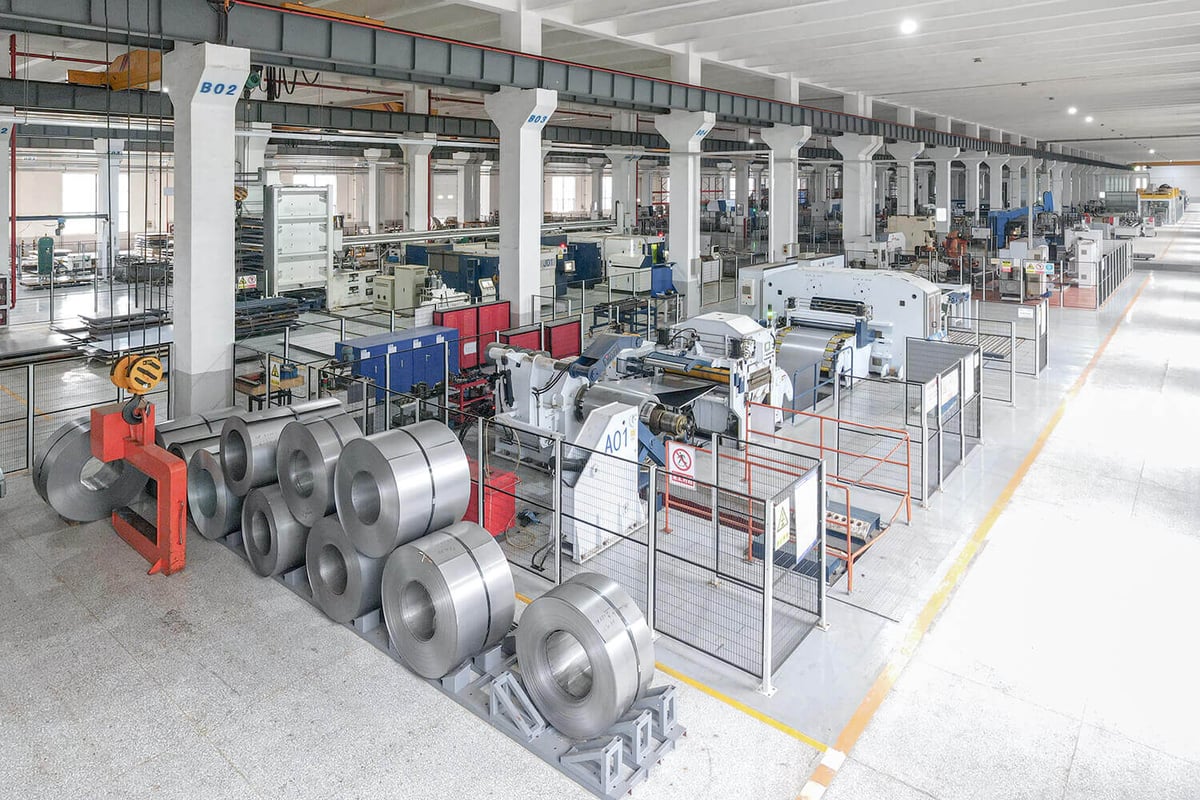
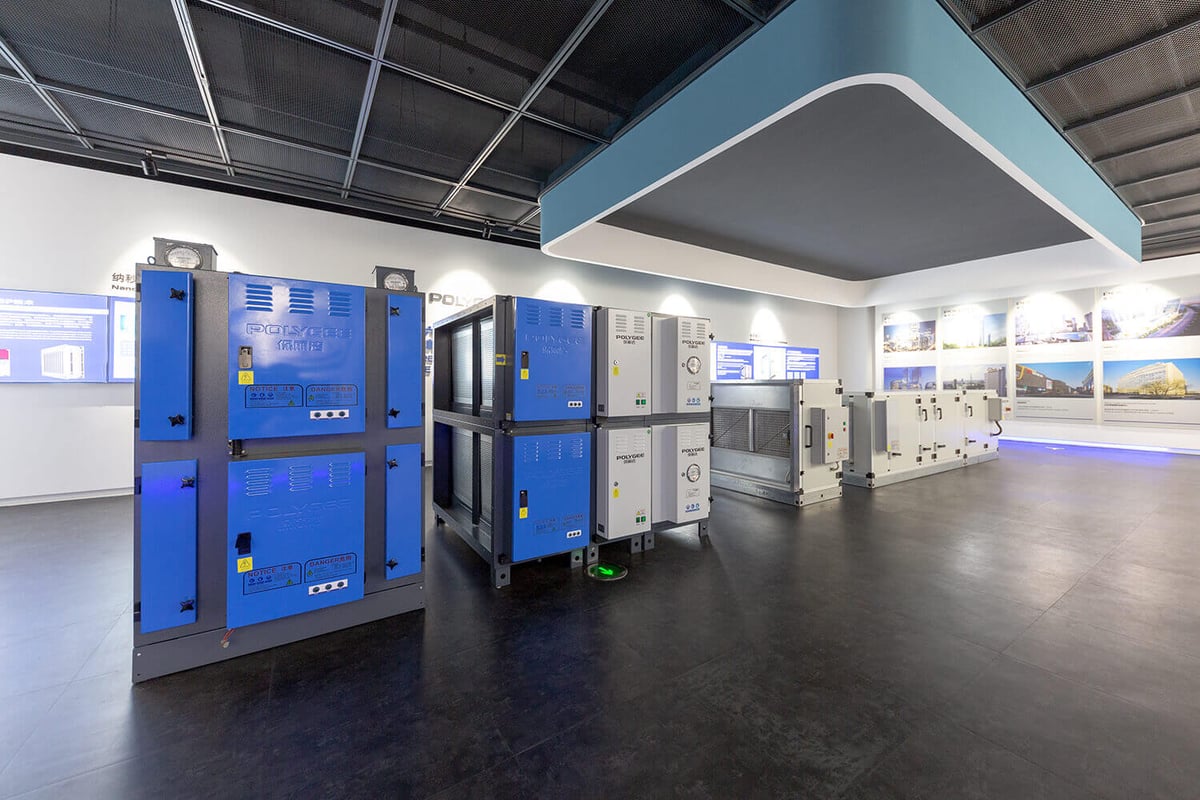
BBQ Smoke Control ESP Systems Built in Our Own Smart Factory
Every Polygee ESP is manufactured in-house at our 110,000 m² production facility — with the quality control that heavy BBQ environments demand.

Trusted by Iconic Properties Worldwide
Polygee ESP systems are trusted by some of the world’s most demanding foodservice environments — many of which include BBQ and heavy smoke cooking operations. BBQ chains including Tanyu (探鱼) also run Polygee ESP across their outlets.

Marina Bay Sands
Complex multi-cuisine kitchen ESP across Singapore’s iconic resort, including heavy smoke grilling outlets — meeting Singapore’s strict NEA emission standards.
Singapore · Heavy Load 2012 · ODM units · 500 units
Waldorf Astoria Doha
Five-star hotel kitchens including specialty grilling outlets in Qatar. ESP system maintains a visibly clean, low-odor discharge in a luxury environment.
Qatar · GCC 2016 · LK-E series · 30 units
Dubai Mall
Food court exhaust handling diverse cuisine including BBQ and grill concepts. Visibly clean rooftop discharge maintained across all cooking zones simultaneously.
UAE · Mixed Cooking 2017 · ODM units · 40 units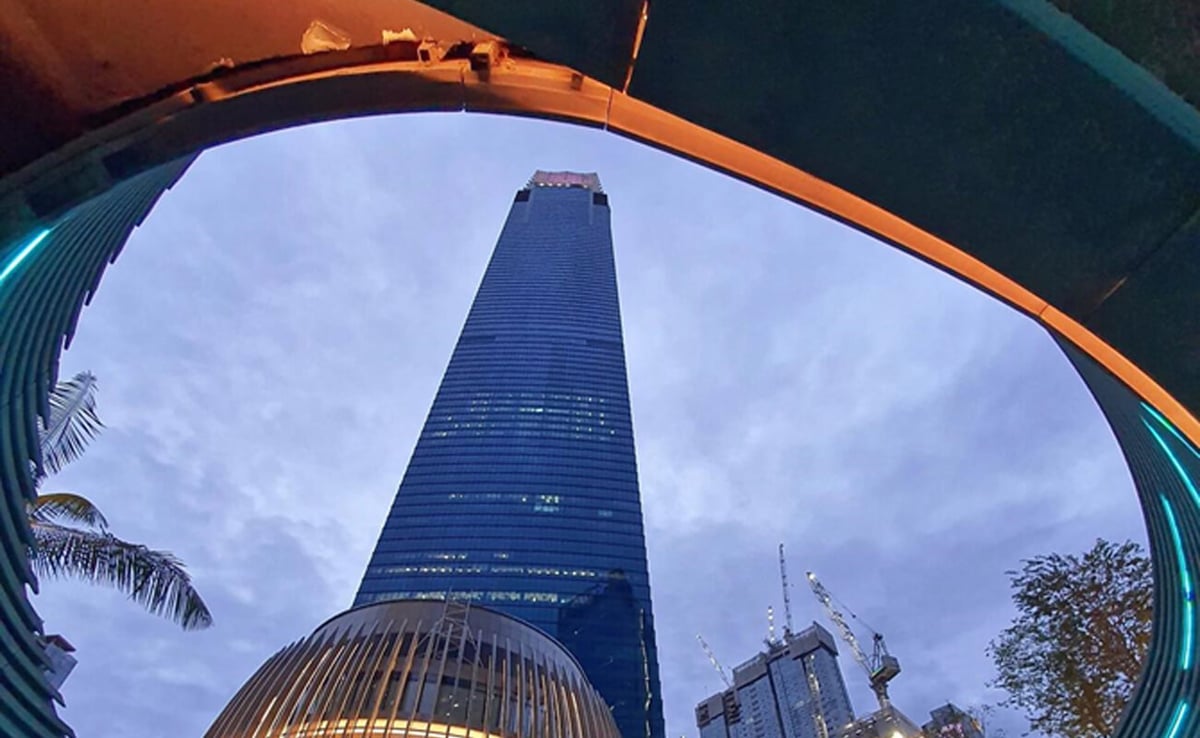
TRX Exchange
Multi-tenant F&B including Asian grill concepts in KL’s financial district. Complex multi-cuisine exhaust management with clean-discharge compliance.
Malaysia · Multi-Tenant 2022 · LK-E + UV series · 300 units
University of Sydney
Campus dining with mixed cuisines including grill stations. ESP resolved cooking odor complaints from adjacent academic buildings, meeting Australian environmental codes.
Australia · Education 2013 · RY series · units on requestCommercial Terms
Key terms for ordering a Polygee BBQ smoke control ESP system — from payment to spare parts support.
| Term | Details |
|---|---|
| Payment | 30% deposit (or 50%), balance before shipment — T/T and L/C accepted |
| Incoterms | Incoterms arranged to suit the buyer (EXW / FOB / CIF) |
| Warranty | 1-year warranty on the complete unit, covering ESP field cells and SPP power supplies. UV-C lamps and activated carbon media are consumables and not covered. On-site labor is not included — paid on-site service is available. |
| MOQ | 1 unit · Project and volume pricing quoted per project. |
| Lead Time | 7–15 days |
| Spare Parts | Common spare parts kept in stock; supply continues for 1 year after a model is discontinued |
| Engineering Support | System design proposals, CAD drawings and full specification sheets — request with your project’s airflow details. |
Get Your Free BBQ Kitchen Assessment
Share your BBQ format, grill count, cooking type, and layout — our engineers will design a complete triple purification solution that clears visible smoke, addresses odor complaints, and supports compliance with your local emission code.
Frequently Asked Questions About BBQ Smoke Control
More on ESP sizing, cleaning intervals, lead times and warranty in our commercial kitchen ESP FAQ.