
Commercial Kitchen Electrostatic Precipitator Systems
From modular in-duct electrostatic precipitators to integrated ESP exhaust hoods and odor control modules — Polygee manufactures a complete product line for commercial kitchen exhaust filtration. BSE-listed (920802) with 225 patents granted, CE on the LK / LK-E / UV series and UL 867 Listed LK / SE 6K, 12K, 18K models — exporting to 50 countries.
Kitchen Exhaust Purification Equipment — Engineered & Manufactured In-House
Whether you need a retrofit in-duct electrostatic precipitator, a brand-new all-in-one ESP hood, or odor control accessories — every product is designed, tested, and manufactured in our own 110,000㎡ smart factory. The brochure lineup runs to 61 models — 12 HME ESP hoods, 11 each of LK-E0, LK-E1 and LK-E2 engineering ESP, 8 UV-C modules and 8 activated carbon modules — set out in the full model lineup table below.
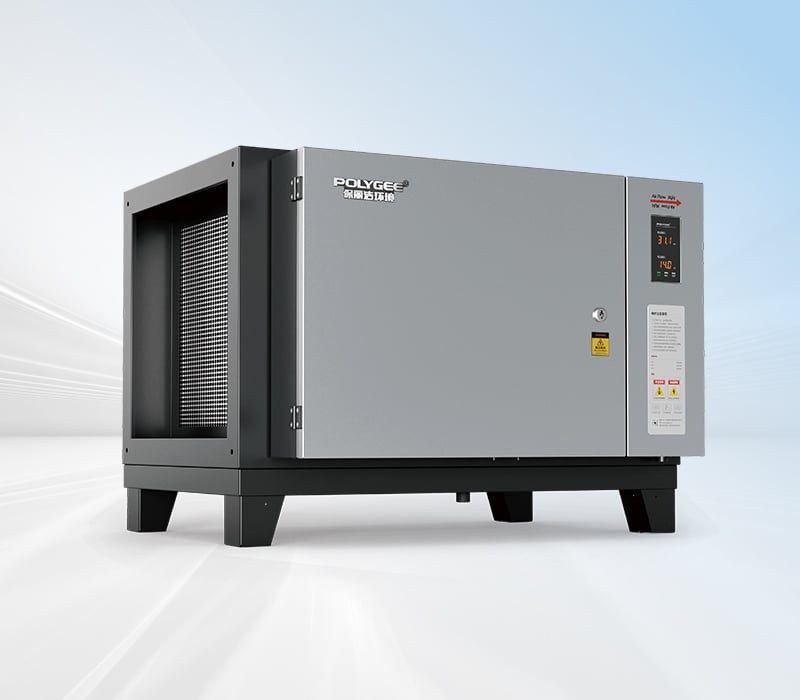
Kitchen ESP LK-K Series (Top Tier)
Premium 5-stage in-duct ESP — dual collector plates + UV photolysis module. LK range third-party tested up to 97.6% grease removal at rated airflow. Ideal for high-end hotels, large food courts, and projects requiring strict emission compliance. from 2,000 m³/h per unit — top capacity sized to your project, parallel-scalable.
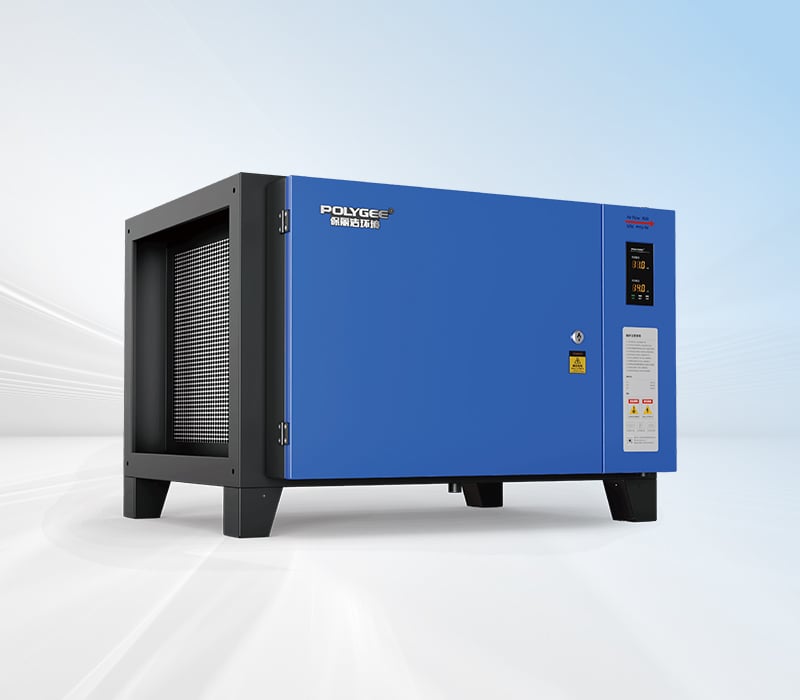
Kitchen ESP LK-D Series (High Tier)
High-efficiency 4-stage in-duct ESP. Plate-type electric field technology ideal for medium to large commercial kitchens. Balances excellent purification performance with competitive pricing. Modular, retrofit-ready design installs directly into existing ductwork.
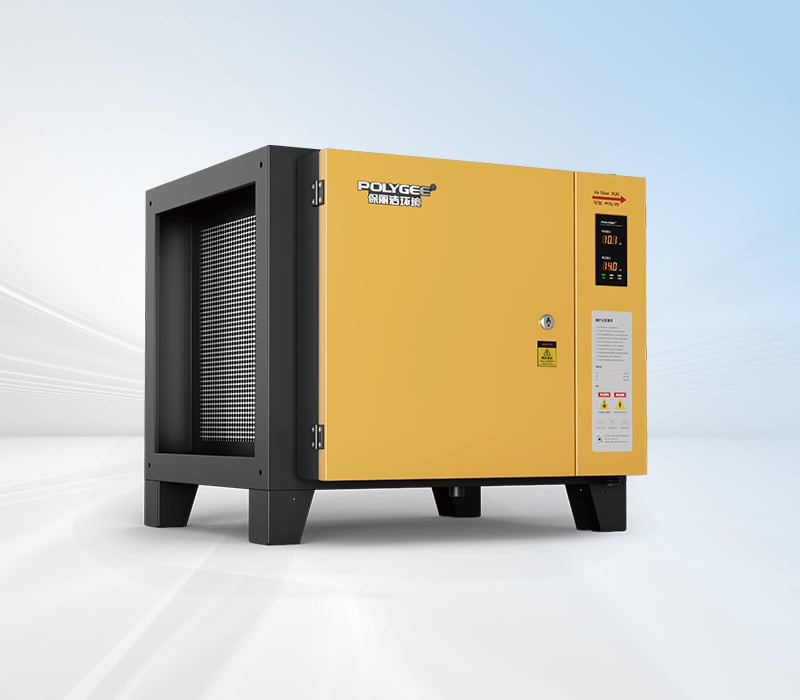
Kitchen ESP LK-A Series (Standard Tier)
Cost-effective 4-stage in-duct ESP. Reliable plate-type design for standard commercial kitchen exhaust. A popular choice for budget-conscious projects that still require professional-grade purification. Easy maintenance with washable electrostatic cells.
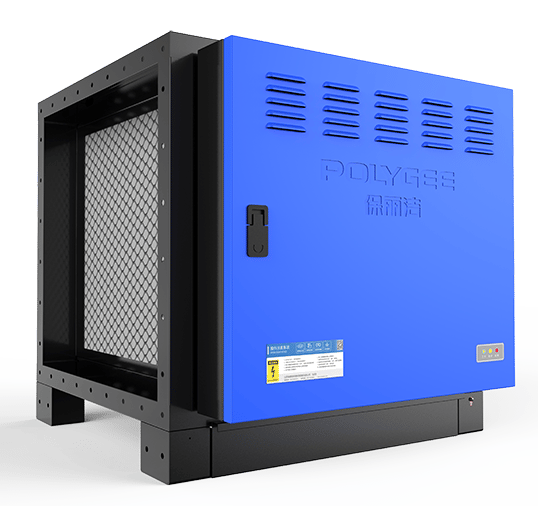
LK-E2 Series Engineering ESP (≥98% design)
High-capture engineering-grade in-duct ESP, E2 tier (≥98% design efficiency). Higher collection capacity and rated power for dense smoke and stricter emission projects. 3,000–24,000 m³/h, with an optional ESP + UV + CB odor-control upgrade.
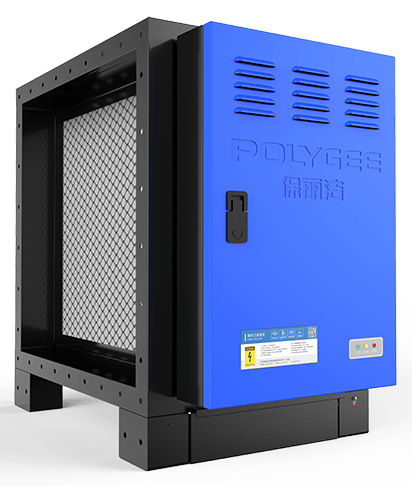
LK-E1 Series Engineering ESP (≥95% design)
Balanced engineering-grade in-duct ESP, E1 tier (≥95% design efficiency), the lowest ESP-field resistance in the LK-E range at 23 Pa. 3,000–24,000 m³/h — a strong value choice for daily heavy-use commercial kitchens.
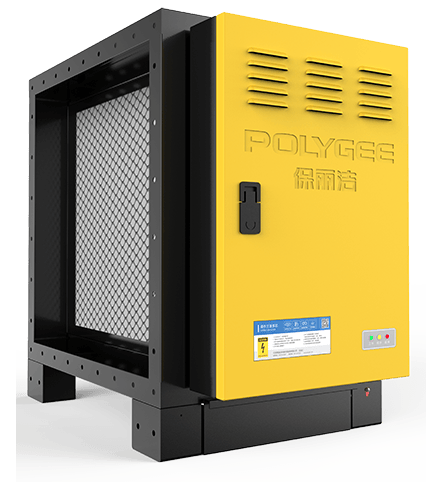
LK-E0 Series Engineering ESP (≥90% design)
Cost-effective engineering-grade in-duct ESP, E0 tier (≥90% design efficiency) with the widest airflow range in the LK-E family. 4,000–40,000 m³/h (LK40E0–LK400E0) for standard commercial kitchen exhaust.
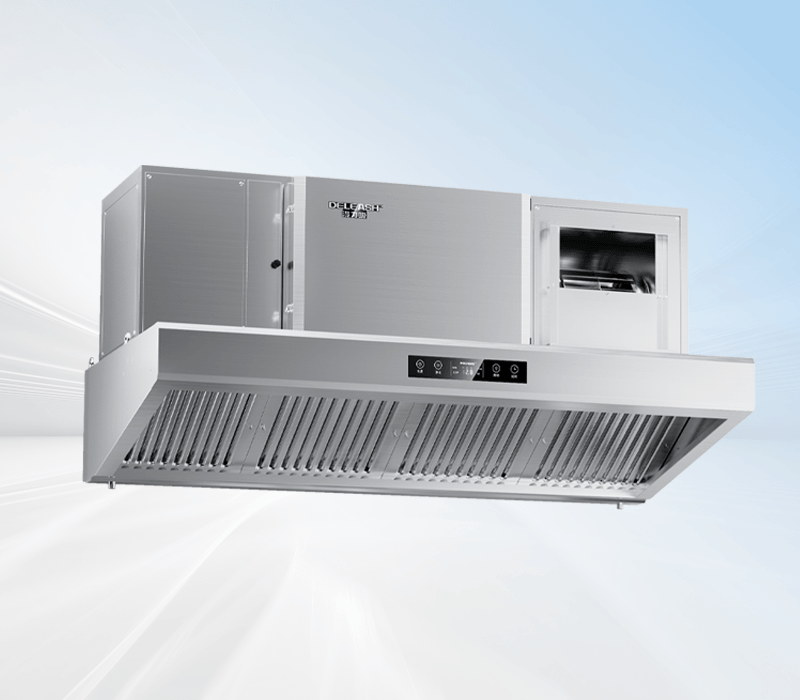
Integrated Kitchen ESP Hood
A complete commercial kitchen exhaust hood with built-in electrostatic precipitator, LED task lighting, and an oil drainage system. Clean air exits the hood directly — no external purifier or ductwork modifications needed. Stainless steel construction with custom dimensions available. A clean, efficient design for new kitchen builds.
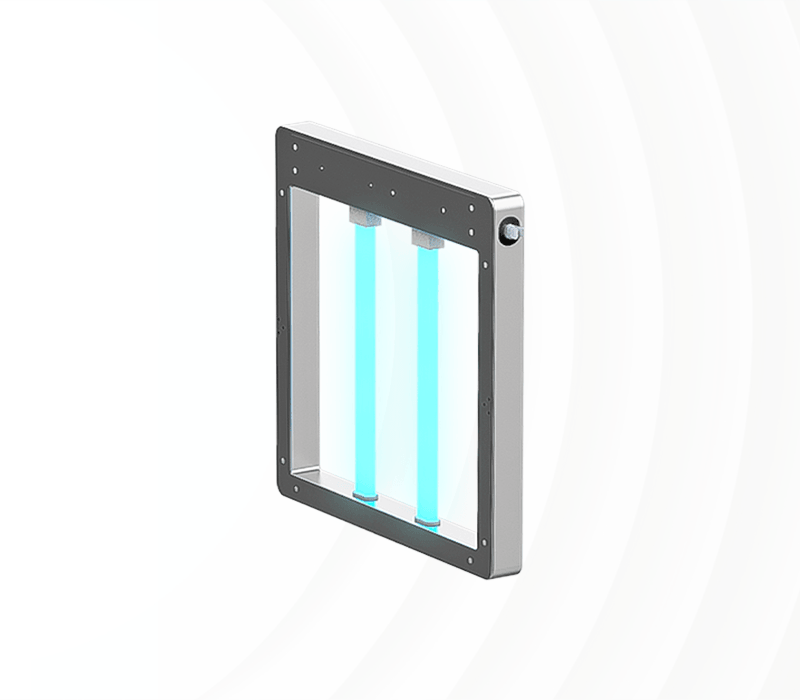
UV-C Photolysis Odor Control Module
High-intensity UV-C photolysis module for decomposing gaseous cooking odors and VOCs (volatile organic compounds). Installs downstream of the electrostatic precipitator to provide complete kitchen exhaust treatment — treating both visible smoke and odor molecules. Essential for restaurants in residential areas or dense urban environments.
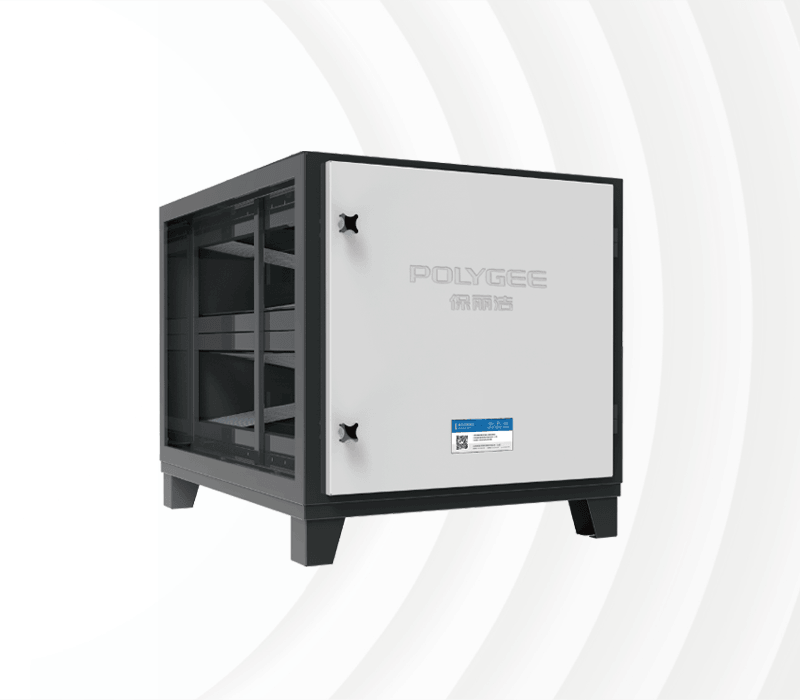
Activated Carbon Adsorption Filter
High-capacity activated carbon adsorption module for cooking odor adsorption. Installed downstream of the electrostatic precipitator for comprehensive exhaust treatment. Multi-layer carbon cartridges maximize adsorption surface area. Cartridges are replaceable and recyclable — reducing long-term operating costs and environmental impact.
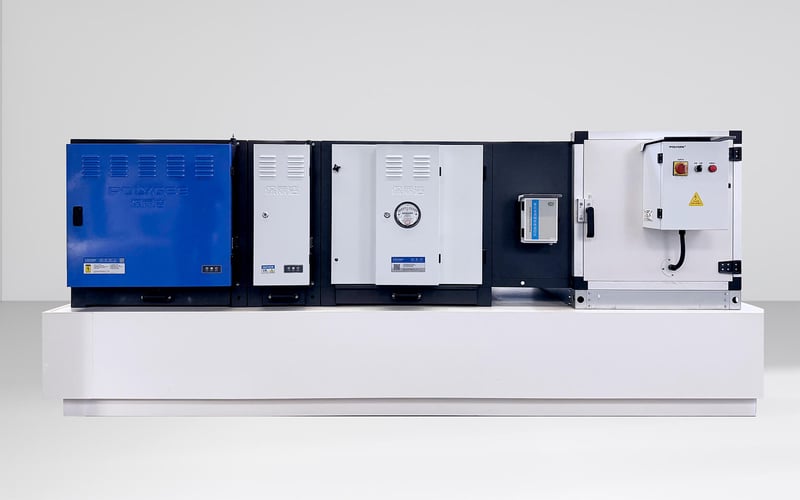
Kitchen Ecology Unit
The three treatment stages supplied as one train: an LK-E electrostatic stage for grease and smoke, a dual-band UV-C stage for odor molecules and a CB activated carbon stage for residual VOCs, bolted into one duct run or stacked to fit the plant room. Specified as an ecology unit or ECU in Gulf and UK tenders, and as a pollution control unit on North American drawings. The matched extract fan can be supplied with it.
What Is a Commercial Kitchen Electrostatic Precipitator?
A commercial kitchen electrostatic precipitator (ESP) is an advanced air purification device that uses high-voltage electrostatic fields to capture grease particles and smoke from cooking exhaust — Polygee LK units measured 96.0–97.6% grease removal in third-party tests — without disposable filters. According to the U.S. EPA, cooking emissions are a major indoor air quality concern in commercial foodservice environments.
Unlike household range hoods that simply redirect smoke outdoors, a commercial kitchen ESP actually captures grease and smoke particles at the source. It works by first charging grease and smoke particles with a high-voltage ionization field, then collecting them on oppositely charged stainless steel collector plates. The result: clean, odor-reduced air that helps meet strict emission standards worldwide.
ESP technology is a proven choice for commercial kitchens because it handles the extreme volume and density of cooking fumes that restaurants, hotels, food courts, and central kitchens generate daily — far beyond what any passive mesh or baffle filter can manage. The ASHRAE guidance covers electrostatic precipitation among exhaust treatment methods for commercial kitchen ventilation systems.
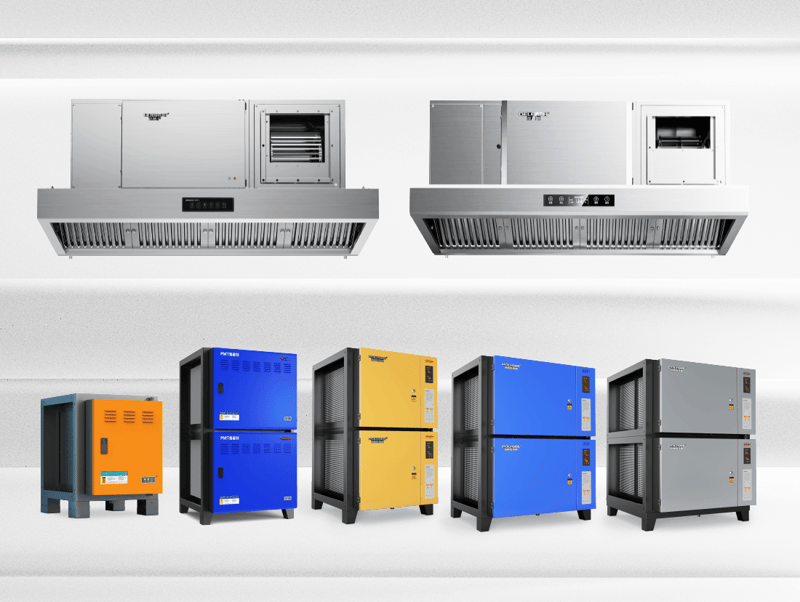
Key Components of Polygee ESP Systems
Three patented core technologies — each independently designed, manufactured, and quality-tested in our 110,000㎡ smart factory.
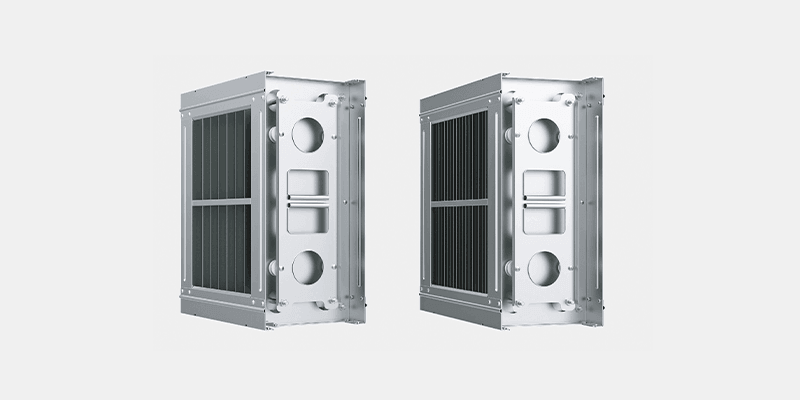
Dual-Zone Plate-Type Electrostatic Field
Our patented dual-zone plate-type ESP field separates ionization and collection into two dedicated stages. High-voltage ionization wires charge particles in the first zone; stainless steel collector plates capture them in the second — LK units third-party tested at 96.0–97.6%.
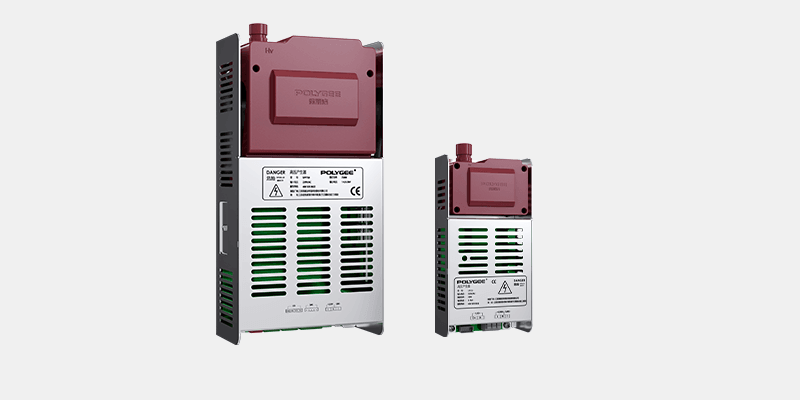
Intelligent Power Supply
Self-developed SMPS high-voltage power supply with real-time adaptive voltage control, automatic fault detection, arc suppression, and self-recovery. Maintains stable performance under varying exhaust loads — reducing energy waste under varying loads.
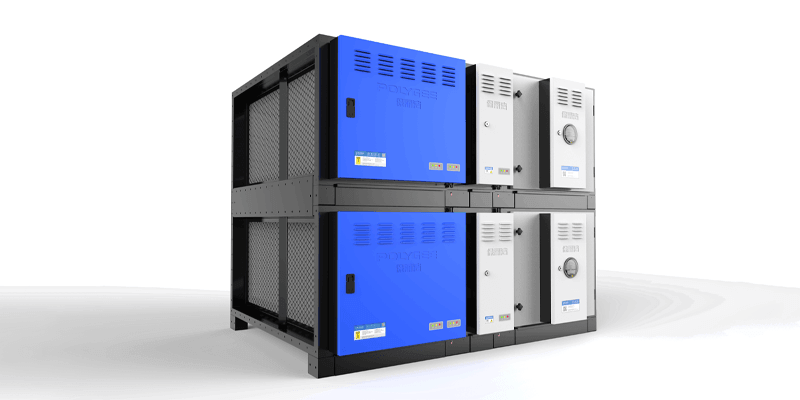
Modular Design
Standardized modular construction allows flexible configuration for any kitchen size — from single-unit restaurants to large-scale hotel central kitchens. Easy installation, quick maintenance, and seamless capacity expansion with plug-and-play collector cells.
Electrostatic Precipitator vs. Traditional Grease Filters
See why commercial kitchens worldwide are replacing disposable mesh filters with electrostatic precipitators for kitchen exhaust filtration.
| Feature | Traditional Mesh/Baffle Filter | Polygee Electrostatic Precipitator |
|---|---|---|
| Grease Capture Efficiency | Limited — grease passes into duct | 96.0–97.6% tested (LK) ✓ |
| Visible Smoke Removal | ✗ Poor | ✓ Visibly clear discharge |
| Fire Risk Reduction | Limited — grease enters duct | ✓ Grease captured at source |
| Filter Replacement | ✗ Frequent disposable | ✓ Washable & reusable cells |
| Duct Cleaning Frequency | Frequent | Substantially reduced ✓ |
| Pressure Drop | Rises steadily as the filter clogs | ≤150 Pa incl. distribution plate ✓ |
| Energy Consumption | Higher — exhaust fan works harder | Stable fan load ✓ |
| Installation Disruption | Full hood replacement required | 4–8 h off-peak retrofit ✓ |
How an Electrostatic Precipitator Removes Kitchen Grease & Smoke
A two-stage electrostatic process captures grease particles and visible smoke — without disposable filters (LK units third-party tested at 96.0–97.6%).
Ionization Stage
Dirty kitchen exhaust passes through a high-voltage ionization field. Every grease and smoke particle receives a positive electrical charge — including sub-micron particles invisible to the naked eye.
Collection Stage
Charged particles enter the collector zone — stainless steel plates arranged with alternating polarity in a dual-zone plate-type configuration. Particles are attracted to and deposited on the plates.
Clean Air Output
Purified air exits the ESP. Collector cells are fully washable and reusable — simply soak in alkaline degreaser or run through a commercial dishwasher. No disposable filters.
Types of Commercial Kitchen ESP Systems
Choose the right ESP configuration based on your kitchen layout, installation constraints, and exhaust treatment requirements.
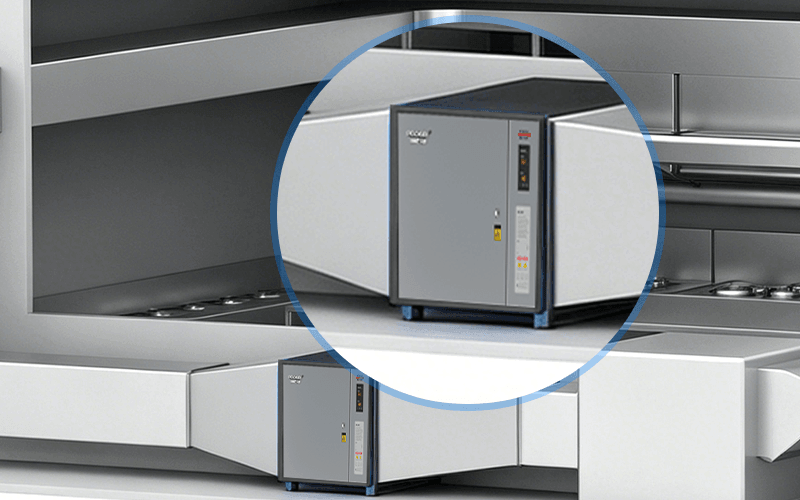
Modular ESP unit that slides into existing kitchen exhaust ductwork. No hood replacement or structural changes required. A popular choice for restaurants already in operation.
- Retrofits in 4–8 off-peak hours
- From 2,000 m³/h per unit — custom top capacity
- No ceiling demolition or hood replacement
- Works with any existing hood brand
- CE (LK30–480) · UL 867 Listed 6K/12K/18K
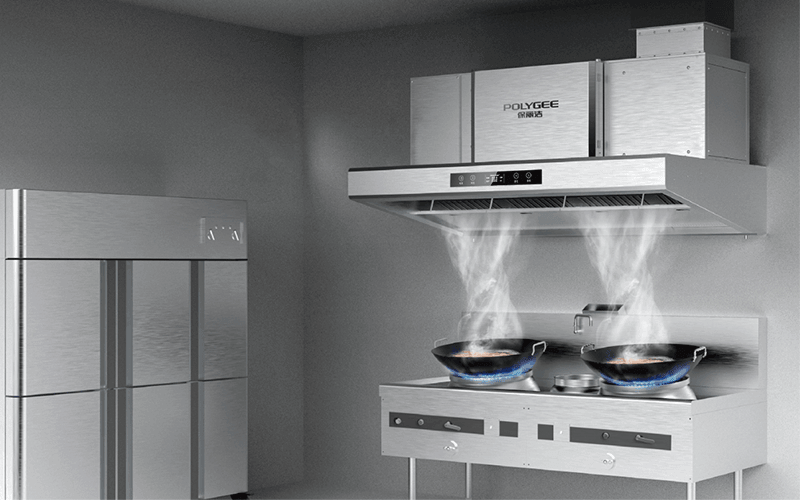
Complete all-in-one exhaust hood with built-in ESP, LED lighting, and oil drainage. Clean air exits the hood directly — no external equipment needed.
- 98.0–98.1% third-party tested efficiency
- Stainless steel construction
- Built-in LED task lighting
- Custom dimensions available
- Clean hood-integrated design
Combination system: ESP for grease/smoke removal + UV-C photolysis and/or activated carbon for odor control. A comprehensive kitchen exhaust treatment package.
- Addresses both particulate & gaseous pollutants
- Reduces cooking odors for neighbors
- Supports strict urban emission standards
- Modular: add UV or carbon independently
- Essential for residential-area restaurants
What Makes Polygee Electrostatic Precipitators Different
Backed by 225 patents granted, a BSE-listed parent company (stock code: 920802), and 110,000㎡ of in-house manufacturing — our technology is proven at scale.
Patented Plate-Type Electrostatic Field
Dual-zone plate-type design separates ionization and collection for high grease capture efficiency. Backed by our portfolio of 39 invention patents (225 total).
Self-Developed Smart Power Supply
High-frequency, high-voltage power supply with auto fault detection, arc protection, and self-recovery. Engineered and manufactured in-house.
Compliance Documentation for 50 Countries
CE on the LK30–480, LK-E and UV series (FQC2602501); UL 867 Listed for the LK / SE 6K, 12K and 18K models at 230V/50Hz (File E522667); RoHS for LK / SE / HME / FMC / HPS / LK-E (BKC25114877LC); CCEP held per model family; and ISO 9001 (ABZB25Q30072R3M), ISO 14001 (ABZB25E30043R3M) and ISO 45001 (ABZB25S30027R2M). The HME, SE and FMC hoods are tested to EN standards under an ICR Verification of Conformity. See the ESP certificate list with document numbers. Which of these documents to ask any ESP supplier for, and how to read the model coverage on each, is set out in our commercial kitchen ESP buying guide.
Common Challenges in Commercial Kitchen Exhaust Management
Traditional kitchen exhaust methods create costly, dangerous, and compliance-threatening problems. Here’s how electrostatic precipitators address each of them.
- ✗Emission violations and regulatory fines — mesh filters only capture a fraction of grease, leaving visible smoke plumes that trigger complaints and inspections
- ✗Kitchen fire hazard from grease-loaded ductwork — grease that passes through filters accumulates inside ducts, a common cause of commercial kitchen fires
- ✗Ongoing expense from disposable filter replacements — mesh and baffle filters degrade quickly and must be purchased repeatedly, adding up to thousands annually
- ✗Cooking odor complaints from neighbors and tenants — passive filters do nothing to address gaseous odors, which can escalate into neighbor complaints and disputes in residential areas
- ✗Business shutdown required for hood replacement — installing a new exhaust system means days of downtime, construction disruption, and lost revenue
- ✗High energy bills from exhaust fan overwork — as mesh filters clog, pressure drop increases, forcing exhaust fans to work harder and consume noticeably more electricity
- ✓Third-party tested efficiency (LK units up to 97.6%) supports strict emission compliance — visibly clean discharge and full compliance documentation provided
- ✓Grease captured at source before entering ductwork — dramatically reduces fire risk and substantially reduces duct cleaning frequency
- ✓Washable, reusable collector cells — no recurring filter cost. Just soak in degreaser on a routine schedule and reinstall.
- ✓Add UV-C or activated carbon downstream for effective odor control — gaseous VOCs decomposed or adsorbed, addressing neighbor complaints at the source
- ✓In-duct ESP retrofits in 4–8 off-peak hours without closing the restaurant — slides into existing ductwork, no hood replacement, no construction, restaurant stays open
- ✓Stable pressure drop (≤150 Pa incl. distribution plate) keeps fan energy steady — unlike mesh filters that progressively clog, ESP maintains consistent airflow resistance
Commercial Kitchen Applications for Electrostatic Precipitators
From single-location restaurants to multi-site chain operations — Polygee ESP systems are engineered for every commercial kitchen environment. Browse all kitchen ESP solutions by venue type.
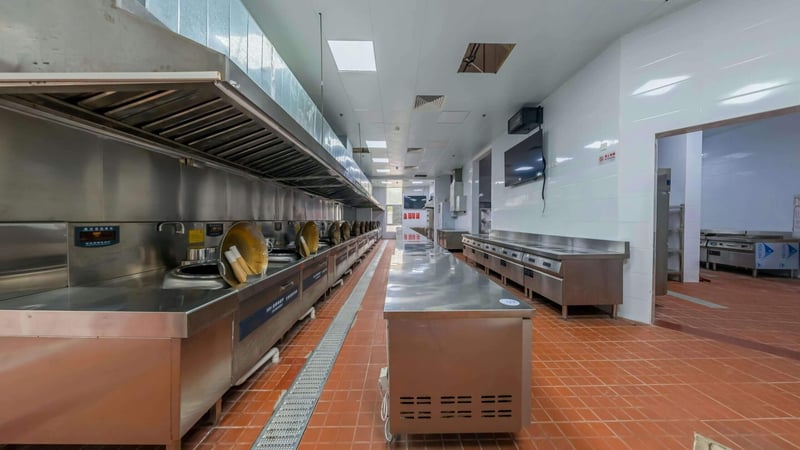
Restaurant Kitchen ESP Solution
Chinese wok, Western grill, Japanese teppanyaki — customized ESP for every cooking style. Retrofit in 4–8 off-peak hours.
See the restaurant kitchen ESP solution →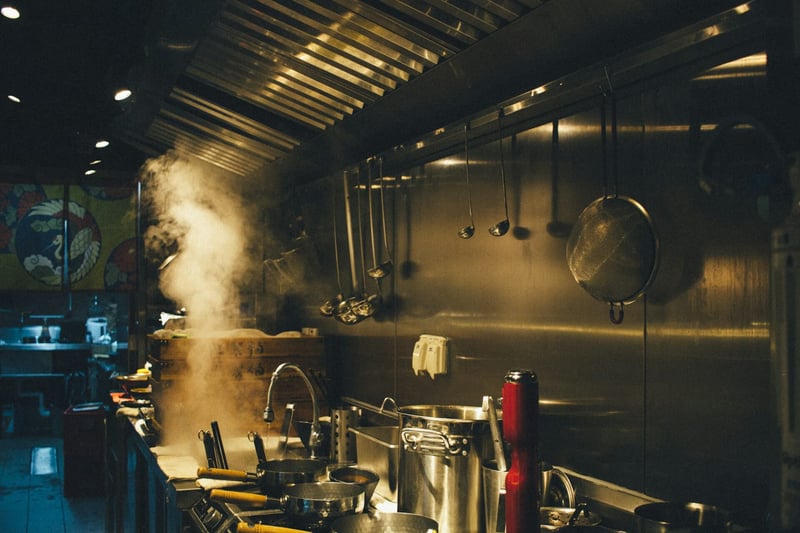
Hotel Kitchen ESP System
Centralized ESP for banquet halls, all-day dining, specialty restaurants & room service kitchens.
See the hotel kitchen ESP system →
Chain Restaurant ESP Filtration
Standardized ESP configurations for multi-location rollouts. Consistent specs across every location.
See the chain restaurant ESP filtration setup →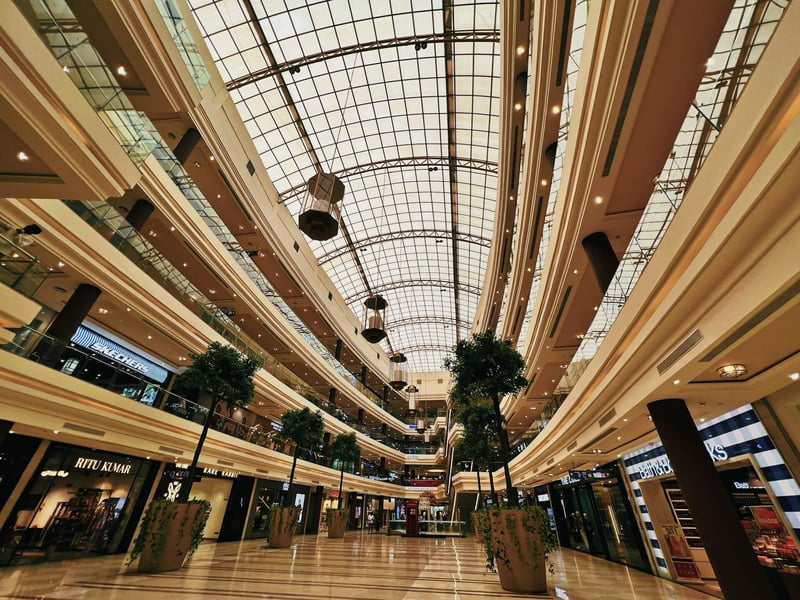
Food Court ESP Exhaust Purification
Centralized ESP arrays — single LK-E0 units to 40,000 m³/h, configured in parallel across multiple vendors.
See the food court ESP purification setup →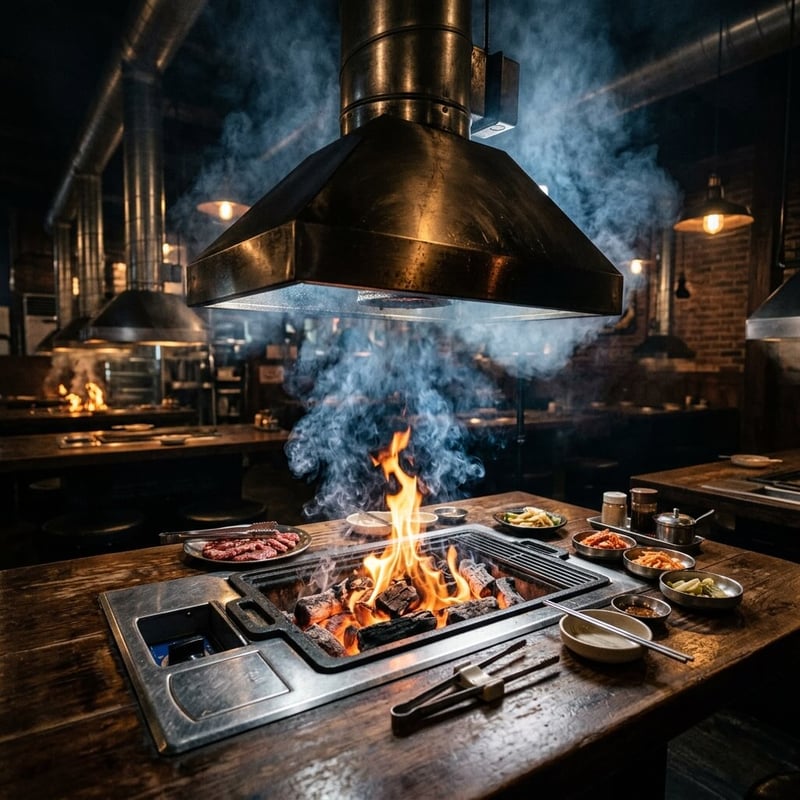
BBQ Smoke Control ESP
Heavy-smoke environments. ESP + UV-C combo controls smoke and reduces intense cooking odors.
See the BBQ smoke control ESP setup →
Café & Bakery ESP Filtration
Compact, quiet ESP for baking fumes and light grease. Ideal for urban storefronts.
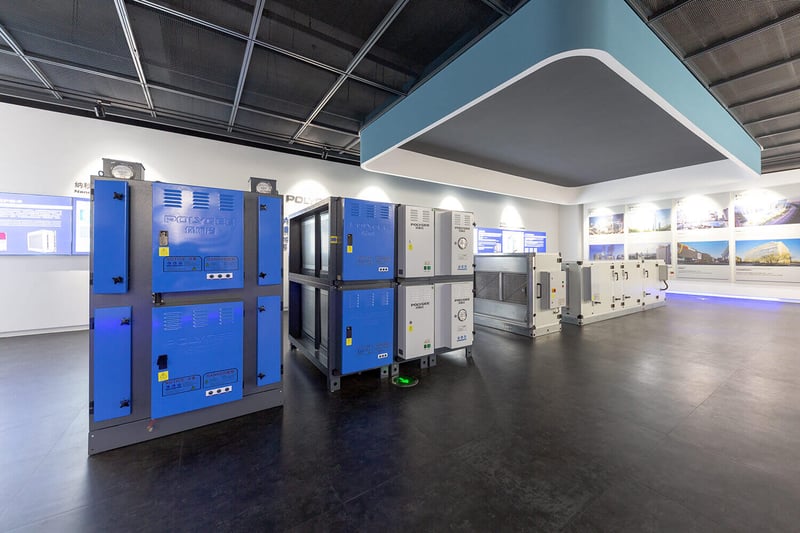
See the café & bakery ESP filtration setup →Every ESP Built in Our Own 110,000㎡ Smart Factory
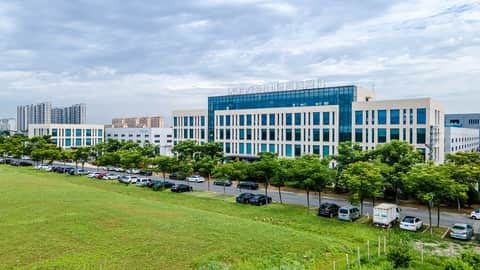
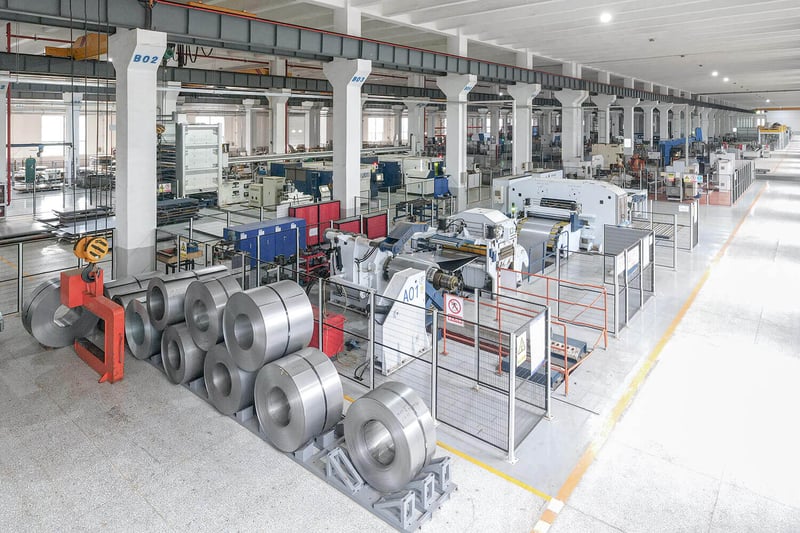
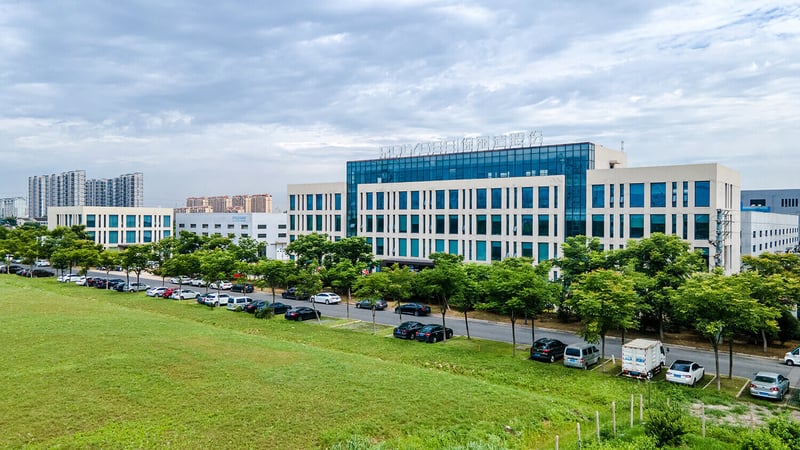
From raw material cutting to final quality inspection — every electrostatic precipitator is manufactured in-house at our Zhangjiagang facility, for consistent quality at any production volume. Wholesale buyers and resellers can review the ESP distributor program.
ESP Performance — Detailed Specification Comparison
Compare key performance parameters across Polygee ESP product lines and traditional filtration technologies.
| Parameter | In-Duct ESP (LK Series) | ESP Hood | UV-C Module | Carbon Filter | Mesh Filter |
|---|---|---|---|---|---|
| Grease Removal | 96.0–97.6% tested | 98.0–98.1% tested | N/A | N/A | Limited |
| Smoke Removal | ✓ High | ✓ High | Partial | N/A | Poor |
| Odor Removal | Partial | Partial | ✓ UV photolysis | ✓ Carbon adsorption | None |
| Airflow Range | From 2,000 m³/h per unit (custom top end) | 3,000–4,800 m³/h | 3,000–15,000 m³/h | 3,000–15,000 m³/h | – |
| Pressure Drop | ≤150 Pa incl. plate | Built-in fan | 65 Pa tested (UV80) | Varies by model | Rises as it clogs |
| Noise Level | No built-in fan | 51 dB(A) tested | Passive | Passive | N/A |
| Maintenance | Washable cells | Washable cells | Replaceable lamps | Cartridge replace | Replace filters |
| Operating Cost | Very Low | Very Low | Very Low | Medium | High |
| Service Life | Washable, reusable cells | Washable, reusable cells | Replaceable lamps | Replaceable cartridges | Frequent replacement |
| Installation | 4–8 h retrofit | New build / Renew | Add-on module | Add-on module | Built into hood |
| Certifications | CE FQC2602501 · UL 867 File E522667 (LK / SE 6K, 12K, 18K) · RoHS BKC25114877LC · CCEP CCAEPI-EP-2024-757 | CCEP CCAEPI-EP-2025-602 · RoHS BKC25114877LC · EN-tested (ICR Verification of Conformity) | CE FQC2602501 | — | — |
Third-party tested: 97.6% on LK160 and 97.0% on LK40 (Beijing Zhongyan Huanneng, CMA — reports ZY05W230298 / ZY05W230296); 96.0% at rated airflow on LK120 (SQEP, CMA — report 2024I20-35-5322488001); 98.0% / 98.1% on the HME ESP hood (Beijing Zhongyan Huanneng — reports ZY01W220017 / ZY07W250333, the latter also recording the 51 dB(A) noise figure). LK-E engineering series (not a column above): LK-E0 4,000–40,000 m³/h, LK-E1 and LK-E2 3,000–24,000 m³/h, design efficiency ≥90% / ≥95% / ≥98% by tier, CE FQC2602501 · ISO 9001 ABZB25Q30072R3M — see the LK-E cards in the product grid and the 61-model lineup table.
ESP Airflow Sizing Calculator
Enter your kitchen details to get instant commercial kitchen exhaust hood sizing and an ESP recommendation. Unit counts follow the brochure airflow ceilings — 4,800 m³/h for an HME ESP hood, 24,000 m³/h for LK-E1 / LK-E2 and 40,000 m³/h for LK-E0. The power figure is scaled from the LK-E2 brochure rating of 924 W at 24,000 m³/h, so it is shown only up to that airflow — the LK-E0 brochure table carries no power rating, and above 24,000 m³/h the figure is confirmed per project. For a detailed quotation, submit the results to our engineering team.
📐 Enter Kitchen Parameters
Fill in the form and click Calculate to run the hood exhaust calculation and see your recommended ESP configuration, estimated airflow, and energy consumption.
📋 Your ESP Recommendation
How to Choose the Right Electrostatic Precipitator for Your Kitchen
Answer these three questions to identify the optimal ESP configuration for your specific project requirements.
New Kitchen Build or Retrofit?
- 🏗️ New build / full renovation → Integrated ESP Hood — clean design, tested efficiency, single-vendor responsibility
- 🔧 Existing kitchen, no downtime → In-Duct ESP — slides into current ductwork in 4–8 off-peak hours without closing the kitchen
- 🔄 Phased upgrade → Start with In-Duct ESP, add UV-C or carbon later as budget allows
Do You Have Odor Complaints?
- 🏢 Located in residential area → ESP + UV-C Module — decompose gaseous cooking odors at molecular level
- 🔥 Heavy-smoke cooking (BBQ, wok) → ESP + Activated Carbon — adsorb intense cooking smells
- 🌳 No odor issues → ESP alone removes the bulk of grease and smoke (LK: 96.0–97.6% tested) — sufficient for most locations
What Airflow Volume Do You Need?
- 🍳 Small kitchen (≤4,800 m³/h) → One HME ESP hood or a compact LK-E unit — cost-effective, easy maintenance
- 🍔 Medium kitchen (4,800–24,000 m³/h) → One LK-E1 or LK-E2 unit — parallel pairing optional for redundancy
- 🏭 Large facility (24,000–40,000 m³/h) → One LK-E0, up to LK400E0 at 40,000 m³/h; above that, LK-E0 units in parallel
How Polygee ESP Is Deployed — Typical Project Profiles
Three representative configurations drawn from commercial kitchen projects in 50 countries. For named references and project parameters, contact our team.
Chains standardize a single in-duct ESP configuration across locations — simplifying compliance documentation, spare-parts stocking, and cleaning schedules for every kitchen.
Parallel-configured ESP arrays treat combined exhaust from many vendors in one shared duct system — protecting the shopping concourse from smoke and cooking odor.
For brands that require UL-documented equipment, Polygee supplies the UL 867 Listed LK / SE 6K, 12K and 18K models at 230V/50Hz (File E522667) with compliance documentation prepared for engineering review.
The Complete 61-Model Kitchen Exhaust Filtration Lineup
Every figure below is taken from the Polygee product brochures. Follow each row through to the matching product page for dimensions, flange sizes, hole patterns and weights.
| Family | Models | Airflow (m³/h) | Supply | Design Efficiency | ESP Field / Notes |
|---|---|---|---|---|---|
| HME-W13 ESP hood | 6 (HME1500W13–HME2400W13) | 3,000–4,800 | 380V/50Hz | ≥98% | Third-party tested 98.0–98.1% · kitchen ESP hood details |
| HME-W11 ESP hood | 6 (HME1500W11–HME2400W11) | 3,000–4,800 | 380V/50Hz | ≥98% | 1,100 mm deep cabinet · commercial kitchen hood system page |
| LK-E0 engineering ESP | 11 (LK40E0–LK400E0) | 4,000–40,000 | 220V/50Hz | ≥90% | 31 Pa ESP field · LK-E0 modular kitchen ESP page |
| LK-E1 engineering ESP | 11 (LK30E1–LK240E1) | 3,000–24,000 | 220V/50Hz | ≥95% | 23 Pa ESP field · LK-E1 engineering ESP details |
| LK-E2 engineering ESP | 11 (LK30E2–LK240E2) | 3,000–24,000 | 220V/50Hz | ≥98% | 34 Pa ESP field · LK-E2 modular ESP specifications |
| UV-C photolysis module | 8 (UV30–UV150) | 3,000–15,000 | 220V/50Hz | — | UV lamp load 80–400 W, 2–10 lamps · UV-C kitchen odor control module |
| Activated carbon module | 8 (CB30–CB150) | 3,000–15,000 | — | — | 4 / 8 / 12 carbon frames by size · activated carbon filter for kitchen exhaust |
61 models in total: 12 ESP hoods, 11 each of LK-E0, LK-E1 and LK-E2, 8 UV-C modules and 8 activated carbon modules. The LK-K / LK-D / LK-A in-duct tiers are quoted from 2,000 m³/h per unit with the top capacity engineered per project — see the in-duct kitchen electrostatic precipitator page. The UV figure is the lamp load, not whole-unit power consumption; a single lamp draws 40 W. The carbon media is coal-based columnar activated carbon (iodine value ≥800 mg/g, methylene blue ≥100 mg/g, specific surface area ≥800 m²/g, packing density 650±50 g/L). Maintenance clearance for the UV and carbon modules is D = 1,000 mm.
Commercial Terms for ESP Orders
Payment, shipping, warranty, spare parts and OEM terms in one place — so you can scope a project before you ask us for a quotation. The complete supplier profile, with certificate scope by model and factory audit arrangements, is on our electrostatic precipitator supplier page.
Deposit, Then Balance Before Shipment
- 💳 Deposit — 30% on order confirmation, or 50% if you prefer
- 📦 Balance — settled in full before the goods leave the factory
- 🏦 Methods — T/T, L/C and other agreed instruments accepted
Incoterms Arranged to Suit the Buyer
- 🚚 Incoterms — EXW / FOB / CIF, whichever fits your freight setup
- 🌎 Destinations — we export to 50 countries
- 🔒 NDA — signed by the company when a project calls for one
1 Year on the Complete Unit
- ✅ Covered — electrostatic collector cells and the SPP high-voltage power supply
- ⚠️ Consumables — UV lamps and activated carbon media sit outside the warranty
- 🛠️ Not included — labor and on-site attendance; paid on-site service is available
Stocked, and Supported After Discontinuation
- 📦 Stock — common spare parts held on the shelf
- 🕑 Dispatch — timing confirmed order by order
- 🔄 After discontinuation — parts supplied for 1 year once a model is retired
MOQ 1 Unit, 7–15 Days Standard
- 📋 MOQ — 1 unit, so a single-site trial order is fine · Project and volume pricing quoted per project.
- ⏱️ Lead time — 7–15 days on the standard lineup
- 💬 Support hours — Mon–Fri, 8:00–17:00 (GMT+8)
Own-Label Builds and Remote Support
- 🏷️ Branding — your logo applied, cabinet color changed to your specification
- 📝 OEM terms — minimum quantity and lead time agreed per project
- 📹 After-sales — video calls plus illustrated manuals for remote support; paid on-site service available
Get Your Custom ESP Configuration
Send us your kitchen details — duct dimensions, airflow requirements, and cooking type — and receive a custom electrostatic precipitator recommendation with a detailed quotation. Our team replies during Mon–Fri, 8:00–17:00 (GMT+8).
Commercial Kitchen ESP — Frequently Asked Questions
More on sizing, installation, and maintenance in the full commercial kitchen ESP FAQ.