

UV Kitchen Odor Control System
Duct-mounted UV kitchen odor control module that breaks down cooking odors, VOCs, and residual grease molecules. The UV-C lamps emit at two wavelengths: 254 nm for direct photolysis, and 185 nm which splits oxygen molecules so that ozone is generated inside the chamber and used as the oxidizing agent. Pairs with ESP to cover both particles and odors. Drawer-type structure with an aluminum profile lamp frame for easier service and stable long-term operation.
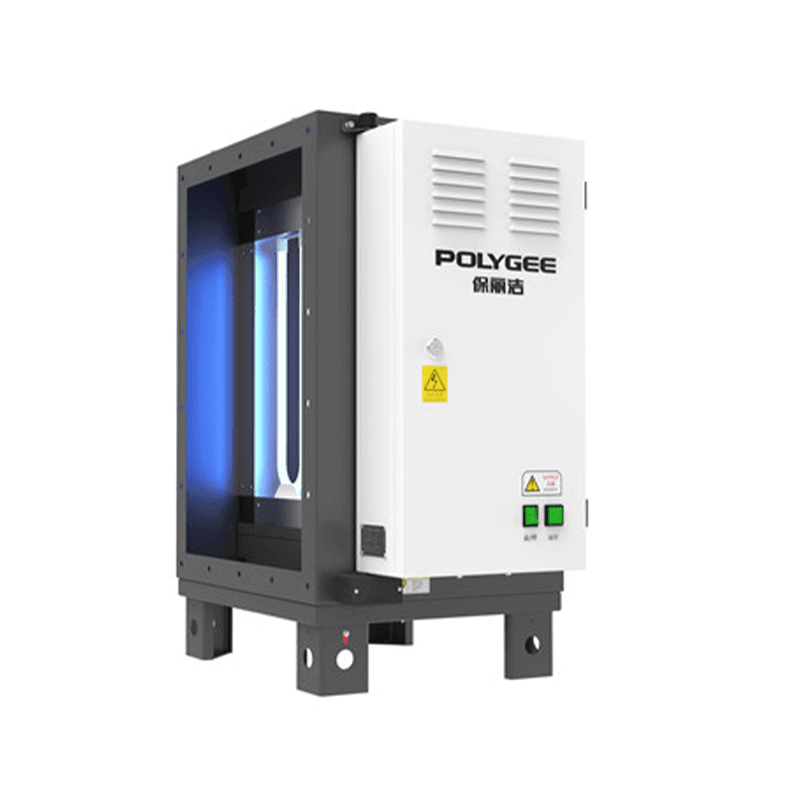
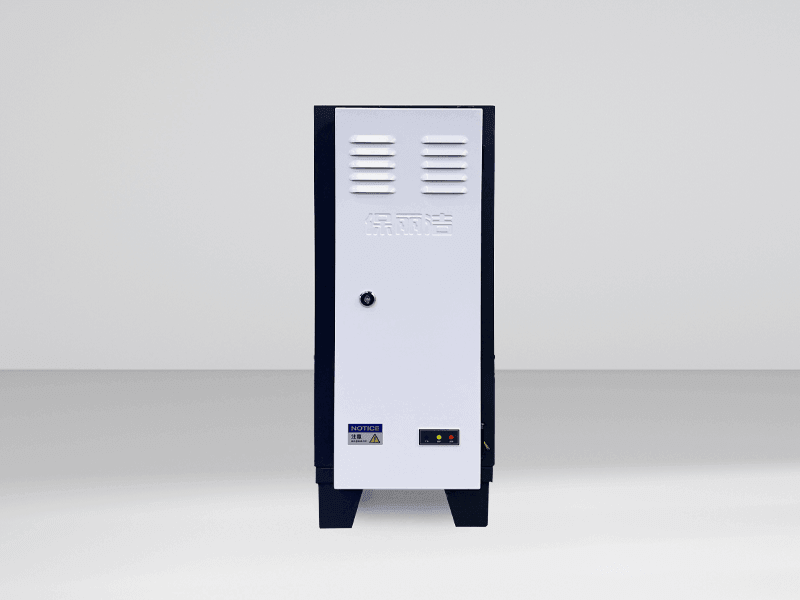
Product Photos of the Kitchen Exhaust Odor Control Unit
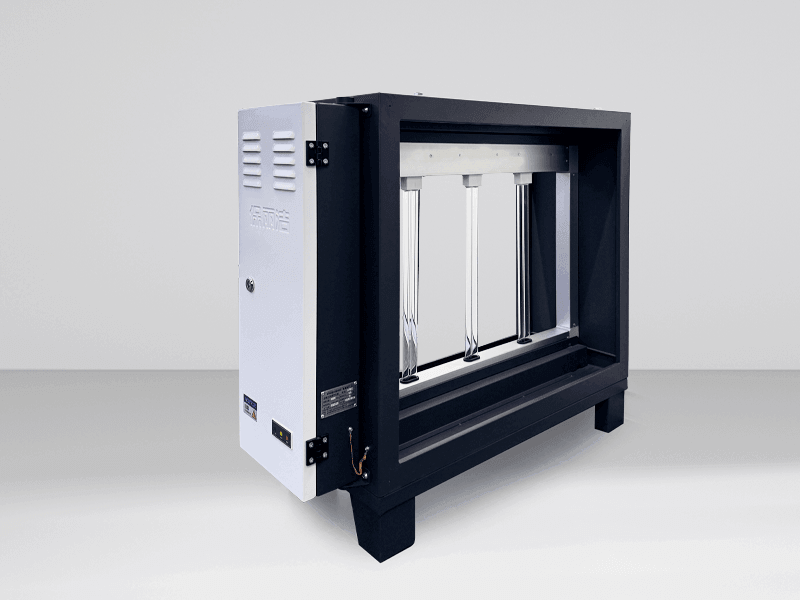
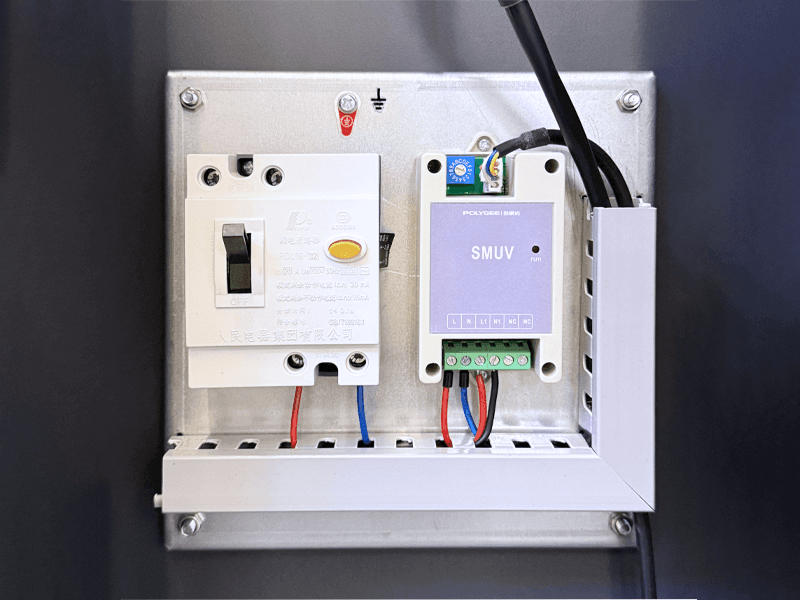
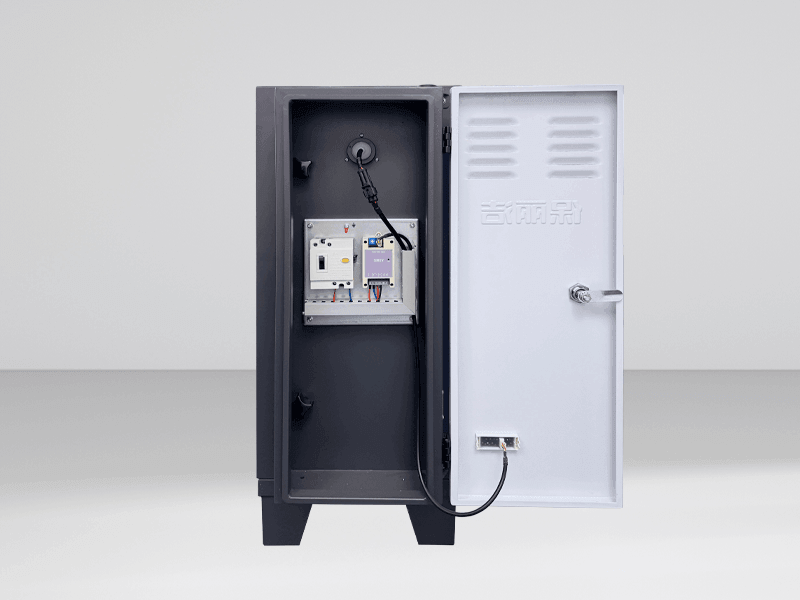
Close-up details of the UV kitchen odor control unit, showcasing the aluminum profile lamp frame, control box layout, service-door access, and compact modular cabinet design.
6 Commercial Kitchen Scenarios for UV Odor Control
When ESP alone cannot remove cooking odors, UV-C photolysis provides a chemical-free odor-treatment stage. See all commercial kitchen exhaust solutions by venue type.
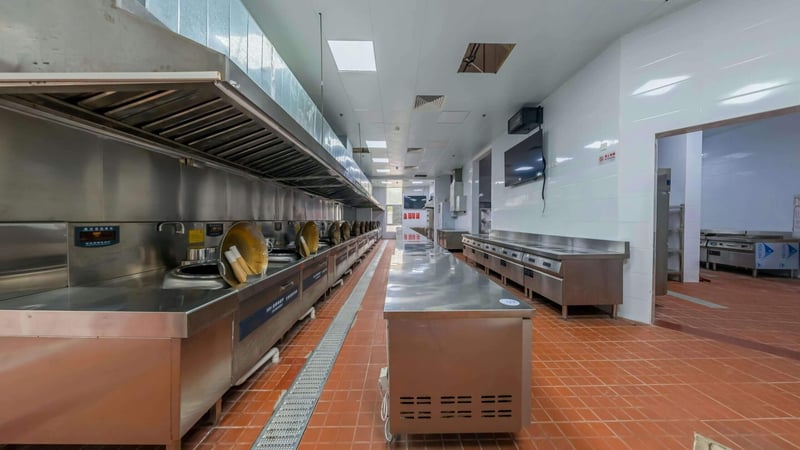
Restaurants Near Residential Neighbors
Wok, grill and fryer odors drifting into homes above or beside the restaurant — add UV after the ESP stage to cut odor complaints.
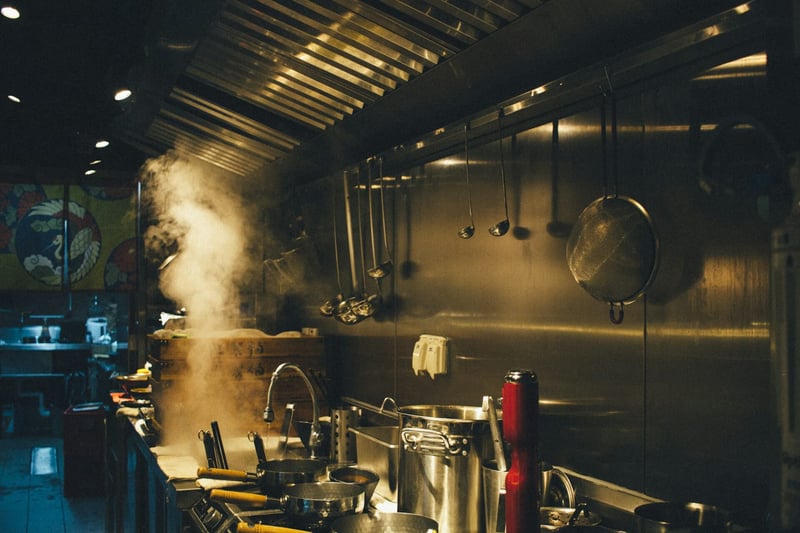
Hotel & Banquet Central Kitchens
Long duct runs and rooftop discharge near guest areas — UV treats the odor fraction that ESP cannot capture.

Chain Standardization Programs
One UV spec across all locations, sized per store airflow, with unified lamp-maintenance schedules.

Food Courts & Shared Risers
Multiple cuisines in one exhaust system — UV modules per line treat mixed odors before the shared riser.
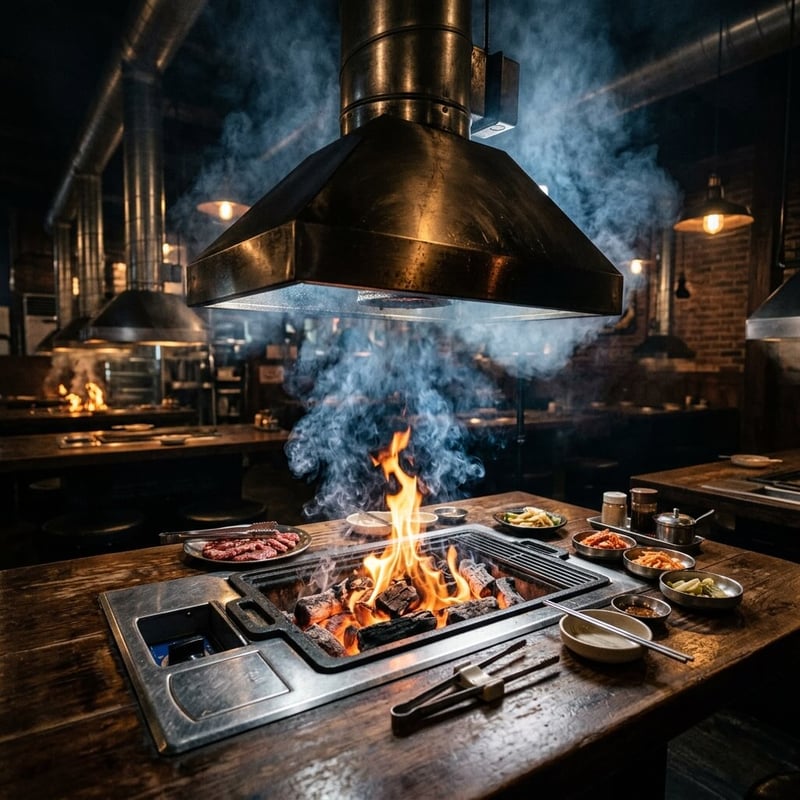
BBQ & Heavy-Smoke Kitchens
Charcoal and smoker exhaust: ESP removes smoke particles, then UV reduces the intense residual odor.

Cafes & Bakeries in Malls
Light but persistent baking odors in enclosed retail air — compact UV modules fit tight ceiling voids.
Why ESP Alone Is Not Enough – UV Kitchen Odor Control Series Closes the Gap
ESP Removes Particles. UV Removes Odors.
Electrostatic precipitators capture grease droplets and smoke particles from the exhaust stream. But they do not remove cooking odors – the gaseous VOCs that cause neighbor complaints, regulatory violations, and failed inspections.
UV-C Photolysis Closes the Gap
UV-C lamps break down odor molecules at the molecular level through photolysis and ozone oxidation. No chemicals, no filter media to replace – periodic lamp replacement is the only recurring item. According to EPA guidelines on volatile organic compounds, controlling VOC emissions is critical for maintaining healthy indoor environments in commercial buildings.
- Decomposes VOCs, aldehydes, and cooking odors
- Reduces grease buildup in downstream ductwork
- Designed to support strict urban emission and odor requirements
- No filter consumables – periodic lamp replacement is the only maintenance item
- Works alongside ESP to cover both particles and odors
- Helps reduce neighbor complaints and shutdown risk
8 Reasons to Choose Polygee UV Kitchen Odor Control
ESP and UV engineering from a manufacturer established in 2004. Purpose-built for commercial kitchen exhaust environments.
Dual-Band 254 nm + 185 nm
254 nm photolysis breaks molecular bonds; 185 nm generates the ozone that oxidizes the fragments.
No Filter Media
No disposable media or chemical filters to replace.
Project-Ready Modular Design
Multiple airflow sizes, ready to integrate with upstream ESP systems.
Aluminum Profile Lamp Frame
Rigid construction supports stable lamp alignment and easier maintenance.
Low Energy Consumption
Minimal power compared to chemical scrubbers.
Safety Interlock
Auto shutdown when access door opens.
Easy Retrofit
Installs directly into existing ductwork.
OEM / ODM Available
Custom sizes, lamp configurations, and branding.
Principle of UV Photolysis Purification
The UV-C lamps emit at 254 nm and 185 nm. The 254 nm band photolyses odor molecules directly; the 185 nm band splits oxygen molecules so that ozone forms inside the chamber and oxidizes what photolysis leaves behind.
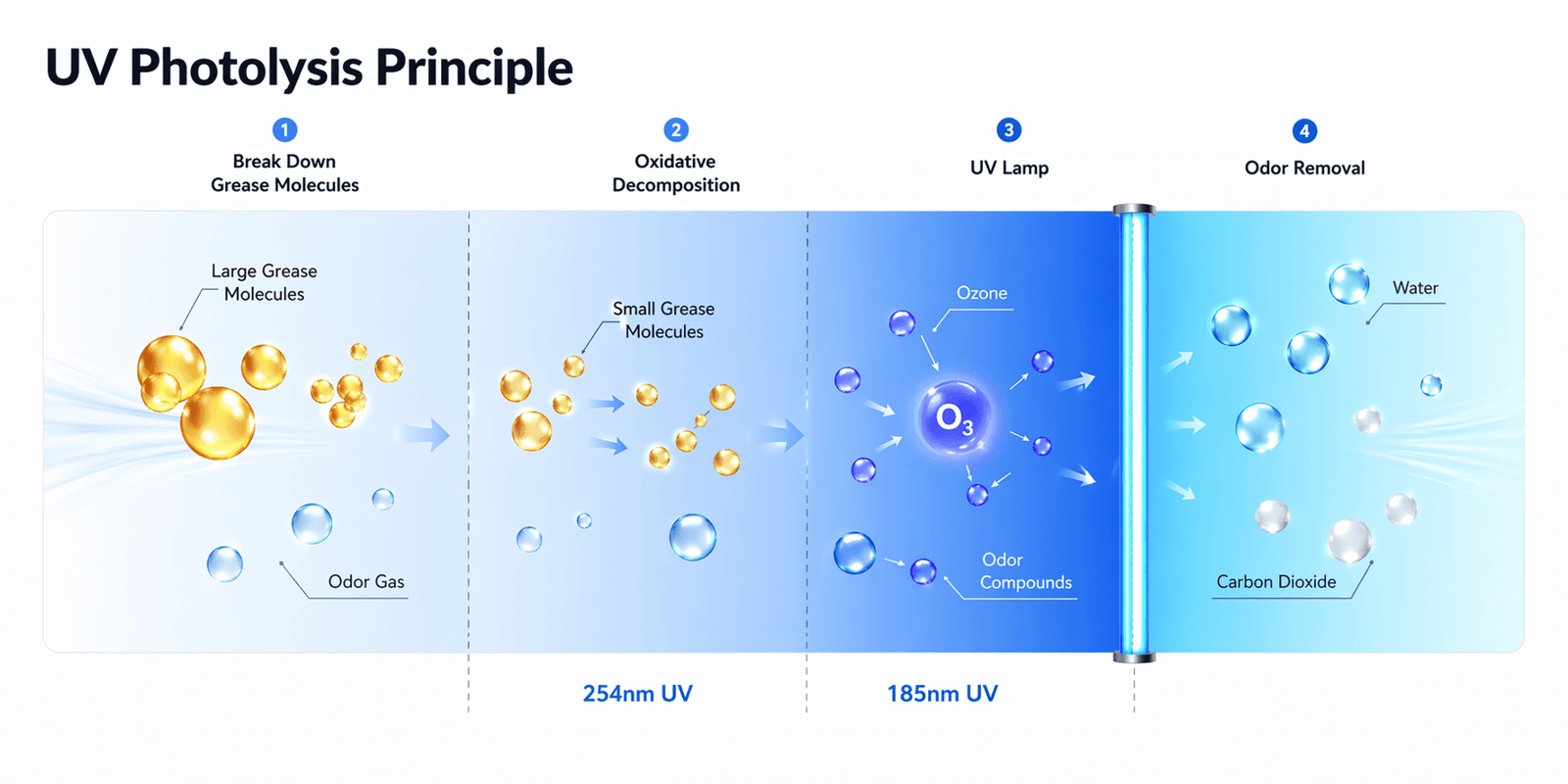
Odor Gas Intake
Large grease molecules and odor gas enter the UV chamber after upstream grease and smoke removal.
→254 nm Direct Photolysis
The 254 nm band is absorbed by the grease-related odor molecules themselves, changing their molecular structure and breaking long chains into smaller compounds. It also acts on micro-organisms carried in the airstream.
→185 nm Ozone Oxidation
The 185 nm band splits oxygen molecules into free oxygen atoms, which recombine with O₂ to form ozone. The ozone oxidizes the fragments that photolysis has already opened up.
→Odor Removal Output
Residual pollutants are converted into simpler end products such as water and carbon dioxide.
Ozone Is Part of the Design, Not a Side Effect
A UV-C lamp in the Polygee UV Series emits at two wavelengths. Each band has a different job, and the shorter one is what produces the oxidizing agent.
💡 254 nm — Direct Photolysis
Grease and odor molecules absorb the 254 nm band directly. The absorbed energy changes the molecular structure of the grease, degrading long-chain organic compounds into shorter, lighter ones. The same band acts on micro-organisms carried in the exhaust stream.
⚙ 185 nm — Ozone Generation
The 185 nm band is absorbed by oxygen molecules in the airstream and splits them into free oxygen atoms. Those atoms recombine with O₂ to form ozone (O₃) inside the chamber. This is the intended function of the shorter band, not an incidental emission.
🌀 Ozone as the Oxidizing Agent
Ozone is a strong oxidant for organic matter, which is why it is generated on purpose here. It attacks the fragments that photolysis has already opened up, including the odor compounds and grease vapor that carry cooking smells, and drives them toward simpler end products.
🔒 Ozone Stays Inside the Duct Run
Ozone is generated and consumed within the same duct run. The UV chamber is fully enclosed, a safety interlock cuts the lamps when the access door is opened, and the section downstream of the lamp rack is dimensioned so the ozone is used up in the oxidation stage before the air reaches the discharge point. Dwell time is set case by case with the Polygee engineering team.
💬 Selecting the Configuration by Venue
“Both bands work together in every model — 254 nm photolysis plus the ozone generated at 185 nm — but the right configuration depends on the venue. A charcoal BBQ line and a mall bakery do not send the same odor load down the duct, so we start from the cooking style, the airflow and the duct layout, then set the model size, lamp count and dwell time case by case with the engineering team. That is why we ask about the cuisine and the neighbors before quoting a UV system.”
— Scarlett, Business Director, Jiangsu Polygee Environmental Technology Co., Ltd.
UV Kitchen Odor Control vs. Other Methods
✅ UV-C Photolysis (Polygee)
No filter consumables. Chemical-free. Breaks down odors at the molecular level. Low maintenance – periodic lamp replacement only. No filter waste. Designed to pair with ESP.
💰 Low Lifetime Cost
No ongoing filter purchases. No chemical refills. No disposal fees. UV lamp replacement is the only recurring cost.
❌ Disposable Media Filters
Can intercept some contaminants at first, but do not decompose odors at the molecular level. Requires regular replacement.
❌ Chemical Scrubbers
Water and chemical consumption. Complex plumbing. Wastewater treatment required. Higher energy and maintenance costs.
Recommended System Layout for UV Kitchen Odor Control Series
UV Series modules are intended as the odor-treatment stage after grease and smoke removal.
Grease and Smoke Removal
Install ESP or other upstream particle-removal equipment first so the UV chamber receives cleaner airflow and maintains lamp efficiency longer.
- Reduces grease load before odor treatment
- Improves UV module service life
- Ideal pairing with Polygee kitchen electrostatic precipitator
UV Series Photolysis Purifier
The core odor-treatment stage. The 254 nm band photolyses the molecules and the 185 nm band generates the ozone that oxidizes them, both inside the duct.
- Ozone generated and consumed within the duct run
- Drawer-type lamp rack for maintenance
- Aluminum profile lamp frame
- Built-in electrical protections and safety interlock
Fan and Clean Discharge
After photolysis treatment, the exhaust is routed to the fan and final discharge point with lower odor concentration.
- Lower residual odor in the discharge line
- Reduced downstream duct contamination
- Supports stricter urban odor-control projects
UV Kitchen Odor Control Model Specifications
Brochure-based technical data for the UV Series photolysis purifier.
| Model | Input Power | Airflow (m³/h) | UV Lamps | Ballasts | UV lamp load (W) | Overall Size L×W×H (mm) | Flange A×B (mm) | Mounting Holes a / b / c (mm) | Weight (kg) |
|---|---|---|---|---|---|---|---|---|---|
| UV30 | 220V / 50Hz | 3,000 | 2 | 1 | 80 | 665 × 431 × 833 | 470 × 653 | 117.5 / 130.6 / 25 | 34 |
| UV40 | 220V / 50Hz | 4,000 | 3 | 2 | 120 | 833 × 431 × 833 | 638 × 653 | 127.6 / 130.6 / 25 | 37 |
| UV50 | 220V / 50Hz | 5,000 | 3 | 2 | 120 | 885 × 431 × 833 | 690 × 653 | 115 / 130.6 / 25 | 39 |
| UV60 | 220V / 50Hz | 6,000 | 5 | 3 | 200 | 1175 × 431 × 833 | 980 × 653 | 122.5 / 130.6 / 25 | 45 |
| UV80 | 220V / 50Hz | 8,000 | 6 | 3 | 240 | 1511 × 431 × 833 | 1316 × 653 | 131.6 / 130.6 / 25 | 55 |
| UV100 | 220V / 50Hz | 10,000 | 6 | 3 | 240 | 1615 × 431 × 833 | 1420 × 653 | 142 / 130.6 / 25 | 58 |
| UV120 | 220V / 50Hz | 12,000 | 10 | 5 | 400 | 2189 × 431 × 833 | 1944 × 653 | 124.6 / 130.6 / 25 | 71 |
| UV150 | 220V / 50Hz | 15,000 | 9 | 5 | 360 | 2345 × 431 × 833 | 2150 × 653 | 107.5 / 130.6 / 25 | 78 |
Maintenance clearance: D = 1,000 mm. Brochure dimensions can be customized for project-specific duct layouts. UV lamps are consumable items and are not covered by the one-year warranty on the complete unit. Full commercial terms are listed below; reseller and OEM terms are set out on the Polygee kitchen ESP distributor page.
Request Custom UV System →- 3,000 m³/h: UV30 — 2 lamps
- 4,000–6,000 m³/h: UV40, UV50 or UV60 — 3–5 lamps
- 8,000–10,000 m³/h: UV80 or UV100 — 6 lamps
- 12,000–15,000 m³/h: UV120 or UV150 — 9–10 lamps
- Match the model to the duct airflow at the design point; if the airflow sits between two models, confirm the selection and dwell time with the Polygee engineering team
Ordering, Warranty and Support for the UV Series
The terms below apply to UV Series orders placed directly with the factory.
Payment Terms
30% deposit (50% on request), with the balance settled before shipment. T/T and L/C are both accepted.
Incoterms
Incoterms arranged to suit the buyer (EXW / FOB / CIF).
Warranty — 1 Year
1 year on the complete unit. UV lamps are consumable items and are not covered. Labor and site visits are not included.
MOQ & Lead Time
MOQ 1 unit. Standard lead time 7–15 days. · Project and volume pricing quoted per project.
Spare Parts
Common spares held in stock; dispatch time confirmed case by case. Supplied for 1 year after a model is discontinued.
After-Sales Support
Video calls plus illustrated manuals for remote support; paid on-site service available. Mon–Fri 8:00–17:00 (GMT+8).
Engineering Support
System design proposals, CAD drawings and full specification sheets — request with your project’s airflow details.
OEM / Private Label
Customer logo and cabinet color options. OEM order quantity and lead time are agreed case by case.
Export & NDA
Polygee equipment is exported to 50 countries. An NDA can be signed by the company on request.
4 Installation Options for UV Kitchen Odor Control
Designed for easy retrofit into existing ductwork or integration with new ESP systems.
🏗 In-Duct Retrofit
Install UV module directly into existing ductwork, downstream of ESP or grease filters.
🔗 Stacked with ESP
Mount UV module directly on top of or beside the ESP unit. Shared frame and electrical connections create one integrated purification system.
🏠 Plant Room Installation
For large systems, install UV modules in a dedicated plant room together with ESP and exhaust fan.
⚙ Rooftop Installation
Weather-rated enclosure available for rooftop installations where ground-level space is limited.
- Install downstream of ESP or grease filters
- Allow D = 1,000 mm maintenance clearance on the lamp-rack access side
- Electrical: single-phase 220V/50Hz for all standard models
- Front or side access door required for lamp replacement
- Safety interlock wiring to fan system
- Size the run downstream of the lamp rack so ozone is consumed in the oxidation stage before discharge
- Allow adequate dwell time – consult Polygee engineering team for sizing
Build a Complete Cooking Odor Removal System
Taking all three stages together? They ship as one matched ecology unit (ECU).
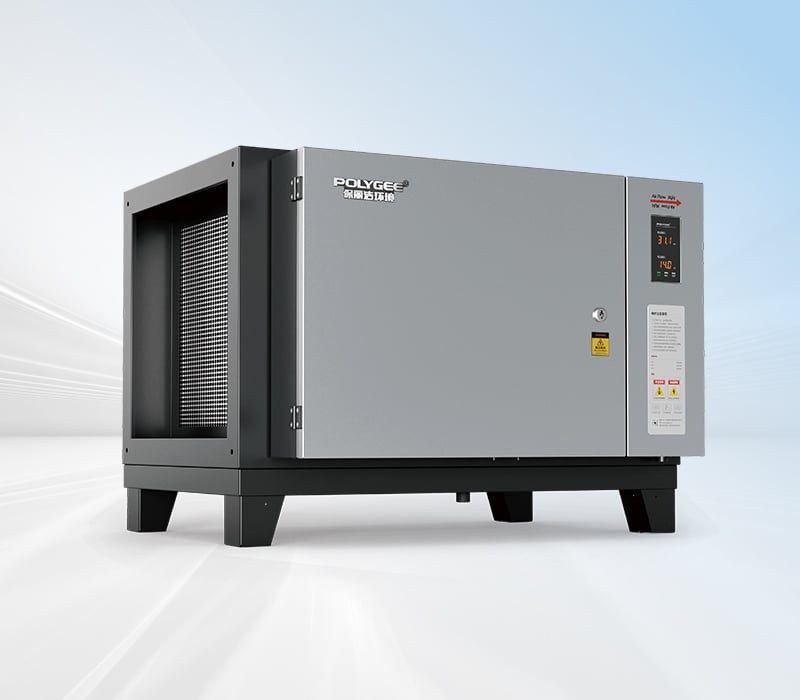
In-Duct Electrostatic Precipitator
Modular ESP for grease and smoke removal. Pairs with UV to cover both particles and odors.
In-duct kitchen electrostatic precipitator specs →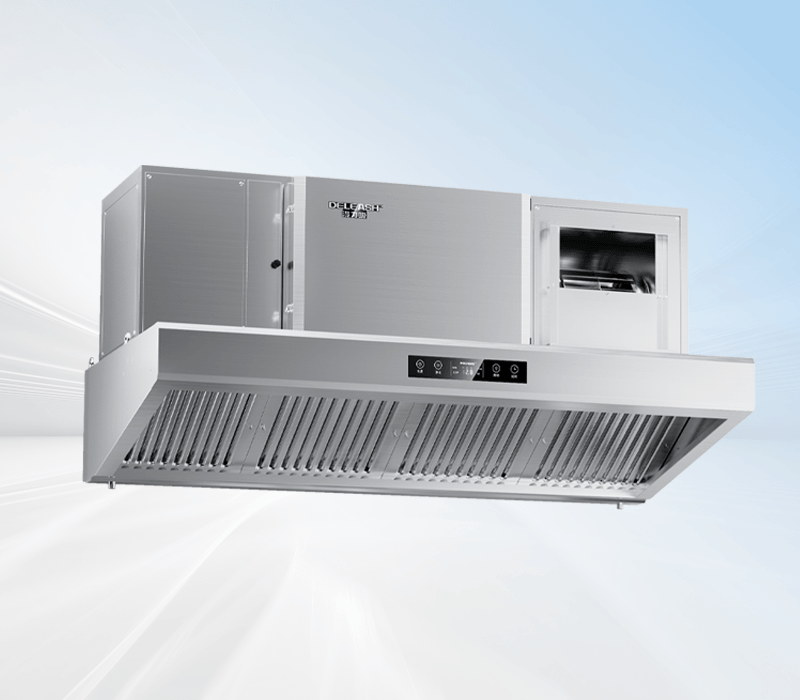
Integrated Kitchen ESP Hood
All-in-one hood with built-in ESP. For new kitchen construction.
Kitchen ESP hood models →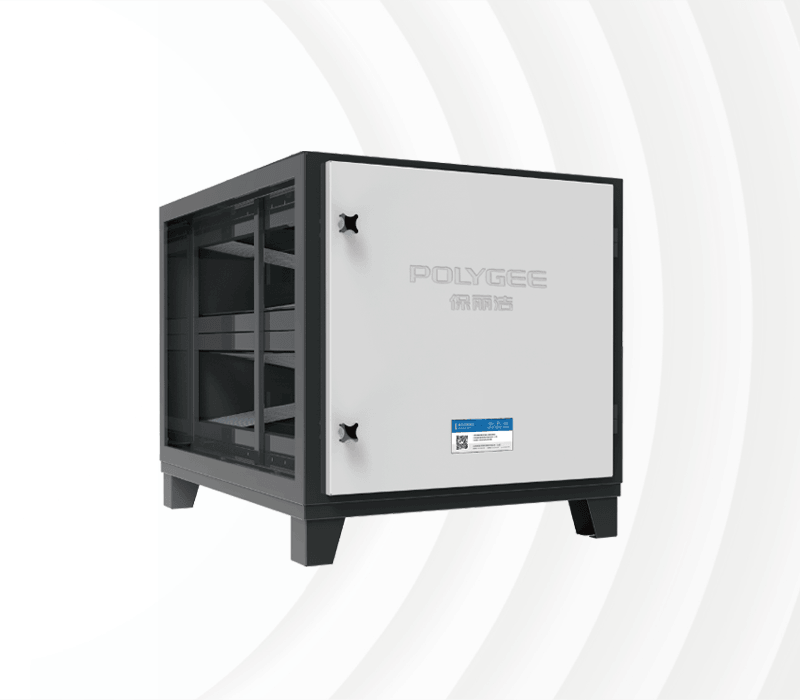
Activated Carbon Filter
Final-stage odor adsorption for residual VOCs. Optional add-on.
Activated carbon filter for kitchen exhaust →Frequently Asked Questions About UV Kitchen Odor Control
Common questions about Polygee UV-C photolysis systems for commercial kitchen odor control. Broader answers are collected on the Polygee kitchen ESP FAQ.
What is UV kitchen odor control?
What is UV-C?
Does the UV module produce ozone, and is that intentional?
Why do I need UV odor control if I already have an ESP?
How long do UV-C lamps last?
Is UV kitchen odor control safe for staff?
Can UV odor control be retrofitted to an existing kitchen?
How does UV compare to activated carbon for odor control?
What are the payment, Incoterms and delivery terms for a UV order?
Does Polygee offer OEM/ODM for UV kitchen odor control?
Solve Cooking Odor Complaints with UV Kitchen Odor Control
Tell us your airflow, cooking type, and odor challenges. We’ll design a UV system around your airflow, cooking type, and local regulatory requirements.
Request a Quote for UV Kitchen Odor Control
We reply during support hours, Mon–Fri 8:00–17:00 (GMT+8), with a custom system design and factory-direct pricing.
🏭 Manufacturer
Jiangsu Polygee Environmental Technology Co., Ltd.
BSE: 920802 • 225 Patents • 110,000 m²
📜 Certifications
CE (FQC2602501) — scope includes the UV Series • ISO 9001 ABZB25Q30072R3M • ISO 14001 ABZB25E30043R3M • ISO 45001 ABZB25S30027R2M (company management systems)
The Polygee RoHS certificate (BKC25114877LC) covers the LK, SE, HME, FMC, HPS and LK-E series and does not cover the UV Series. See the ESP certifications page for scope by product line.