

Kitchen Ecology Unit for Commercial Kitchen Exhaust
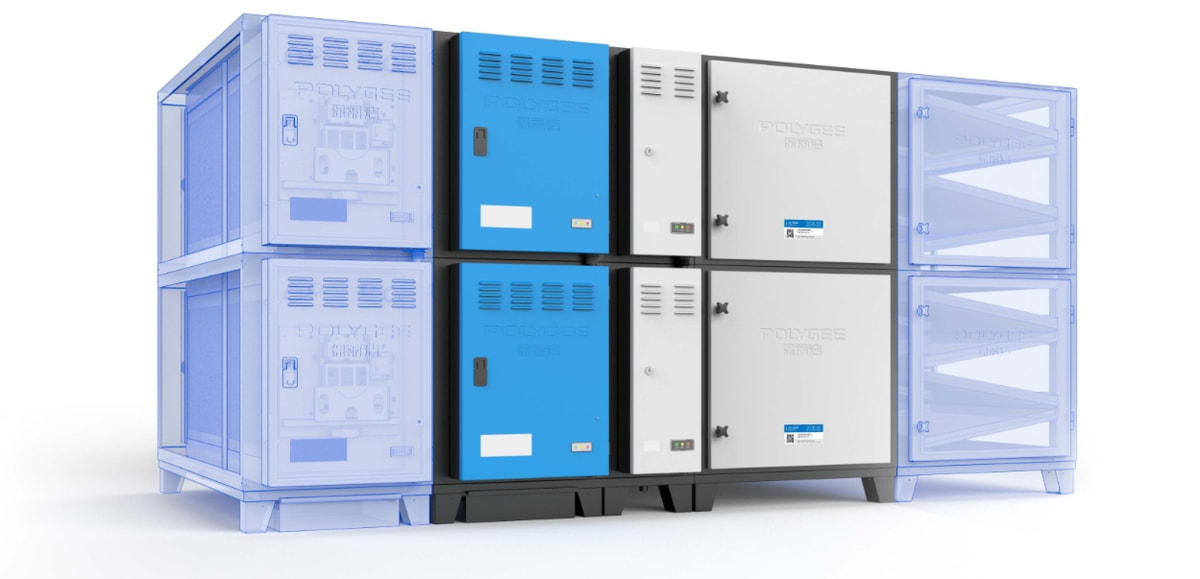
An ecology unit is a multi-stage kitchen exhaust treatment train rather than a single device. The Polygee configuration puts an LK-E electrostatic stage first for grease and smoke, a dual-band UV-C stage second for odor molecules, and a CB activated carbon stage last for the residual VOCs. The stages ship as modules on a common flange height and are bolted into one continuous run, or stacked, according to the plant room you have. The matched extract fan can be supplied with them on request.
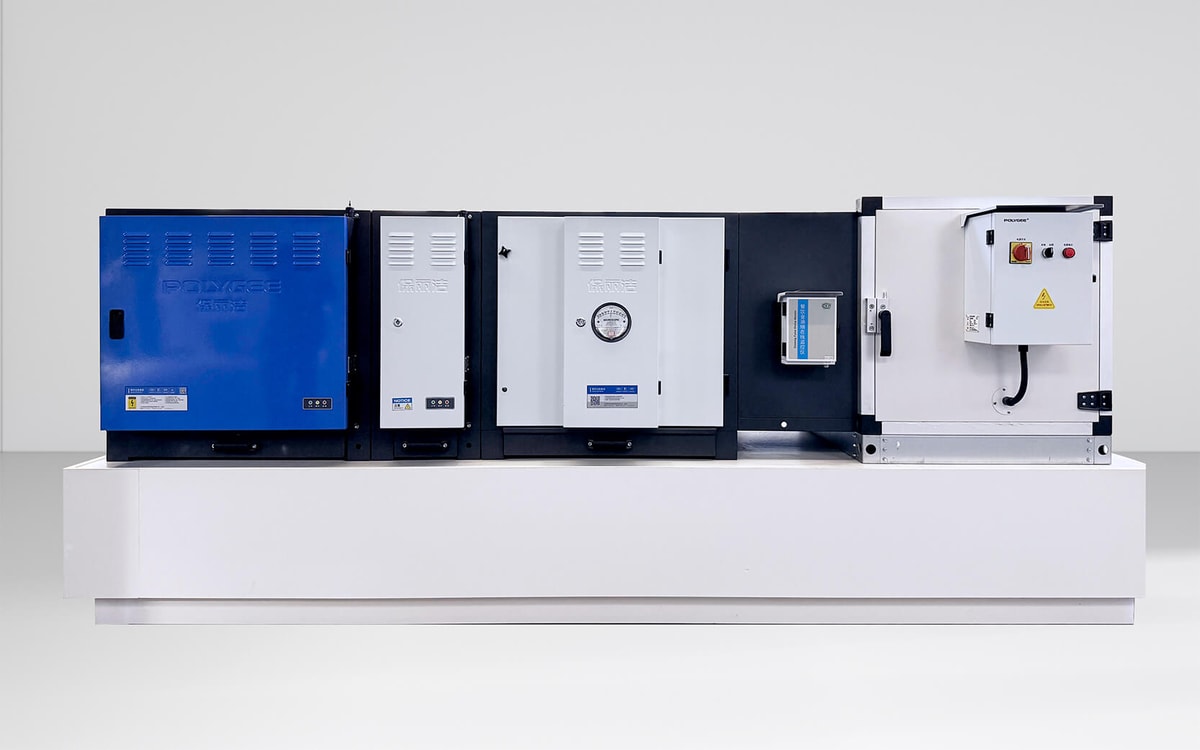
The Three Stages Inside a Polygee Ecology Unit
An ecology unit is only as good as the stages inside it. These are the actual Polygee modules that make up the train — the LK-E electrostatic cell bank, the dual-band UV-C lamp rack, the CB carbon tray cabinet, and the modular layout diagram showing single-run, stacked and combined arrangements.
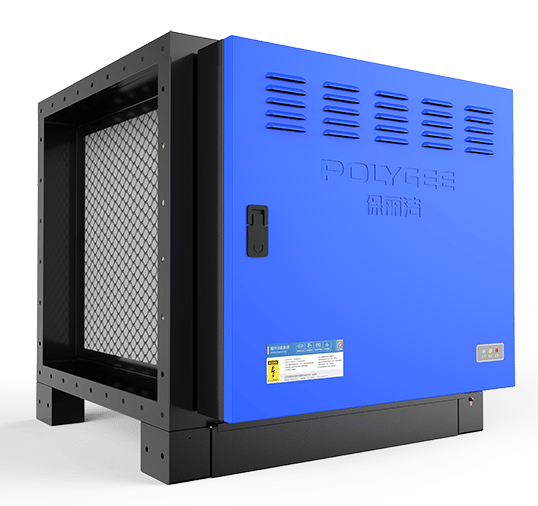
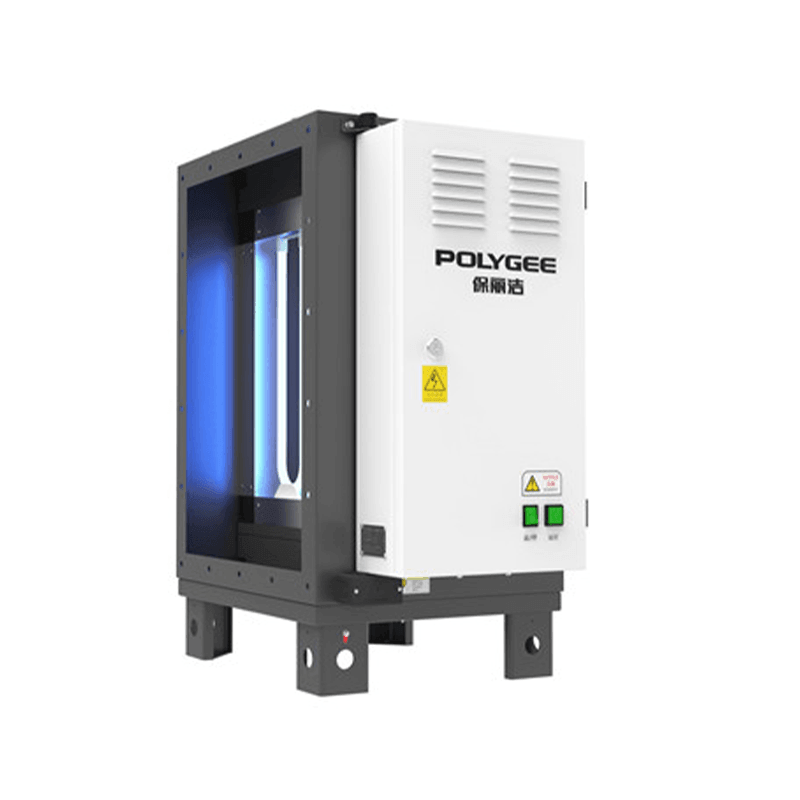
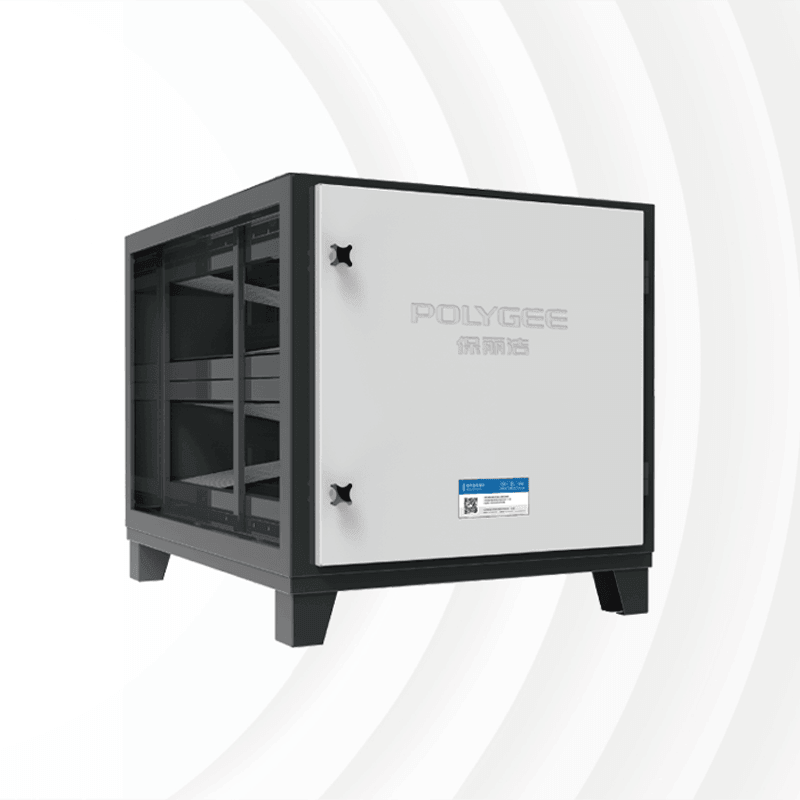
6 Situations Where an Ecology Unit Is Specified Instead of a Single Stage
Ecology units are usually written into the specification when the discharge point is close to people, or when a landlord or authority has set an odor condition. Venue-by-venue designs are on the commercial kitchen exhaust solutions pages.
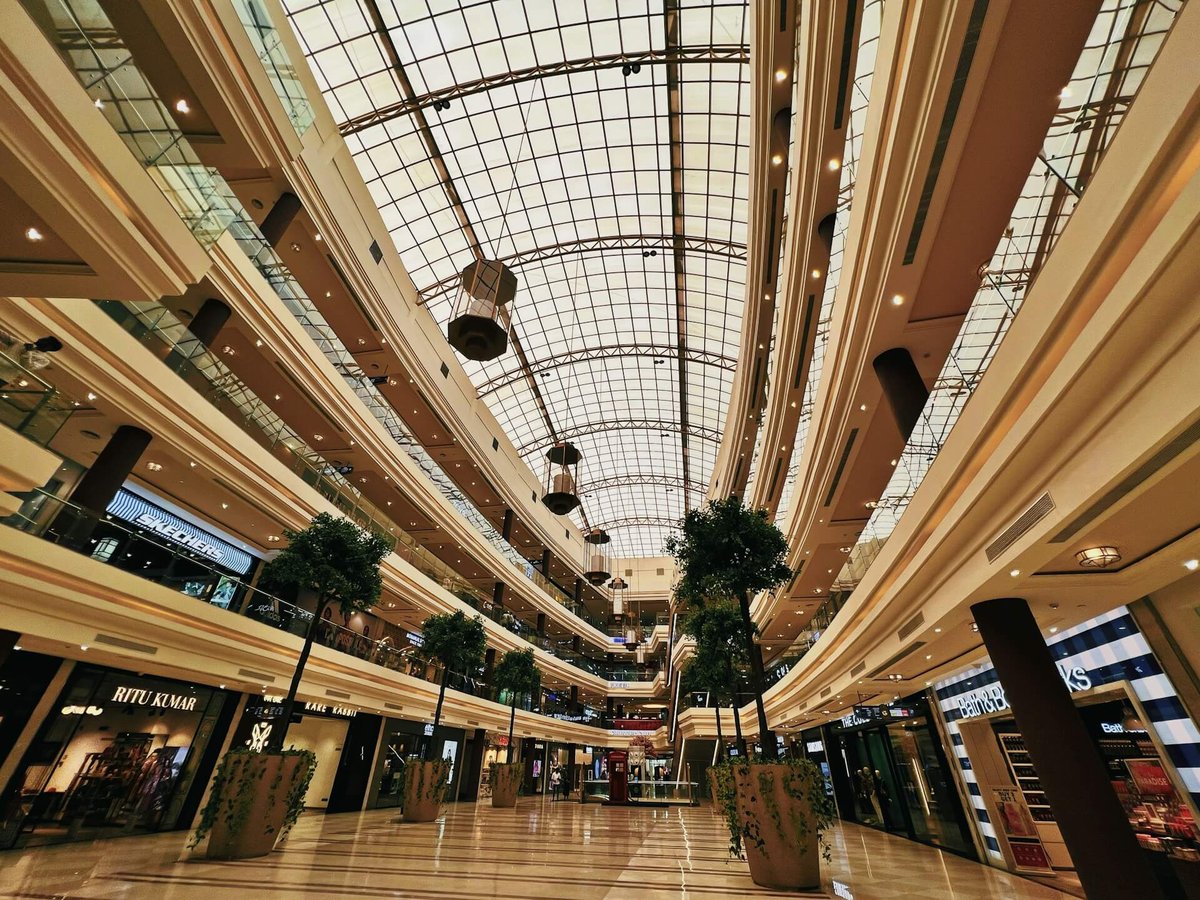
Mall Food Courts and Shared Risers
Many tenants, one riser, one landlord specification. The full three-stage train is the usual answer when mixed cuisines share a duct.
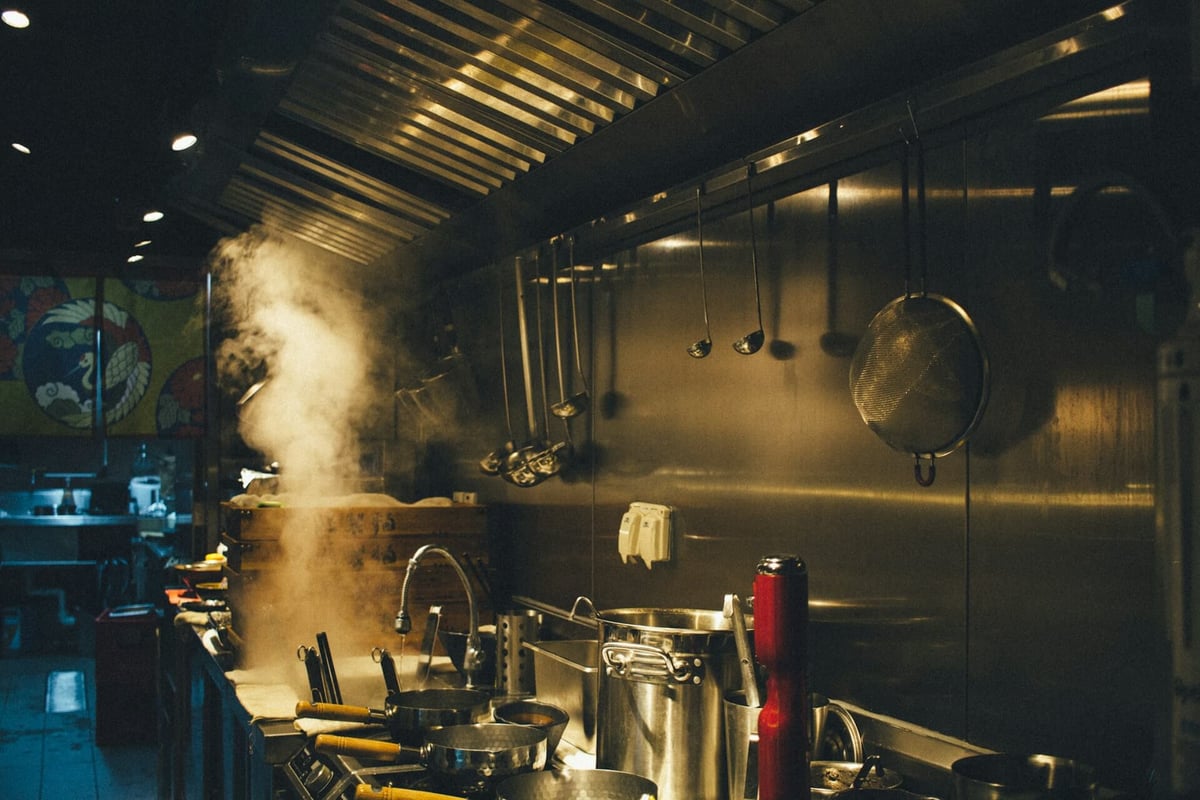
Hotels with Guest Areas Near the Discharge
Podium roofs, pool decks and terraces sit close to kitchen exhaust. The carbon stage is what the consultant is usually after.
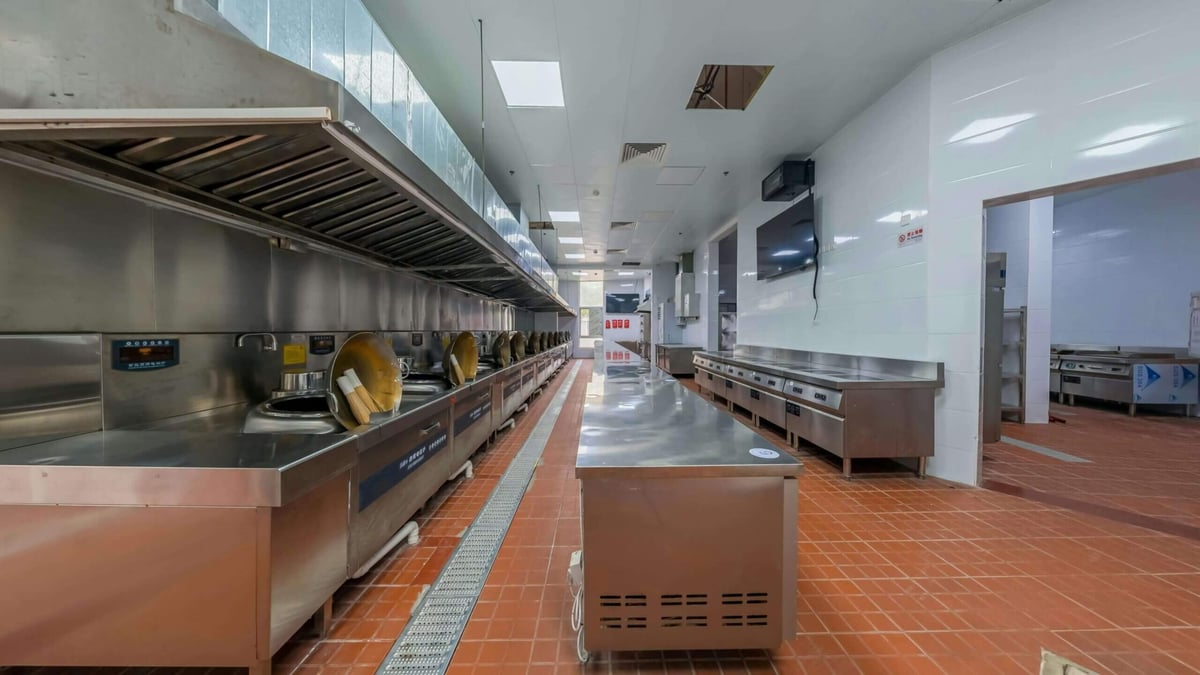
Restaurants in Mixed-Use Buildings
Apartments above the kitchen change the brief from grease removal to odor at the terminal. Three stages, one plant room.
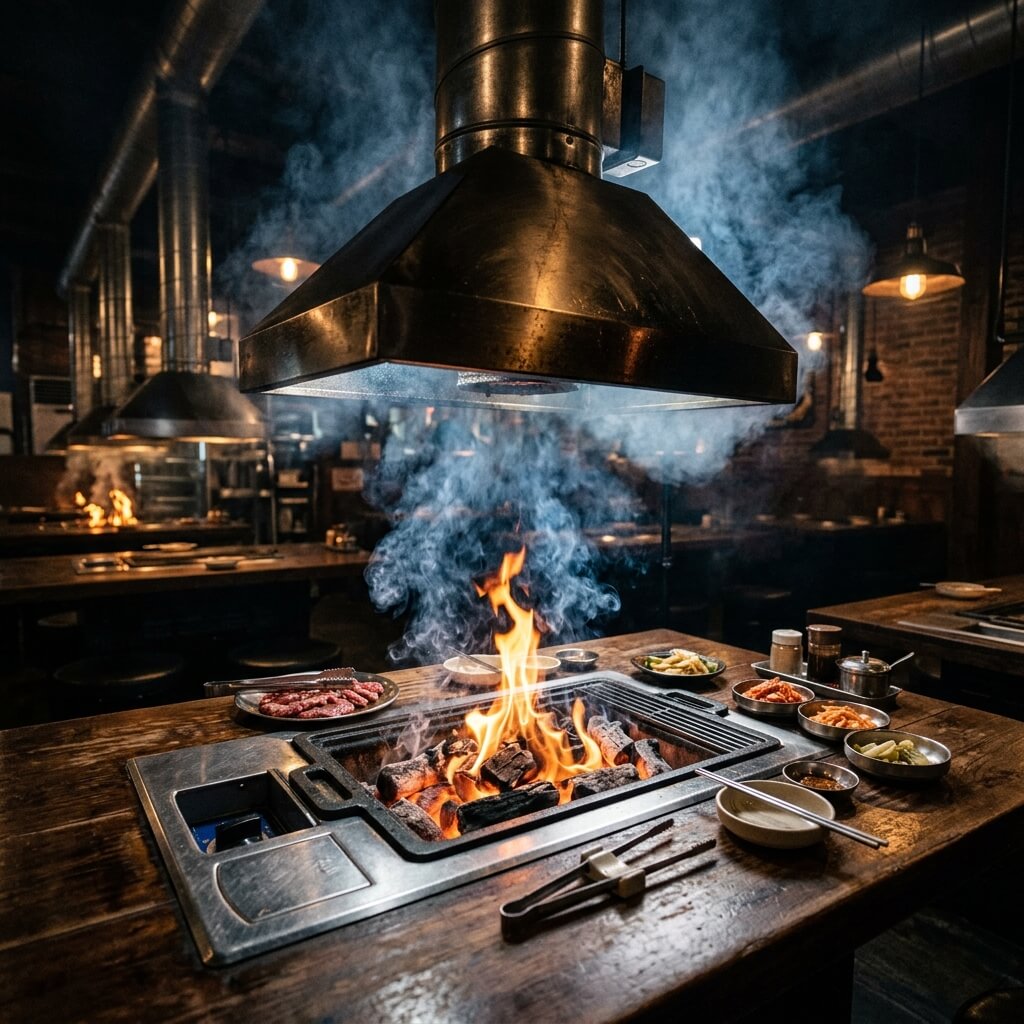
Charcoal, Shawarma and Grill Houses
Heavy smoke plus persistent odor is the case the three-stage train was built for, with the ESP tier chosen for the load.
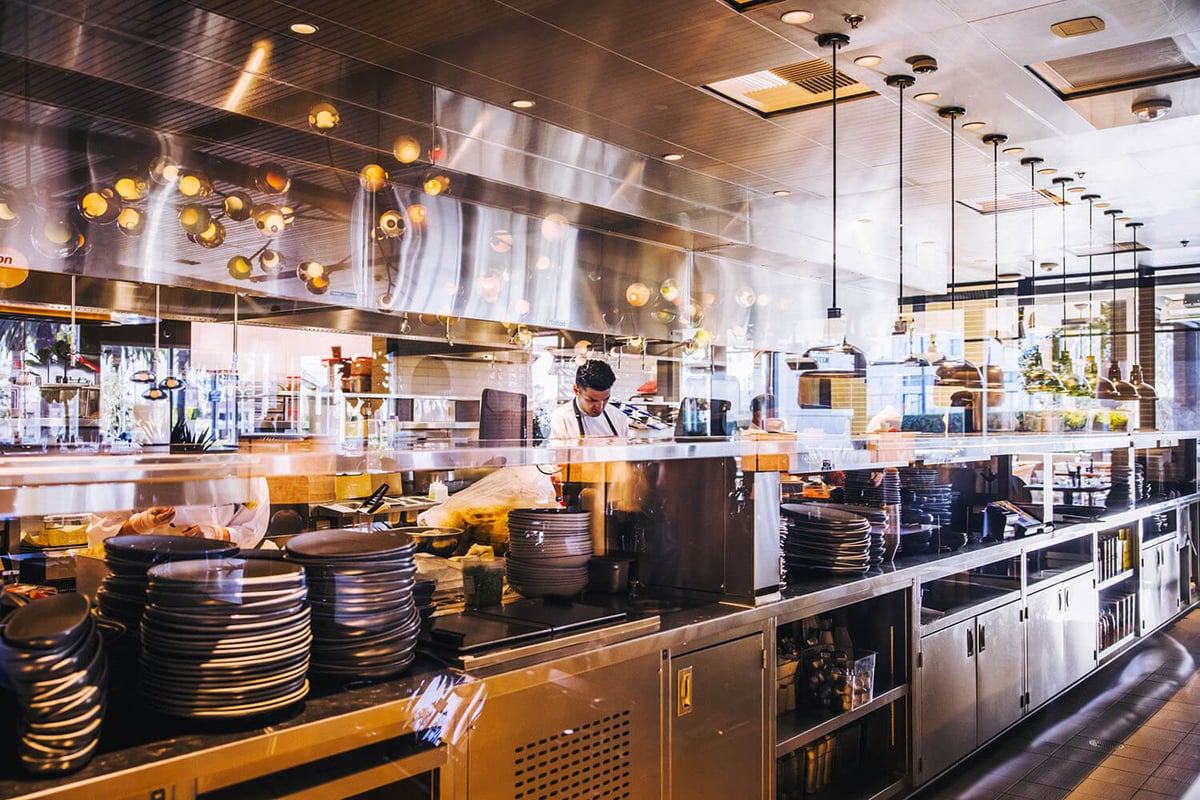
Chains Rolling Out One Specification
One ecology unit specification per store format, sized by airflow, so procurement and maintenance stay identical across sites.
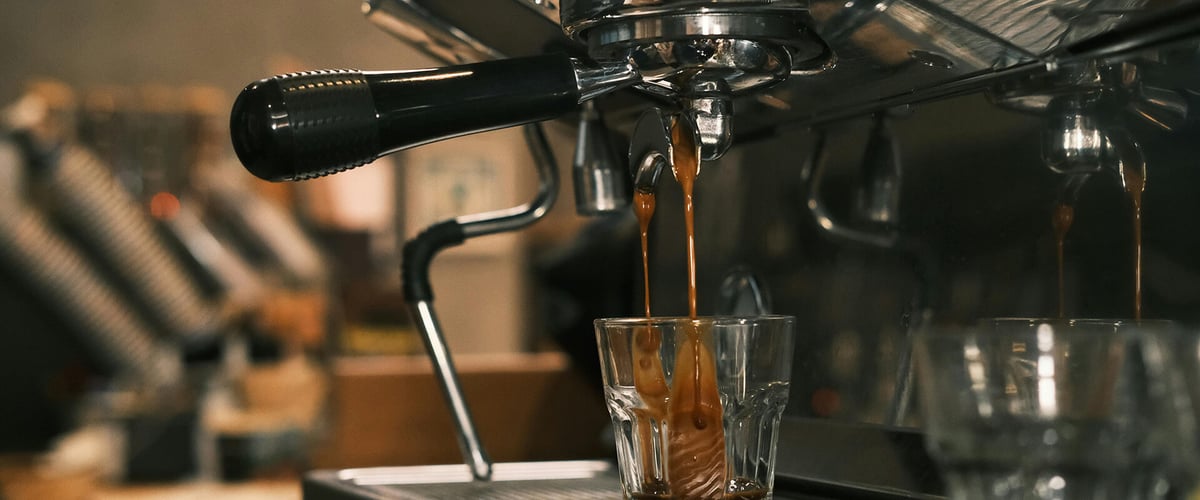
Cafés and Bakeries in Retail Units
Small airflows, tight ceiling voids and a shopping-center odor clause — the compact end of the range, often stacked.
Ecology Unit, ECU or Pollution Control Unit for Kitchen Exhaust — Same Equipment, Different Markets
The same equipment goes by different names depending on which market the tender was written in. Getting the naming straight avoids quoting the wrong scope. Four companion guides sit behind this page: what an ecology unit is, stage by stage, and what the straight run, weight, pressure allowance and access clearance have to be before a three-stage train will physically go in, in ecology unit installation. The recurring side — which stage is washed and which are consumed — is in ecology unit filters, and what moves the capital number is in ecology unit price.
What a kitchen ecology unit is
An ecology unit is a packaged multi-stage treatment train for commercial kitchen exhaust. It is defined by the sequence of stages it contains, not by a single technology. A typical train removes particles first, treats odor molecules second, and adsorbs what is left third, so that the air reaching the discharge point has been through more than one mechanism.
What a kitchen ecology unit is called in other markets
Gulf tenders and UK ventilation specifications tend to say ecology unit or ECU. North American drawings for the same duty usually say pollution control unit, abbreviated PCU — a term used both for a single in-duct ESP and for a full multi-stage train, so check the stages listed on the drawing. Indian enquiries often say kitchen exhaust scrubber, even where no water is involved. If your document uses one of those terms, the scope described on this page is the one being asked for.
What a kitchen ecology unit is not
- Not a baffle or mesh grease filter — those sit inside the hood and stop bulk grease, upstream of everything here
- Not a wet scrubber — the Polygee train is dry, with no water supply, no drain and no chemical dosing
- Not a stand-alone electrostatic precipitator — the LK-E series and the LK in-duct range are the first stage of the train, not the whole train
- Not a stand-alone UV module or carbon box — each is one stage, sold separately for buyers who already own the others
- Not an ESP hood — that is a hood with a built-in cell, mounted over the cooking line rather than in the duct run
- Not a fan set on its own — the extract fan can be supplied with the train when you want it quoted that way, but on most projects it sits in the ventilation contractor package
The same modules arranged as one straight run or stacked in layers — the layout is set on the project drawing.
8 Reasons Buyers Specify a Polygee Ecology Unit
Every stage in the train is a Polygee product with its own brochure specification, so the configuration can be checked module by module before you order.
One Supplier for All Three Stages
ESP, UV-C and carbon come from the same factory and are set out on one project drawing, so there is no interface argument between three vendors when something needs sorting.
ESP Tier Chosen for the Load
LK-E0, LK-E1 and LK-E2 give ≥ 90%, ≥ 95% and ≥ 98% design efficiency. A bakery and a charcoal grill do not need the same first stage.
Dry Process, No Water Services
No water supply, no drain, no chemical dosing and no effluent to handle — the whole train runs dry, which is what keeps it viable in a rooftop plant room.
Washable First Stage
The electrostatic cells are stainless steel and are washed and refitted rather than thrown away. Only the UV lamps and the carbon media are consumables.
Matched Module Geometry
UV and carbon stages share a common 653 mm flange height, with matched widths at most sizes, so the modules line up in a straight run. At 12,000 m³/h the UV and carbon flanges differ by 50 mm and are joined with a transition piece.
Serviceable From the Front
Drawer-type cells, lamp racks and carbon panels, with D = 1,000 mm maintenance clearance on the access side of the UV and carbon stages.
Stacked or In-Line
The same modules can be arranged as one straight run or stacked in layers when the plant room is short of length. The layout is set on the project drawing.
OEM / ODM Builds
Your logo on the unit and a different enclosure color are available, and integrated ODM ecology units have been supplied on a project basis.
How a Kitchen Ecology Unit Works — 3 Treatment Stages, Plus the Hood Filters Upstream
Each stage removes what the stage before it cannot, and each one protects the stage after it.
Hood Filters
Baffle or mesh filters in the hood take out bulk grease. They belong to the hood, not to the ecology unit, but the train depends on them working.
→Electrostatic Precipitation
The LK-E cell charges the grease and smoke particles and collects them on stainless-steel plates. This is the stage that stops the duct downstream from coating up — the mechanism is explained in what an electrostatic precipitator is.
→UV-C Photolysis
The 254 nm band breaks odor molecules apart; the 185 nm band splits oxygen so that ozone forms inside the chamber and oxidises the fragments.
→Carbon Adsorption
The CB carbon panels adsorb the residual VOCs that survive photolysis. This is the last stage before the fan and the terminal.
Ecology Unit vs. Single-Stage ESP vs. Wet Process vs. ESP Hood
Four routes get specified for the same duty. They differ in what they remove, what they consume, and who maintains them.
✅ Ecology Unit (ESP + UV-C + Carbon)
Removes particles, treats odor molecules and adsorbs residual VOCs in one train. The route to specify when there is an odor condition attached to the discharge point. The longest module run of the four, so the plant room has to take it and the total static pressure has to be added up stage by stage before the fan is selected.
⚡ Single-Stage ESP Only
Removes grease and smoke particles and keeps the duct clean, which is often all a landlord condition or a local requirement is asking for. It does not treat gaseous odor at all, so it is the wrong route where neighbors or a landlord have raised smell rather than smoke. See the in-duct electrostatic precipitator for that route.
💧 Wet Scrubber
Uses a water circuit to wash the airstream. It needs a water supply, a drain, effluent handling and freeze protection, and adds humidity to the discharge. The Polygee ecology unit is a dry alternative for projects where those services are difficult to provide.
🏠 ESP Hood (Hood-Integrated)
Puts the cell inside the hood over the cooking line, which suits new-build kitchens with no plant room for a duct-mounted train. Treatment is a single stage, and the airflow band is narrower. See the commercial kitchen hood system for that route.
| Route | Removes Particles | Treats Gaseous Odor | Water Services | Where It Sits | Typical Trigger |
|---|---|---|---|---|---|
| Ecology unit (ESP + UV-C + carbon) | Yes | Yes, two stages | None | Duct run or plant room | Odor condition on the discharge point |
| Single-stage ESP | Yes | No | None | In-duct | Grease and smoke only |
| Wet scrubber | Yes | Partly | Supply, drain, effluent | Plant room | Specification calls for a wet process |
| ESP hood | Yes | No | None | Over the cooking line | New build with no plant room |
Recommended Layout for a Kitchen Ecology Unit
The order of the stages is not interchangeable. Each one is sized on the assumption that the stage in front of it is doing its job.
LK-E Electrostatic Stage
Grease and smoke particles are charged and collected here. Put anything else first and the UV lamps and carbon media foul early, which is the single most common reason an ecology unit underperforms in service.
- Three tiers: ≥ 90%, ≥ 95% and ≥ 98% design efficiency
- Washable stainless-steel collecting cells, no filter media to buy
- Complete module rated at no more than 150 Pa with its airflow distribution plate; the electrostatic field itself contributes 20–30 Pa (brochure equipment resistance 31 Pa on E0, 23 Pa on E1, 34 Pa on E2)
UV-C Photolysis Stage
Dual-band lamps attack the odor molecules the ESP cannot capture, because odor is a gas and the electrostatic stage only works on particles. The ozone generated at 185 nm is consumed inside the duct run, provided the section downstream of the lamp rack is dimensioned for the required dwell time, which is set case by case on the project drawing.
- Eight models, UV30 to UV150, 3,000 to 15,000 m³/h
- 220V/50Hz standard, aluminum profile lamp frame, safety interlock
- Lamps are consumables; the replacement schedule comes with the proposal
- Stage resistance is issued per model with the configuration proposal — it is the one figure not published in the brochure
CB Activated Carbon Stage
The last stage adsorbs residual VOCs before the fan. Because the two stages upstream have already taken out the particles and much of the odor load, the carbon is not asked to do the whole job on its own.
- Eight models, CB30 to CB150, 3,000 to 15,000 m³/h
- Coal-based columnar carbon, iodine adsorption value ≥ 800 mg/g
- Equipment resistance 150 Pa across the series — include it in the fan calculation
Kitchen Ecology Unit — Configuration and Stage Specifications
Start from the extract rate. That fixes the UV and carbon module sizes; the ESP tier is then chosen from the cooking load.
| Nominal Airflow (m³/h) | ≈ CFM | ESP Stage | UV Stage | Carbon Stage | UV Flange A×B (mm) | Carbon Flange A×B (mm) | Carbon Frames (pcs) |
|---|---|---|---|---|---|---|---|
| 3,000 | 1,766 | LK-E1 / LK-E2 | UV30 | CB30 | 470×653 | 470×653 | 4 |
| 4,000 | 2,354 | LK-E tier to suit | UV40 | CB40 | 638×653 | 638×653 | 4 |
| 5,000 | 2,943 | LK-E tier to suit | UV50 | CB50 | 690×653 | 690×653 | 4 |
| 6,000 | 3,532 | LK-E tier to suit | UV60 | CB60 | 980×653 | 980×653 | 8 |
| 8,000 | 4,709 | LK-E tier to suit | UV80 | CB80 | 1316×653 | 1316×653 | 8 |
| 10,000 | 5,887 | LK-E tier to suit | UV100 | CB100 | 1420×653 | 1420×653 | 8 |
| 12,000 | 7,064 | LK-E tier to suit | UV120 | CB120 | 1944×653 | 1994×653 | 12 |
| 15,000 | 8,830 | LK-E tier to suit | UV150 | CB150 | 2150×653 | 2150×653 | 12 |
| ESP Tier | Models | Airflow Range (m³/h) | Design Efficiency | Equipment Resistance (Pa) | Input Supply | Typical Use in an Ecology Unit |
|---|---|---|---|---|---|---|
| LK-E2 | 11 (LK30E2–LK240E2) | 3,000–24,000 | ≥ 98% | 34 | 220V/50Hz | Charcoal, grill and heavy wok lines; tight landlord conditions |
| LK-E1 | 11 (LK30E1–LK240E1) | 3,000–24,000 | ≥ 95% | 23 | 220V/50Hz | General restaurant and hotel kitchens; the usual starting point |
| LK-E0 | 11 (LK40E0–LK400E0) | 4,000–40,000 | ≥ 90% | 31 | 220V/50Hz | Lighter loads, and large extract rates handled in parallel runs |
| Carbon Media Parameter | Specification | Carbon Media Parameter | Specification |
|---|---|---|---|
| Iodine adsorption value | ≥ 800 mg/g | Carbon tetrachloride adsorption | ≥ 45% |
| Methylene blue adsorption | ≥ 100 mg/g | Benzene adsorption | ≥ 40% |
| Specific surface area | ≥ 800 m²/g | Strength | ≥ 95% |
| Packing density | 650 ± 50 g/L | Moisture | ≤ 10% |
| Ash | ≤ 15% | Heavy metal (as iron) | ≤ 3% |
Full per-model tables live on the stage pages: LK-E series, UV odor control and activated carbon filter. Brochure dimensions can be customized for project-specific duct layouts. Datasheets, certificates and drawings are emailed on request from the downloads center.
Send the extract rate, the cooking style and the plant room dimensions and we will come back with a stage-by-stage configuration and a quotation.
Request an Ecology Unit Configuration →Comparing suppliers as well as sizes? The commercial kitchen ESP buying guide sets out what to ask each of them for.
- Extract rate fixes the module size — the UV and carbon stages exist in eight sizes from 3,000 to 15,000 m³/h
- Cooking style fixes the ESP tier — charcoal and wok lines sit at the ≥ 98% end, cafés at the ≥ 90% end
- Static pressure is added across all three complete modules plus the ductwork — use the module figures, not the cell-only figures
- Plant room length decides whether the train runs straight or is stacked in layers
- If the kitchen runs demand-control ventilation, size the train for the highest airflow the fan will deliver rather than the average — see demand control kitchen ventilation
- Whatever extract rate you settle on has to be replaced by the same volume of air coming in — see commercial kitchen makeup air requirements
- Above 15,000 m³/h the extract is split into parallel runs; the split is set on the project drawing
- Leave D = 1,000 mm clear on the access side of the UV and carbon stages or the unit cannot be serviced
Certification and Submission Documents for an Ecology Unit
Certificate numbers, directives and covered series — stated so your consultant can check them, and packaged so they can be filed with a local submission.
✅ CE — Certificate FQC2602501
Valid to 9 January 2031 and naming the LK series (LK30–LK480), the LK-E1 range LK30E1–LK150E1 and the UV series against three directives: Machinery 2006/42/EC, EMC and LVD. We confirm in writing which certificate applies to the exact models in your configuration before you submit. Machinery-directive coverage on a kitchen-exhaust product line is not common, and this is the certificate that goes into the submission for the electrostatic and UV stages. The LK-E stage is additionally covered by RoHS certificate BKC25114877LC.
🏭 ISO 9001 / 14001 / 45001
Manufacturing runs under three certified management systems: ISO 9001 ABZB25Q30072R3M, ISO 14001 ABZB25E30043R3M and ISO 45001 ABZB25S30027R2M. The activated carbon stage is a passive component with no electrical parts, so it is built and inspected under this scope.
📄 What We Send for a Submission
Certificates, third-party test reports, general arrangement drawings and specification sheets, put together for the market you are submitting in. We have supplied projects in Dubai and across the Gulf — among them Dubai Mall in 2017, 40 ODM units — so we know the form a submission usually takes there. Tell us the authority or the consultant reviewing it and we assemble the pack to match, at no charge.
🔎 Checkable, Not Decorative
Every certificate here is quoted with its number, its scope and its expiry, so it can be verified before you commit. Ask for the originals and we send the scans. Scope by product line across the whole Polygee range is set out on the ESP certifications page.
💬 What Consultants Actually Ask Us — From the Project Team
“The first question I get from a consultant is never about efficiency, it is which certificate covers which part of the train, and can they file it. So we put the number, the directive and the covered series on the page instead of a row of logos, and we send the same documents in a pack they can hand straight to the authority. If your reviewer asks for something specific, tell us early in the enquiry and we will work out how to cover it with you.”
—
Law, Project Manager, Jiangsu Polygee Environmental Technology Co., Ltd.
Ordering, Warranty and After-Sales Terms for an Ecology Unit
The commercial baseline for ecology unit orders. Every point below is restated in writing on your quotation and pro forma invoice.
Deposit and Balance
A 30% deposit releases production, with the balance settled before shipment. A 50% deposit is also available if your procurement rules ask for it.
- T/T and L/C are both accepted
- Balance due before the goods leave the factory
- Bank details stated on the pro forma invoice
Incoterms to Suit the Buyer
Incoterms arranged to suit the buyer (EXW / FOB / CIF). Tell us the delivery point and we quote on that basis.
- EXW for buyers using their own forwarder
- FOB from a Chinese port of loading
- CIF to your named port of destination
1 Year on the Complete Unit
Each module carries a 1-year warranty on the complete unit. The electrostatic cells and the SPP high-voltage power supplies are covered.
- UV lamps and activated carbon media are consumables and are excluded
- Labor and site attendance not included; paid on-site service available
- Spare parts supplied for 1 year after a model is discontinued
One Unit, 7–15 Days
MOQ is 1 unit and standard lead time is 7–15 days. Project and volume pricing is quoted per project.
- Single-unit and sample orders accepted
- Individual stages can be ordered separately for a staged upgrade
- OEM minimum order quantity and lead time agreed case by case
Treatment Stages, With or Without the Fan
The standard scope is the treatment modules with their control gear. We can also supply the matched extract fan with the train, so the airflow and the treatment come from one supplier and one party is answerable for the duty point. Say which you want on the enquiry.
- Fan supplied and matched to the total static pressure of your configuration, on request
- Flange sizes and transition pieces confirmed against your duct
- Attenuator, fire damper and ductwork remain with the ventilation contractor
Remote Support and OEM
Remote support runs on video calls backed by illustrated manuals, Mon–Fri 8:00–17:00 (GMT+8). Paid on-site service is available.
- Your logo on the unit and a different enclosure color are available
- NDA signed by the company on request
- Manufacturing under ISO 9001 / 14001 / 45001 management systems
Drawings and Specifications
Stage-by-stage configuration proposals, CAD drawings and full specification sheets — request them with your project’s extract rate and plant room dimensions.
4 Ways to Install an Ecology Unit in a Kitchen Exhaust System
The stages bolt together on a common flange height, so an ecology unit kitchen layout follows the space rather than the other way round — whether the drawing came from a Gulf consultant, a UK ventilation specification or a North American PCU schedule.
🔗 Straight In-Line Run
ESP, then UV, then carbon in one continuous horizontal run in the duct. The simplest arrangement to service and the easiest to commission, and the default where the plant room has the length for it.
🧱 Stacked Layout
Where length is short, the modules are stacked in layers with transition sections between them. This is the arrangement shown in the modular combination diagram and is common in retail units and basement plant rooms.
🏗 Rooftop Plant Room
The whole train installed at roof level ahead of the discharge terminal. Outdoor and rooftop enclosure options are available on request. Keep the maintenance access clear on the UV and carbon stages.
⚙ Staged Retrofit
Add stages to an existing system over time — typically a UV and carbon stage behind an ESP that is already installed, including a third-party one. Standard flange sizes with transition pieces available.
- Keep the stage order — ESP first, then UV, then carbon; reordering it shortens the life of the consumables
- Allow D = 1,000 mm maintenance clearance on the access side of the UV and carbon stages
- Site the extract fan downstream of the train so the modules run under negative pressure
- Add up the complete-module static pressure of every stage plus the ductwork before the fan is selected
- Wire the UV safety interlock to the fan system, and provide access doors at each stage
- Electrostatic cells are washed and refitted; UV lamps and carbon panels are replaced on schedule
- Isolate the power supply and allow the high-voltage section to discharge before any cell is removed; change UV lamps with the interlock proved and the lamps de-energized. All service by competent personnel, per the manual
💬 Sizing an Ecology Unit — From the Project Team
“The first question I ask is not which model, it is what the extract rate is and what is being cooked under the hood. The airflow fixes the UV and carbon module size straight away, because those exist in eight sizes and nothing else. The cooking decides the ESP tier, and that is where buyers most often over-specify or under-specify. The third question is the plant room, because a train that will not fit has to be stacked, and that changes the drawing. Give me those three answers and the configuration comes back within 24 hours on business days.”
—
Scarlett, Business Director, Jiangsu Polygee Environmental Technology Co., Ltd.
The Ecology Unit Stages, Sold Separately
Already own part of the train? Each stage has its own page, its own model table and its own MOQ of one unit.
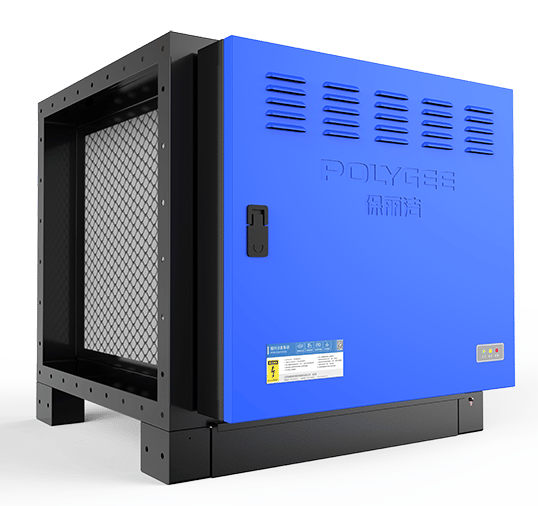
LK-E Series Modular ESP
Stage 1 of the train. 33 models across three efficiency tiers, 3,000 to 40,000 m³/h.
Modular kitchen ESP specs →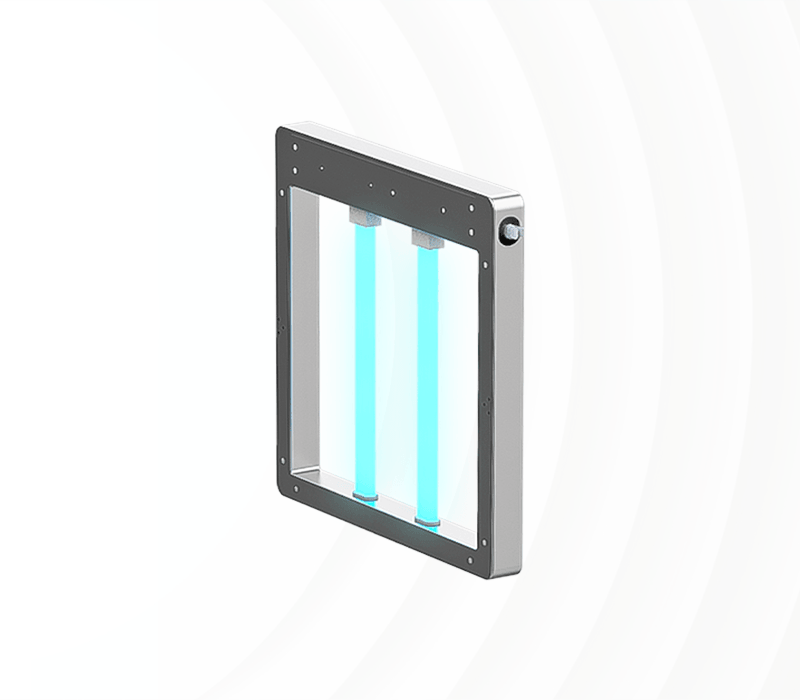
UV-C Odor Control Module
Stage 2 of the train. Eight models, dual-band 254 nm and 185 nm lamps.
UV kitchen odor control module →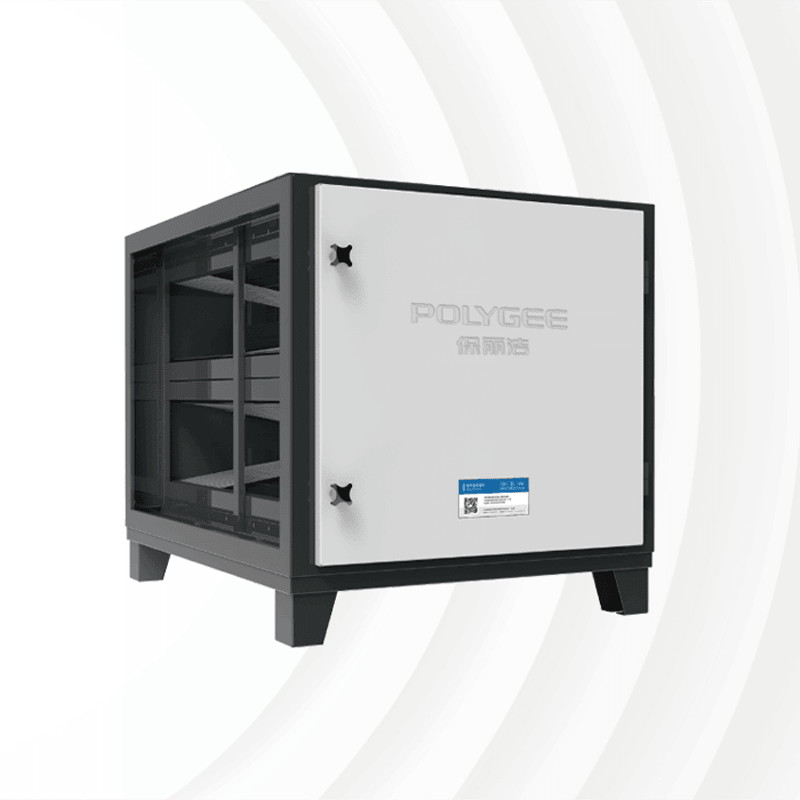
CB Activated Carbon Filter
Stage 3 of the train. Eight models, coal-based columnar carbon, drawer-type trays.
Activated carbon filter specs →Frequently Asked Questions About Kitchen Ecology Units
What buyers and consultants ask before specifying an ecology unit. Site-wide answers are collected on the Polygee kitchen ESP FAQ.
What is a kitchen ecology unit?
What is the difference between an ecology unit and an electrostatic precipitator?
Is an ecology unit the same as a pollution control unit or an ECU?
Does a Polygee ecology unit include the extract fan?
How much does a kitchen ecology unit cost?
What maintenance does an ecology unit need?
What certification does the ecology unit carry?
Can an ecology unit be retrofitted to an existing kitchen exhaust system?
Get an Ecology Unit Configured for Your Project
Send the extract rate, the cooking style and the plant room dimensions. You get a stage-by-stage configuration and a quotation back.
Request a Quote for a Kitchen Ecology Unit
We reply during support hours, Mon–Fri 8:00–17:00 (GMT+8), with a stage-by-stage configuration and factory-direct pricing.
Prefer to send the extract rate over chat? Message us on WhatsApp →
1-year warranty on the complete unit • MOQ 1 unit • Lead time 7–15 days • UV lamps and carbon media are consumables
🏭 Manufacturer
Jiangsu Polygee Environmental Technology Co., Ltd.
BSE: 920802 • 225 Patents • Exported to 50 Countries
📜 Certifications
CE FQC2602501 (LK, LK-E1 and UV series, to 2031) • ISO 9001 ABZB25Q30072R3M • ISO 14001 ABZB25E30043R3M • ISO 45001 ABZB25S30027R2M
Scope by product line is set out on the ESP certifications page.